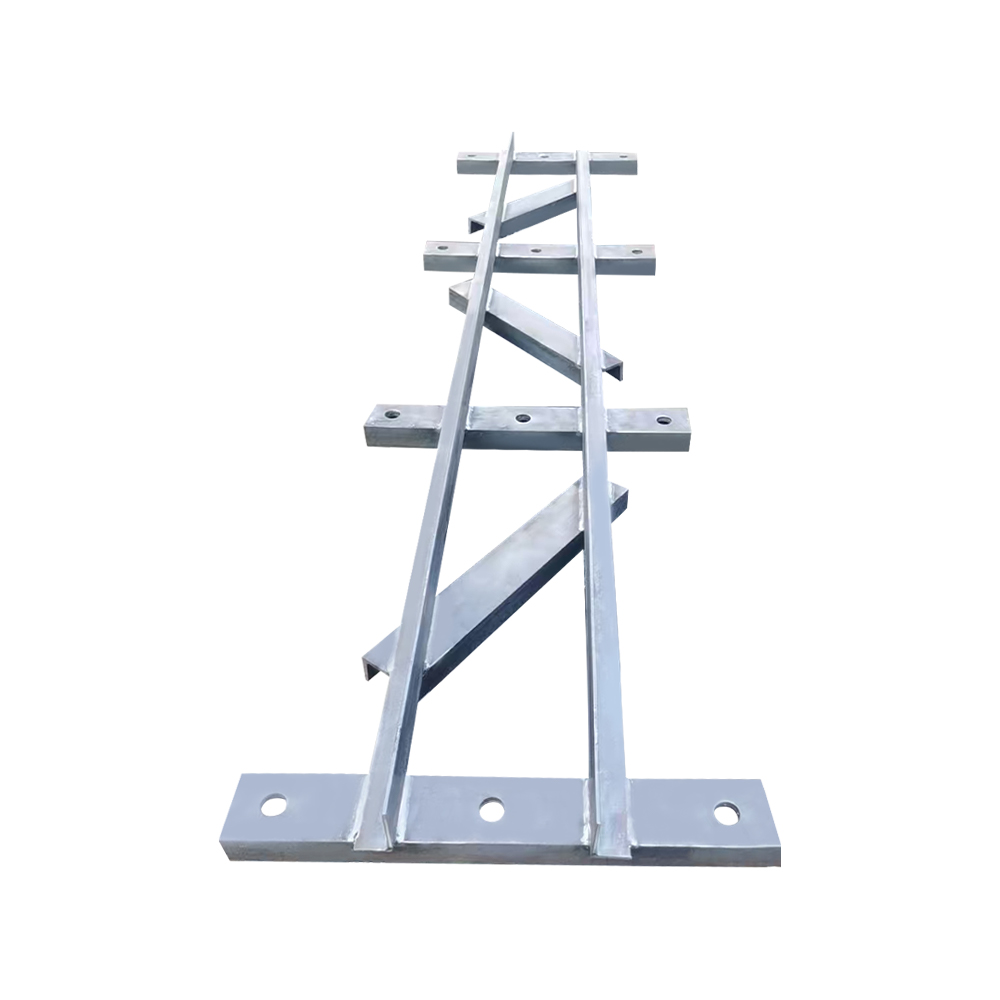
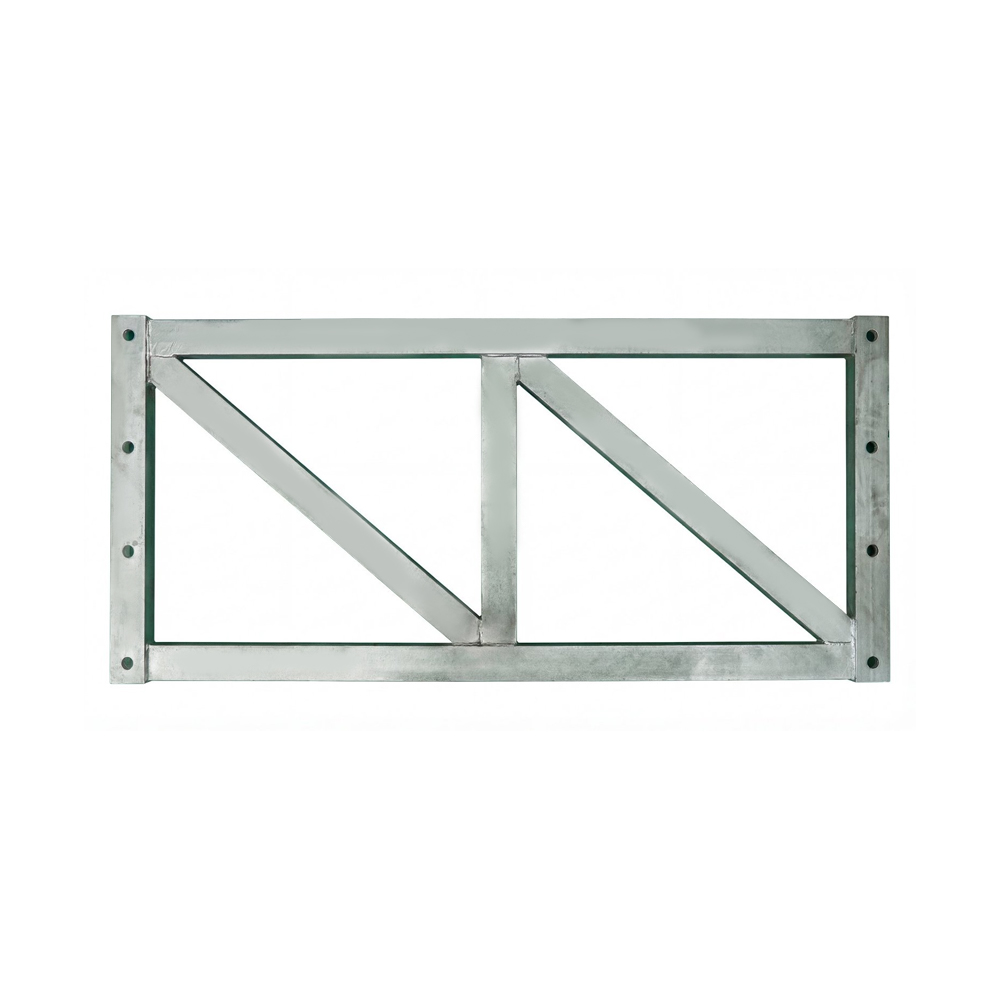
When engineers and builders ask which truss design is the strongest, the answer is never one-size-fits-all. Truss strength depends on the span length, the type and direction of the applied load, the material used, and the specific structural purpose. That said, certain truss geometries consistently outperform others across a wide range of applications. This guide breaks down the most common truss designs, explains the mechanics behind their strength, and identifies the top performers for different real-world scenarios.
A truss is a structural framework made up of straight members connected at joints, called nodes. Unlike a solid beam, a truss achieves strength through geometry — the arrangement of triangles — rather than through mass alone. The triangle is the only geometric shape that cannot be deformed without changing the length of one of its sides, which makes it inherently rigid and load-resistant.
When a load is applied to a truss, the force is distributed through the members as either tension (pulling forces) or compression (pushing forces). The efficiency of a truss design is measured by how well it distributes these forces with minimal material. A strong truss:
- Converts applied loads into pure axial forces (tension or compression) along its members
- Minimizes bending moments, which are far more structurally damaging than axial forces
- Distributes load evenly across multiple members rather than concentrating stress at one point
- Uses the shortest possible member lengths to resist buckling under compression
- Achieves maximum structural depth relative to span length
With these principles in mind, it becomes clear why some truss configurations excel in specific scenarios while others fall short. The geometry of each design determines how well these criteria are met.
The Most Common Truss Designs Explained
Before determining which is strongest, it is essential to understand how each major truss type is constructed and how forces flow through it.
Pratt Truss
The Pratt truss, patented by Thomas and Caleb Pratt in 1844, features vertical members under compression and diagonal members under tension. The diagonals slope downward toward the center of the span from each support end. Because steel and most structural materials handle tension far more efficiently than compression, the Pratt truss makes excellent use of its material. It is one of the most widely used truss designs in bridges, roof systems, and industrial buildings spanning 18 to 90 meters (60 to 300 feet).
Howe Truss
The Howe truss reverses the Pratt configuration: its diagonal members are under compression and its vertical members are under tension. Diagonals slope upward toward the center. This design was advantageous in the 19th century when timber (which handles compression well) was the primary structural material. In modern steel construction, the Howe truss is less efficient than the Pratt because it places longer members in compression, increasing the risk of buckling.
Warren Truss
The Warren truss, developed by James Warren in 1848, uses equilateral or isosceles triangles with no vertical members. Diagonal members alternate between tension and compression. This design requires fewer total members than the Pratt or Howe, reducing material cost and weight. The Warren truss performs extremely well under moving or distributed loads and is a dominant choice for long-span railway and highway bridges. A modified version — the Warren truss with verticals — adds upright members to handle concentrated point loads more effectively.
K-Truss
The K-truss features diagonal members that meet at the midpoint of vertical members, forming a K-shape at each panel. This configuration effectively halves the unsupported length of vertical members, dramatically increasing their resistance to buckling under compression. The K-truss is widely used in large-span bridge construction where member buckling is a primary design concern.
Fink Truss
The Fink truss is characterized by a V-shaped substructure that divides the span into smaller triangular panels, efficiently transferring loads to the support points. It is predominantly used in roof construction. Its geometry allows for economical use of material in pitched roof applications, particularly for residential and light commercial spans of 6 to 20 meters (20 to 65 feet).
Vierendeel Truss (Frame)
The Vierendeel is technically a rigid frame rather than a true truss, as it lacks diagonal members. It relies on moment-resistant connections at each joint to transfer loads. While not as structurally efficient as triangulated trusses under simple loading, the Vierendeel is used in architecture where diagonal members would obstruct functional space — such as in floor systems above open-plan areas or in pedestrian bridges.
Bowstring Truss
The bowstring truss features a curved upper chord (the arc) and a straight lower chord (the string), with vertical or diagonal web members between them. The curved upper chord follows the parabolic shape of the bending moment diagram for a uniformly distributed load, meaning that material is placed exactly where it is most needed. This makes the bowstring one of the most material-efficient truss forms for long-span roof applications.
Baltimore Truss
A refined version of the Pratt truss, the Baltimore truss adds sub-members that subdivide each panel, reducing the unsupported length of compression members and allowing longer spans without increasing member size. It is commonly used in long-span highway and railroad bridges where controlling buckling in the main compression chord is critical.
Which Truss Design Is the Strongest?
Across independent structural engineering tests and academic load studies, the Warren truss and the Pratt truss consistently emerge as the strongest and most efficient designs for the widest range of applications. However, each leads in different conditions.
Strongest for Uniform Distributed Loads: Warren Truss
For spans carrying loads evenly spread across their length — such as the dead weight of a roof deck or the uniform live load of a bridge deck — the Warren truss achieves the best strength-to-weight ratio. Its equilateral triangle geometry distributes forces symmetrically, and no member carries disproportionately more stress than another. In controlled load-to-failure testing, Warren trusses made from identical materials and dimensions consistently bear higher loads before failure than equivalent Pratt or Howe configurations under uniform loading conditions.
Strongest for Long Spans with Point Loads: Pratt Truss
Where loads are concentrated at specific points — such as secondary beams framing into a main bridge truss — the Pratt truss performs best. Its configuration places the longest members (the diagonals) in tension rather than compression, eliminating buckling risk in the most critical members. Because tension members can be made slender without risk of buckling, the Pratt design uses less material for equivalent strength under point-load conditions than any other truss type.
Strongest for Roof Applications: Fink or Bowstring Truss
In pitched roof construction, the Fink truss is the most material-efficient design for spans up to approximately 20 meters. For longer industrial and commercial roof spans, the bowstring truss is the strongest configuration, because its curved upper chord aligns with the natural stress distribution of the load, reducing internal forces throughout the structure.
Strongest Against Buckling in Compression Members: K-Truss or Baltimore Truss
When member buckling under compression is the limiting design factor — typically in very long spans or when slender high-strength members are used — the K-truss and Baltimore truss outperform other designs by halving the effective buckling length of their vertical and diagonal compression members. This allows longer spans with the same member cross-section.
Structural Strength Comparison: Key Test Data
Numerous engineering studies and student bridge-building competitions have produced comparative load test data for common truss designs. While results vary by material, scale, and loading protocol, the following general findings are well-supported:
- Warren truss consistently achieves the highest load-to-weight ratio under uniform distributed loads — typically 15 to 25% stronger per unit of material than an equivalent Howe configuration.
- Pratt truss outperforms the Howe truss by 10 to 20% under point-load conditions in steel construction, due to tension-dominant diagonal members.
- Howe truss outperforms Pratt in timber construction under compression loads, where wood's higher compression strength is an asset.
- Bowstring truss can achieve span-to-depth ratios of 8:1 to 10:1 while maintaining structural efficiency — superior to flat truss designs at the same span.
- K-truss allows panel lengths up to twice those of equivalent Pratt designs before buckling becomes critical, enabling longer spans with the same member weight.
It is important to note that "strongest" in structural engineering means highest strength relative to material used, not simply highest absolute load capacity. A heavier truss with more material will always carry more load — the engineering challenge is achieving the required strength with the least material, which is where design geometry becomes decisive.
How Material Choice Affects Truss Strength
The same truss geometry performs differently depending on the construction material. Material selection interacts directly with truss design efficiency.
Steel Trusses
Steel has nearly equal strength in tension and compression, but long, slender steel members are vulnerable to Euler buckling under compression. This makes tension-dominant designs like the Pratt truss and Warren truss particularly advantageous in steel, as their critical members are loaded in tension where buckling is not a concern. Steel trusses are used for spans from 10 to over 200 meters (33 to 660 feet).
Timber Trusses
Timber is significantly stronger in compression than in tension along the grain, and timber joints are weaker in tension than in compression. This means compression-dominant designs like the Howe truss perform better in timber than in steel, which is why the Howe design was dominant in 19th-century wooden bridge construction. Modern engineered timber (glulam, LVL) has reduced this disparity but not eliminated it.
Aluminum Trusses
Aluminum has a lower elastic modulus than steel, making buckling an even greater concern for compression members. Truss designs that minimize compression member lengths — such as the Warren with verticals, the K-truss, or short-panel Pratt designs — are preferred for aluminum space frames and lightweight industrial structures.
Composite and Carbon Fiber Trusses
Advanced composite materials have exceptional tension strength but can be anisotropic (direction-dependent), meaning their performance varies with loading direction. In aerospace and high-performance structural applications, Warren-type geometries are favored because their symmetric force distribution aligns well with the directional properties of composite materials.
Depth-to-Span Ratio and Its Effect on Strength
Regardless of truss type, the depth-to-span ratio is one of the most significant factors determining structural performance. Truss depth is the vertical distance between the top chord (upper member) and the bottom chord (lower member). A deeper truss distributes loads through smaller axial forces in its members, reducing internal stresses and deflection.
General engineering guidelines for optimal depth-to-span ratios are:
- Roof trusses: 1:4 to 1:6 (depth equal to one-quarter to one-sixth of span length)
- Bridge trusses: 1:5 to 1:10 depending on span and loading
- Long-span industrial trusses: 1:8 to 1:12 for economic material use
A shallow truss — one where depth is small relative to span — requires significantly heavier chord members to carry the same load as a deeper equivalent. Increasing truss depth is often more structurally efficient than increasing member sizes, up to the point where the additional depth creates its own engineering or architectural constraints.
Strongest Truss Designs by Application
To make the comparison practical, here is a summary of the strongest truss design for each major structural application:
Residential Roof Trusses (6–15 m spans)
The Fink truss is the standard and strongest option for typical residential pitched roofs. Its W-shaped internal geometry efficiently transfers roof loads to the support walls using minimal timber. For flat or low-pitch residential roofs, a parallel-chord Pratt or Warren configuration is preferred.
Commercial and Industrial Roof Trusses (15–60 m spans)
The Pratt truss and Warren truss compete closely in this range, with the Warren typically preferred for uniform roof loading. For very long spans (above 40 meters), the bowstring truss becomes the most material-efficient choice due to its curved chord geometry.
Short to Medium Span Bridges (up to 60 m)
The Pratt truss is the benchmark design for steel highway and pedestrian bridges in this range. It places the longest diagonal members in tension, maximizing efficiency in steel and minimizing material use per unit of load capacity.
Long Span Bridges (60–300 m)
The Warren truss and K-truss dominate long-span bridge construction. The Warren provides superior efficiency under moving vehicle loads, while the K-truss controls buckling in deep, slender members at extended spans. Many major bridges combine elements of both designs.
Railway Bridges
Railway bridges carry heavy concentrated axle loads with high dynamic impact factors. The Pratt and Baltimore trusses are the most widely used, with the Baltimore design preferred for the longest railway spans because its sub-paneling controls buckling in the compression chord under these demanding loading conditions.
Space Frames and 3D Trusses
Three-dimensional truss structures (space frames) used in large roof canopies, aircraft hangars, and exhibition halls are typically based on tetrahedral or octahedral unit cells — the 3D equivalents of Warren-type triangulation. These provide isotropic strength and stiffness in all directions, making them the strongest and most versatile option for large-area roof structures.
Common Mistakes That Reduce Truss Strength
Understanding which design is strongest is only half the equation. Even the most efficient truss geometry can underperform if these common errors are made:
Undersized Gusset Plates or Joints
Truss members rarely fail in the middle — they fail at the joints. Gusset plates must be sized to transfer the full member force without yielding, buckling, or bearing failure. Undersized connections are the most frequent cause of truss failure in both design and construction.
Insufficient Lateral Bracing
Trusses are two-dimensional structures and are inherently weak out of plane. Without adequate lateral bracing between adjacent trusses or along the top chord, lateral-torsional buckling can cause catastrophic failure at loads well below the in-plane design capacity. Roof decking, cross-bracing, and purlin systems all contribute to lateral stability.
Ignoring Dynamic and Fatigue Loads
Static load analysis is insufficient for bridges and structures subject to repeated loading cycles. Tensile members in steel trusses are vulnerable to fatigue cracking at stress concentrations — particularly at welded connections and punched holes in gusset plates — under cyclic loading. Bridge trusses must be designed and inspected for fatigue over their service life.
Using the Wrong Truss Type for the Load Pattern
Applying a design optimized for uniform loads to a structure with dominant point loads — or vice versa — reduces efficiency and can cause overstress in members not designed for that load pattern. Load analysis must drive design selection, not cost or aesthetic preference alone.
Frequently Asked Questions
Which truss design is the strongest overall?
For the widest range of structural applications, the Warren truss offers the best overall strength-to-weight ratio, particularly under uniformly distributed loads. The Pratt truss is stronger under concentrated point loads in steel construction. For long-span roofs, the bowstring truss is the most structurally efficient design. There is no single strongest truss — the best choice depends on span, load type, and material.
Why is the triangle the basis of all truss designs?
The triangle is the only polygon that is geometrically rigid under load without needing moment-resistant joints. Any force applied to a triangulated structure is resolved into pure tension or compression along the members, with no bending. Quadrilateral and other polygonal frames deform under load unless additional diagonal members are added — effectively converting them into triangulated systems.
Is a deeper truss always stronger?
Up to a practical limit, yes. Increasing truss depth reduces internal chord forces for the same applied load, allowing lighter members to carry more load. However, beyond an optimal depth-to-span ratio (roughly 1:4 for roof trusses), the self-weight of the deeper truss and the increased length of web members offsets the structural benefit. There is a point of diminishing returns for every configuration.
What is the strongest truss for a school project or competition?
For balsa wood or popsicle stick bridge competitions judged on load-to-weight ratio, the Warren truss or Pratt truss consistently achieves the best results. The Warren design is particularly effective because it uses fewer members (lower weight) while maintaining full triangulation. Maximizing truss depth within the allowed dimensions and ensuring tight, clean joints will have a greater impact on performance than design alone.
Can truss designs be combined?
Yes. Many real-world structures use hybrid configurations. The Warren truss with verticals combines Warren efficiency with Pratt-style vertical members for better point-load performance. The Baltimore truss is a sub-paneled Pratt. Modern bridge and roof trusses are frequently optimized using computational methods that produce geometries combining elements of multiple classical designs, tailored precisely to the actual load distribution of the structure.
Final Verdict
The strongest truss design depends on the application, but the Warren truss and Pratt truss are the two configurations that consistently deliver the highest structural efficiency across the broadest range of real-world conditions. The Warren truss leads under uniform distributed loads, offers the best material economy, and is the dominant choice for long-span bridges and large roof structures. The Pratt truss leads under concentrated point loads in steel construction and remains the most widely used bridge truss design in the world for spans up to 60 meters.
For specialized applications — pitched roofs, very long spans, buckling-critical members, or timber construction — the Fink, bowstring, K-truss, and Howe designs each offer specific advantages that make them the strongest option in their respective contexts. Selecting the right truss is not about finding a universally superior geometry; it is about matching structural efficiency to the actual demands of each unique project.


 Français
 Español
 عربى
عربى