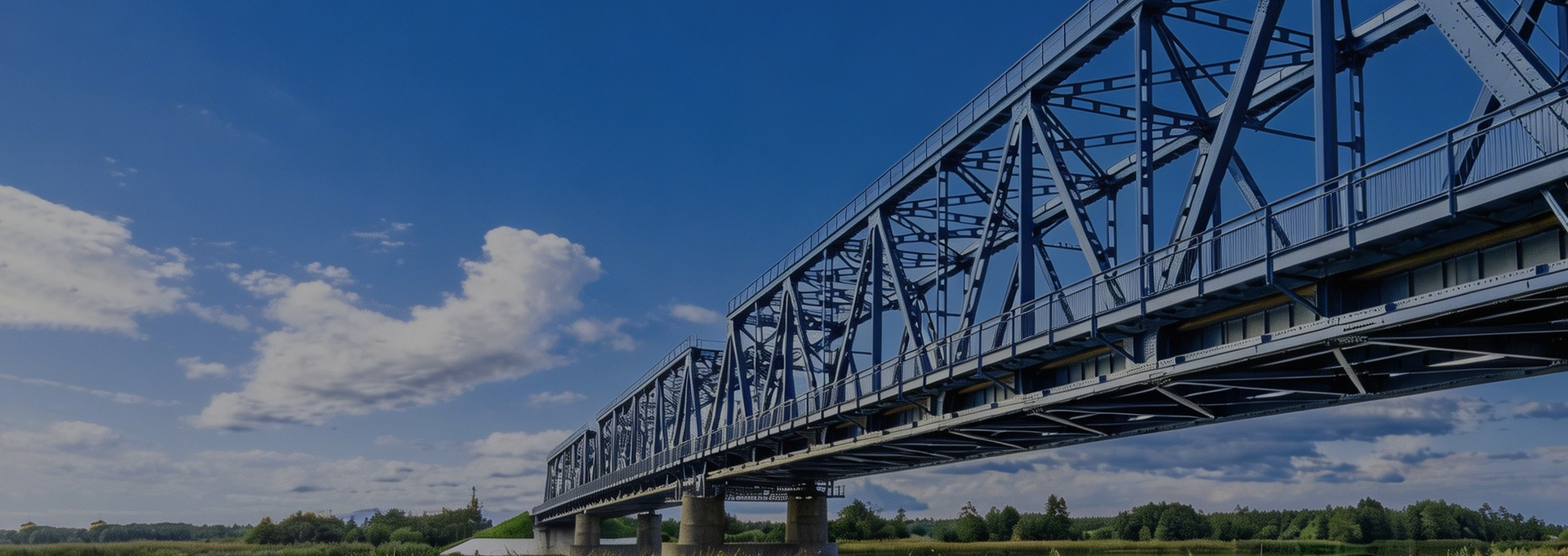
When engineers and contractors evaluate formwork for bridge construction, the choice between bridge steel formwork and aluminum formwork is rarely straightforward. Both systems are engineered to withstand the substantial hydrostatic pressures of wet concrete in bridge elements — pier caps, deck soffits, abutment walls, wingwalls, and crossheads — yet they achieve their performance envelopes through fundamentally different material properties, manufacturing approaches, and deployment strategies.
Bridge steel formwork has been the industry default for large-scale infrastructure for decades, prized for its rigidity under high concrete pressures, its dimensional stability across temperature extremes, and its capacity to be fabricated in bespoke shapes for non-standard bridge geometries. Aluminum formwork, by contrast, emerged as a systematic alternative prioritising weight reduction and corrosion immunity — qualities that deliver compounding benefits on long-duration projects with extensive repetitive forming requirements.
The decision between the two systems is ultimately a technical and economic optimisation specific to each project's geometry, programme, site conditions, and procurement model. This article examines each system in depth across all the dimensions that matter in bridge construction — and provides a structured framework for making the right call.
3×Heavier than aluminium (per m²)
500+Reuse cycles (steel)
65%Weight saving vs. steel
400+Reuse cycles (aluminium)
Bridge Steel Formwork: Engineering Properties & Performance
Bridge steel formwork systems are built from structural steel sections — typically S235 to S355 grade — with cold-rolled face sheets ranging from 3 mm to 6 mm thickness. The high elastic modulus of steel (approximately 200 GPa) produces a face sheet that deflects minimally under the lateral pressure of wet concrete, even in large-format panels spanning significant widths without intermediate support.
Structural capacity under bridge loading conditions
Bridge concrete elements impose some of the most demanding pressure regimes in construction. Pier caps and crossheads are often poured monolithically to significant heights, generating hydrostatic pressures that exceed 80 kN/m² at the base. Deck soffit formwork must support not only the pressure of wet concrete but also the superimposed dead load of reinforcement cages, construction traffic, and pump line surge forces. Steel formwork, with its high yield strength and stiffness, handles these combined loads with smaller deflections and lower risk of panel distortion than lighter alternatives.
Thermal stability
Bridge construction frequently involves pours during temperature extremes — cold-weather winter pours with curing blanket insulation, and summer pours requiring thermal management to prevent early strength gain. Steel formwork maintains dimensional stability across a wide temperature range. Its thermal expansion coefficient of approximately 12 × 10⁻⁶ /°C is well characterised and factored into joint design. Critically, steel does not creep or deform under sustained load at construction temperatures, a reliability essential when holding tolerances on bearings seats and deck edge geometry.
Weldability and bespoke fabrication
The weldability of structural steel is the defining advantage for non-standard bridge geometry. Curved soffit forms, skewed abutment walls, haunched pier caps, and voided deck sections all require formwork that cannot be assembled from standard flat panels alone. Steel can be cut, bent, and welded on-site or in a fabrication workshop to match any geometry precisely. This flexibility is indispensable on signature bridge projects where architectural ambition drives complex concrete shapes.
Steel Strengths in Bridge Use
Maximum rigidity under high hydrostatic pressures. Unlimited bespoke fabrication for curved and irregular geometries. Highest face sheet stiffness — minimal deflection on large-span soffits. Proven 500+ cycle lifespan on well-maintained systems. Superior resistance to impact damage on congested bridge sites.
Steel Limitations in Bridge Use
Panel weights of 45–80 kg/m² demand crane-assisted handling for all but the smallest panels. Corrosion risk in marine and coastal bridge environments requires ongoing maintenance. Higher transport tonnage increases logistics cost on remote or access-restricted sites. Heavier system slows repetitive forming cycles.
Aluminum Formwork: Engineering Properties & Performance
Aluminum formwork systems use high-strength aluminium alloys — most commonly 6061-T6 or 6082-T6 — extruded into panel frames and face sheets with a typical thickness of 4–6 mm for the face plate and 50–100 mm deep extrusion ribs for structural depth. The elastic modulus of aluminium is approximately 70 GPa — one-third that of steel — meaning that panel designs compensate through deeper section geometry and more closely spaced rib intervals to achieve equivalent face sheet stiffness.
Weight advantage and its downstream effects
The density of aluminium (2,700 kg/m³) is roughly one-third that of steel (7,850 kg/m³). In formwork panels, this translates to a weight reduction of approximately 60–65% per square metre for equivalent structural performance. For bridge construction, this has profound operational consequences. Panels weighing 15–25 kg/m² can be handled manually or with lightweight material hoists, reducing crane dependency significantly. On bridge projects where crane availability is a critical path constraint — particularly during deck construction over live traffic or water — the ability to handle formwork without the crane is a programme advantage that can outweigh the additional material cost of aluminium.
Corrosion immunity in bridge environments
Bridges are among the most corrosively demanding environments in construction. Marine salt air, tidal splash zones, chloride-laden de-icing runoff, and permanently humid confined spaces beneath deck soffits create conditions that aggressively attack unprotected steel. Aluminium's passive oxide layer provides inherent corrosion resistance without ongoing painting or re-coating. On coastal bridge projects, the lifecycle cost advantage of aluminium formwork over steel is significantly amplified when maintenance costs are included in the comparison.
Extrusion precision and surface finish
Aluminium extrusion tolerances are tighter than those achievable by steel rolling and fabrication. Panel faces can be extruded to ±0.3 mm thickness variation, and frame dimensions are controlled to sub-millimetre accuracy. This manufacturing precision produces panel assemblies with inherently tighter joint tolerances, reducing grout loss and the surface fin defects that require remediation on exposed bridge concrete faces.
Aluminium Strengths in Bridge Use
60–65% weight reduction enables manual handling and reduced crane use. Natural corrosion resistance eliminates re-coating lifecycle cost in marine environments. Tighter extrusion tolerances improve concrete surface finish quality. Faster reuse cycling on repetitive bridge elements. Lower transport tonnage on remote or weight-restricted access routes.
Aluminium Limitations in Bridge Use
Not weldable on-site with standard equipment — bespoke shapes require specialist fabrication. Lower impact resistance means panel damage is more likely in congested bridge construction environments. Higher material cost per tonne. Thermal expansion coefficient (23 × 10⁻⁶/°C) is nearly double that of steel — requires careful joint design in temperature-variable conditions.
Comprehensive Performance Comparison
The following matrix evaluates both systems across the full set of criteria relevant to bridge construction project teams — from structural engineering through to logistics, sustainability, and procurement.
| Evaluation Criterion |
Bridge Steel Formwork |
Aluminum Formwork |
Verdict |
| Load Capacity (high-pressure pours) |
Excellent — up to 120 kN/m² |
Good — up to 80 kN/m² |
Steel |
| Panel Weight / Handling |
45–80 kg/m² — crane required |
15–28 kg/m² — manual feasible |
Aluminium |
| Bespoke Shape Fabrication |
Full on-site welding capability |
Specialist workshop only |
Steel |
| Corrosion Resistance |
Requires coating and maintenance |
Inherent — no maintenance needed |
Aluminium |
| Concrete Surface Finish |
F2–F4 achievable |
F3–F4 consistently |
Aluminium (slight edge) |
| Stiffness / Deflection Control |
Higher modulus — less deflection |
Compensated by deeper sections |
Steel |
| Assembly Speed (repetitive) |
Moderate — crane dependency |
Fast — lighter panels, less crane |
Aluminium |
| Impact Resistance on Site |
High — tolerates site handling |
Lower — denting more likely |
Steel |
| Reuse Cycle Life |
300–500+ cycles |
250–400+ cycles |
Steel (slight edge) |
| Transport Weight / Logistics |
High tonnage |
60–65% weight saving |
Aluminium |
| Initial Capital Cost |
Lower per tonne |
Higher per tonne |
Steel |
| Lifecycle Cost (incl. maintenance) |
Higher (corrosion costs) |
Lower in marine environments |
Aluminium (marine) |
| Cold Weather Performance |
Stable — predictable expansion |
Higher expansion — joint management |
Steel |
| Sustainability / End-of-Life |
Recyclable |
High-value recyclate — better recovery |
Aluminium |
Bridge-Specific Application Analysis
Different bridge elements present different formwork challenges. The optimal material choice often varies by element type within a single bridge project — making a hybrid specification increasingly common on large infrastructure schemes.
Pier columns and shaft forming
Circular and rectangular pier columns are among the highest-pressure bridge forming applications, with pour heights frequently exceeding 6–8 metres for major viaduct structures. The hydrostatic pressure at the base of an 8-metre pour of normal-density concrete reaches approximately 90–95 kN/m² — a loading that pushes aluminium systems to or beyond their rated capacity while remaining within the comfortable operating range of engineered steel formwork. For tall, heavily loaded pier columns, steel formwork is the technically appropriate specification. Aluminium climbing systems can be used on piers of moderate height where pressure ratings are not exceeded.
Pier cap and crosshead forming
Pier caps concentrate significant loading — wet concrete weight, reinforcement, and formwork self-weight all combine on the soffit shuttering. The complex geometry of most pier caps — with haunched soffits, variable widths, and corbel details — demands bespoke formwork that can only be economically achieved in steel. Aluminium pier cap formwork is manufactured for standard rectangular cross-sections on repetitive viaduct structures but is rarely practical for signature or complex geometries.
Deck soffit forming
Bridge deck soffit formwork spans between the pier caps and must carry substantial distributed load from the wet concrete deck slab above. Here, the aluminium advantage becomes most compelling: the lower weight of aluminium panels reduces the structural demand on the falsework supporting them, and the speed of panel handling directly affects the critical path of the deck pour cycle. On long viaducts with 30 or more repetitive spans, the cumulative programme saving from faster soffit forming can be measured in weeks.
Abutment and wingwall forming
Bridge abutments involve high concrete volumes, significant pour heights, and often congested reinforcement arrangements that complicate formwork assembly and striking. Steel formwork — with its superior impact resistance and on-site modifiability — handles the unpredictable conditions of abutment construction more robustly than aluminium. Wing walls, particularly at skewed abutments, require complex angular adjustments that are more readily achieved in welded steel than in extruded aluminium assemblies.
"The most effective bridge formwork strategy is rarely a binary choice — experienced contractors increasingly specify steel for high-pressure, bespoke elements and aluminium for repetitive, lower-pressure applications on the same project, extracting the advantages of both systems where each excels."
Indicative relative cost index based on industry benchmarks. Actual figures vary by project scale, location, and procurement model. TCO = Total Cost of Ownership.
The capital cost premium of aluminium — typically 60–80% higher than equivalent steel formwork per square metre — is the most visible line in the procurement comparison. However, this initial gap narrows considerably when labour, crane, and transport costs are included. On a large bridge project with 5,000 m² of soffit forming over 40 repetitive spans, the reduction in crane lifts achievable with aluminium panels can represent cost savings that offset a significant portion of the material premium within the first two to three pour cycles.
Financial Modelling Note
Lifecycle cost models for bridge formwork should include end-of-life residual value — high-purity aluminium alloy retains approximately 40–60% of its original material value as recyclate, while used steel formwork commands lower scrap prices. For long-duration infrastructure programmes, this terminal value difference is financially material in the investment case for aluminium.
Environmental & Sustainability Considerations
Infrastructure clients are increasingly embedding sustainability metrics into formwork procurement decisions, driven by net-zero construction commitments and the growing prevalence of environmental product declaration (EPD) requirements in bridge contracts.
Embodied carbon comparison
Primary aluminium production is carbon-intensive — approximately 8–12 kg CO₂ equivalent per kg of metal, compared to approximately 1.8–2.2 kg CO₂e/kg for primary steel. On an as-manufactured basis, aluminium formwork carries a higher embodied carbon footprint than equivalent steel formwork. However, this calculation shifts substantially when secondary (recycled) aluminium is used: recycled aluminium production consumes only 5% of the energy of primary production, reducing the embodied carbon to approximately 0.5–0.7 kg CO₂e/kg — below that of steel.
Reuse cycle carbon amortisation
The environmental impact per concrete pour decreases with every reuse cycle. Divided across 400 pours, the per-cycle embodied carbon of either system becomes minimal. The dominant sustainability variable on site is not formwork material but transport logistics: the 60–65% weight saving of aluminium panels reduces fuel consumption in transport and on-site crane operations, contributing meaningfully to project carbon budgets on large bridge schemes.
- Specify secondary aluminium alloys where available: Many formwork manufacturers now offer systems incorporating high recycled-content billets, substantially reducing embodied carbon without compromising structural performance
- Maximise reuse cycle count: Proper maintenance and cleaning after each pour is the single highest-impact sustainability action for either system — every additional cycle amortises the manufacturing footprint further
- Plan end-of-life recycling: Both steel and aluminium are infinitely recyclable; ensure procurement contracts specify material recovery obligations at end of formwork life
- Account for crane fuel savings: Aluminium's weight advantage reduces powered equipment hours — include this in project carbon accounting to reflect the full lifecycle picture
Decision Framework: Which System for Which Project?
Rather than treating this as a single binary decision, project teams should use the following framework to select the appropriate system — or combination — for their specific bridge project conditions.
Choose Steel Formwork When…
- Concrete pressures exceed 80 kN/m² (tall piers, deep abutments)
- Bridge geometry is complex, non-standard, or highly variable
- On-site modification and welding capability is essential
- Site environment involves heavy plant, impact risk, and rough handling
- Capital budget is constrained and upfront cost is prioritised
- Non-marine, non-coastal environment minimises corrosion lifecycle costs
- Forming requirements are non-repetitive with limited reuse opportunity
- Temperature extremes require minimal dimensional variation in formwork
Choose Aluminium Formwork When…
- Long viaduct with 20+ repetitive spans maximises reuse value
- Marine, coastal, or tidal environment makes corrosion a lifecycle cost driver
- Crane availability is a critical path constraint on the bridge programme
- Access restrictions limit transport vehicle weight to the site
- Soffit forming pressure ratings are within aluminium's design envelope
- Architectural concrete surface quality F3–F4 is specified
- Sustainability credentials and low-maintenance operation are client priorities
- Programme speed on deck forming is the dominant commercial driver
A hybrid specification — steel for piers and abutments, aluminium for deck soffits — is increasingly the preferred engineering solution on major bridge contracts. This approach allocates each material to the applications where its specific properties deliver the greatest advantage, rather than imposing one system's limitations across the entire structure.
Procurement, Standards & Quality Assurance
Bridge formwork procurement must operate within a rigorous quality assurance framework. Both steel and aluminium systems used on public infrastructure bridge contracts are subject to formal temporary works design approval, material certification, and inspection protocols that differ in several important respects between the two materials.
Applicable standards
In European markets, bridge formwork design is governed by EN 12812 (Falsework — Performance Requirements and General Design) as the overarching framework, supported by EN 13670 for concrete construction execution. Steel formwork panels must be manufactured to material standards EN 10025 (structural steel) and, for face sheets, EN 10131 (cold-rolled steel). Aluminium systems are certified under EN 485 (aluminium and aluminium alloy sheet and strip) and EN 755 (extruded aluminium sections). In the US, ACI 347 provides the reference standard for concrete formwork design and inspection.
Third-party load testing
For bridge applications where concrete pressures approach or exceed standard panel ratings, procurement specifications should require third-party load test certificates demonstrating panel performance at the project-specific design pressure with appropriate safety factors. Both steel and aluminium manufacturers of quality systems supply test documentation; buyers should be cautious of products where such documentation is unavailable or cannot be independently verified.
Inspection and traceability
Bridge infrastructure contracts increasingly require material traceability — documentation linking formwork panels to material certificates, mill test reports, and manufacturing inspection records. Steel formwork panels manufactured to EN 10204 Type 3.1 include inspection certificates issued by the steel mill. Aluminium extrusion systems can be similarly certified. Maintain these records as part of the project's quality management documentation for the design working life of the bridge.
- Always commission a temporary works design: Both systems require formal engineering design by a competent temporary works engineer for bridge-class loading — system manufacturer load tables are the starting point, not the design
- Verify panel condition before each deployment: Implement a documented pre-use inspection checklist covering face sheet integrity, locking mechanism condition, and frame distortion — for both steel and aluminium systems
- Do not mix panel generations without engineering sign-off: Older panels that have exceeded their rated cycle count or sustained damage may have reduced load capacity — mixing with rated panels in a forming bank is a structural risk
- Establish cleaning and storage protocols before site mobilisation: Release agent selection, cleaning procedure, and storage orientation all directly affect concrete finish quality and system longevity on bridge projects
Final assessment: Bridge steel formwork and aluminum formwork are complementary technologies, not competing ones. Steel's superior load capacity, on-site weldability, and impact resilience make it the definitive choice for the high-pressure, geometrically complex elements that define bridge substructure. Aluminium's weight advantage, corrosion immunity, and surface finish precision make it the system of choice for repetitive bridge deck soffit forming, marine environments, and programme-critical applications where crane independence delivers measurable schedule value. The most technically and commercially successful bridge projects treat this as a material selection exercise — matching system properties to element requirements — rather than a binary tender decision applied uniformly across a structure.


 Français
 Español
 عربى
عربى