Cast-In-Place Bridge Bailey Support: Load-Bearing Capacity and Structural Stability
The load-bearing performance of Cast-In-Place Bridge Bailey Support depends on careful assessment of all forces acting on the structure during construction. At Zhenjiang Jinhao Road and Bridge Supporting Engineering Co., Ltd., we analyze dead loads, live loads, and dynamic loads comprehensively. Dead loads include the self-weight of the support system and any permanent construction attachments. Live loads cover temporary construction equipment, workers, and material movement. Dynamic loads involve vibrations from machinery, wind forces, and sudden shifts in weight distribution. To optimize load-bearing performance, we conduct finite element analysis and advanced structural simulations to predict deflections and stress concentrations under multiple scenarios. This allows us to adjust cross-bracing, steel thickness, and modular configurations of Cast-In-Place Bridge Bailey Support to maintain uniform load distribution. The design process also incorporates redundancy, ensuring that if one structural path experiences stress, alternative load paths maintain stability. Using high-grade steel and reinforced concrete, our supports resist bending, buckling, and shear forces effectively. Site-specific adjustments, such as anchoring to the foundation and alignment verification, are incorporated into our planning to prevent uneven stress distribution. Through this approach, Zhenjiang Jinhao Road and Bridge Supporting Engineering Co., Ltd. ensures that our Cast-In-Place Bridge Bailey Support systems sustain heavy construction loads while maintaining accurate formwork alignment and minimizing deformation.
| Parameter |
Specification |
Unit |
Description |
| Support Height |
2.0 – 12.0 |
m |
Adjustable height range for different bridge spans and pier elevations |
| Maximum Load Capacity |
150 – 600 |
kN |
Maximum vertical load the support can safely bear during casting |
| Material |
High-strength steel & reinforced concrete |
– |
Steel grade Q345 / Q420; concrete grade C50 or above |
| Cross-Section |
300 × 300 |
mm |
Standard modular steel frame cross-section for uniform load distribution |
| Modularity |
2 – 6 |
modules |
Number of connectable segments for flexible span adjustments |
Material selection directly affects the structural capacity of Cast-In-Place Bridge Bailey Support. At Zhenjiang Jinhao Road and Bridge Supporting Engineering Co., Ltd., we prioritize high-strength steel with excellent tensile properties and reinforced concrete with high compressive resistance to handle the combined load of wet concrete, construction machinery, and temporary structures. Steel components are tested for tensile strength, fatigue resistance, and chemical composition to ensure they perform consistently under prolonged loads. Reinforced concrete is evaluated for compressive strength, shrinkage behavior, and curing properties to reduce the risk of settlement or cracking. Connection elements, including bolts, plates, and welds, are designed to transmit forces efficiently between steel modules, enhancing the overall rigidity of the support system. Quality control measures extend to the production and assembly process, ensuring no component deviates from tolerance limits. Using a combination of high-quality steel and reinforced concrete, Zhenjiang Jinhao Road and Bridge Supporting Engineering Co., Ltd. achieves a composite support system capable of maintaining performance under static, dynamic, and environmental stresses. The selection of corrosion-resistant coatings and durable fasteners further enhances the longevity of Cast-In-Place Bridge Bailey Support, allowing multiple uses across different projects while preserving load-bearing integrity.
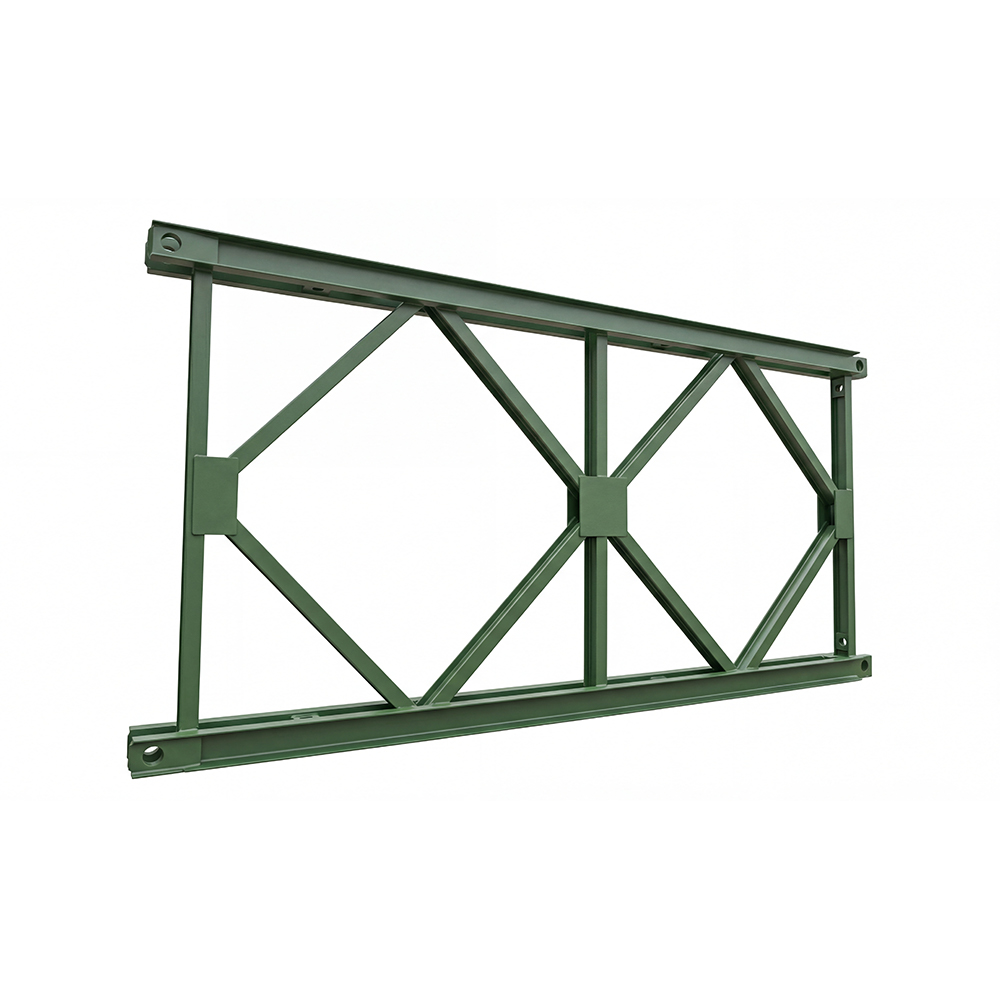
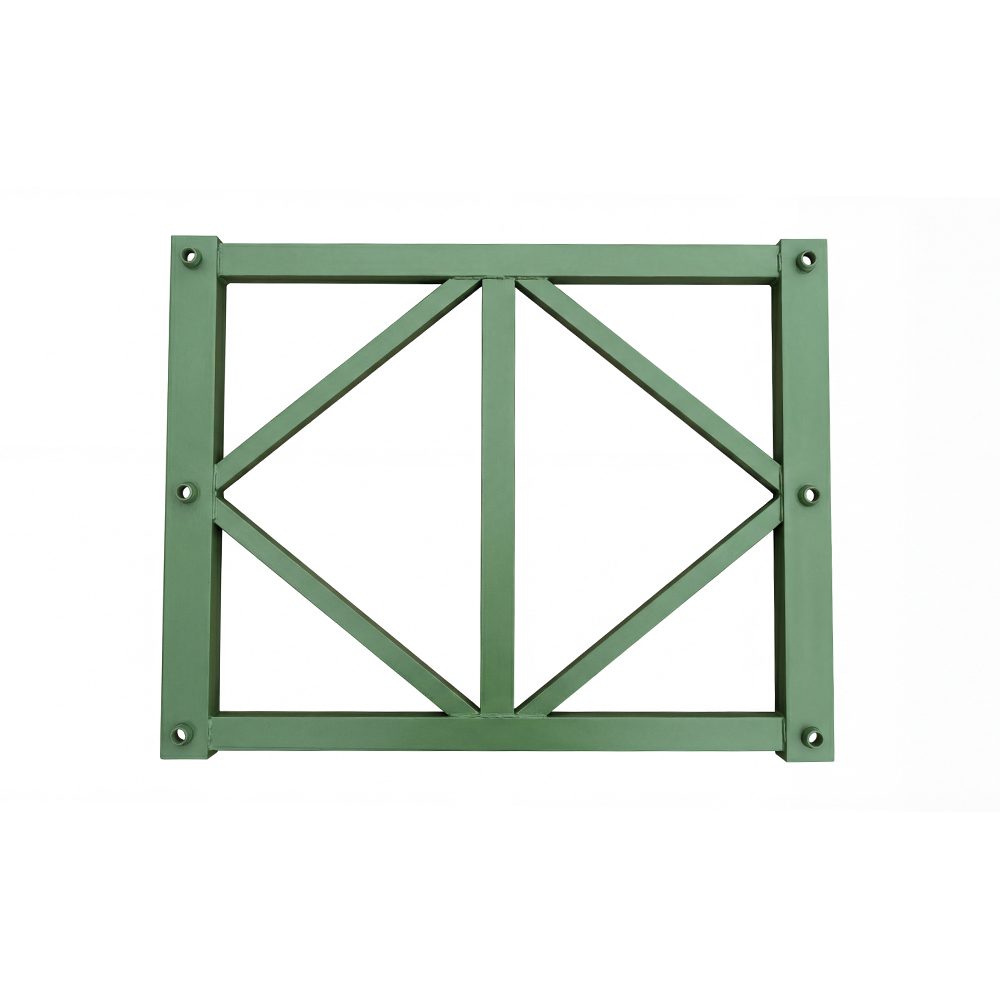
The structural design of Cast-In-Place Bridge Bailey Support affects both load-bearing performance and stability during concrete casting operations. At Zhenjiang Jinhao Road and Bridge Supporting Engineering Co., Ltd., we employ modular frameworks with triangular bracing to distribute forces evenly and reduce localized stress concentrations. Redundant load paths allow stress to bypass weaker points, preventing structural failure even under uneven loading conditions. Cross-bracing along longitudinal and lateral axes increases torsional rigidity, ensuring the support does not twist or deform under applied loads. Connection joints are carefully engineered with welded and bolted reinforcements to resist slippage or fatigue. The design process incorporates finite element modeling to simulate multiple load cases, including equipment movement, concrete pouring rates, and wind pressure, allowing us to optimize steel placement, concrete thickness, and spacing between modular elements. By integrating Cast-In-Place Bridge Bailey Support with formwork panels, Zhenjiang Jinhao Road and Bridge Supporting Engineering Co., Ltd. ensures uniform load transfer and maintains precise alignment. Design innovations, such as adjustable jacks and shims, allow the support to accommodate minor settlement while maintaining structural integrity. The combination of modularity, redundancy, and precision design enables our supports to perform reliably across bridges of varying spans, geometries, and construction conditions.
The assembly and erection of Cast-In-Place Bridge Bailey Support play a critical role in sustaining intended load-bearing performance. Zhenjiang Jinhao Road and Bridge Supporting Engineering Co., Ltd. follows precise erection procedures to ensure correct alignment, uniform load distribution, and structural stability during concrete placement. Components are assembled in a sequential order, starting from primary base modules and progressing to cross-bracing and top decking. Temporary bracing is installed during assembly to prevent deflection before final stabilization. Laser leveling and total station surveying confirm that the support remains within design tolerances. Each joint is checked for torque and welding integrity to eliminate potential weak points. Adjustable screw jacks and shims are deployed to fine-tune elevation and compensate for minor ground irregularities. During installation, continuous monitoring of stress distribution allows our engineers to adjust load paths as required. Using these erection techniques, Zhenjiang Jinhao Road and Bridge Supporting Engineering Co., Ltd. ensures that Cast-In-Place Bridge Bailey Support systems function as designed, sustaining heavy loads while maintaining alignment and rigidity throughout the construction process.
Validating the load-bearing capacity of Cast-In-Place Bridge Bailey Support is an integral part of the construction process at Zhenjiang Jinhao Road and Bridge Supporting Engineering Co., Ltd. Static load testing involves applying weights equivalent to expected live loads to verify deflection limits, stress distribution, and stability. Strain gauges monitor stress at critical points, detecting any abnormal load concentrations. Performance under dynamic loads, such as equipment movement and vibration, is also assessed to confirm resilience. Monitoring deformation patterns allows our engineers to identify adjustments in cross-bracing or foundation support before casting begins. Simulation results are cross-referenced with physical load tests to ensure the design performs under real-world conditions. Validating Cast-In-Place Bridge Bailey Support not only confirms the theoretical design assumptions but also provides actionable data for future deployments, allowing Zhenjiang Jinhao Road and Bridge Supporting Engineering Co., Ltd. to enhance load-bearing strategies for similar projects and maintain consistent structural reliability.
Settlement and deformation pose risks to the stability of Cast-In-Place Bridge Bailey Support, especially in uneven or variable soil conditions. At Zhenjiang Jinhao Road and Bridge Supporting Engineering Co., Ltd., foundation assessment begins with geotechnical investigations to determine soil bearing capacity, compaction levels, and potential settlement zones. Adjustable jacks, shims, and temporary braces provide corrective flexibility during casting, ensuring the support remains level and aligned under changing loads. Continuous monitoring with strain gauges and deflection sensors allows our engineers to detect early signs of bending or tilting, enabling immediate corrective action. The design incorporates redundancy and load redistribution pathways to accommodate minor settlements without compromising structural integrity. Using these strategies, Zhenjiang Jinhao Road and Bridge Supporting Engineering Co., Ltd. maintains uniform stress distribution, preserves alignment of concrete forms, and ensures the Cast-In-Place Bridge Bailey Support performs reliably throughout the construction phase.
Rigidity is essential to maintain Cast-In-Place Bridge Bailey Support stability during concrete placement. Zhenjiang Jinhao Road and Bridge Supporting Engineering Co., Ltd. reinforces longitudinal and lateral cross-members to reduce flexing under heavy loads. Welded and bolted connections minimize movement at joints, distributing forces evenly across the support system. Integration with formwork panels allows concrete loads to transfer efficiently to steel members, preventing localized bending. Triangular and modular configurations enhance torsional rigidity, while redundancy in load paths ensures no single component is overstressed. Continuous monitoring and adjustments during casting optimize load distribution. These rigidity enhancement techniques collectively enable Cast-In-Place Bridge Bailey Support systems to resist deformation, maintain alignment, and sustain heavy loads consistently.


 Français
 Español
 عربى
عربى