Français
 Español
 عربى
عربى

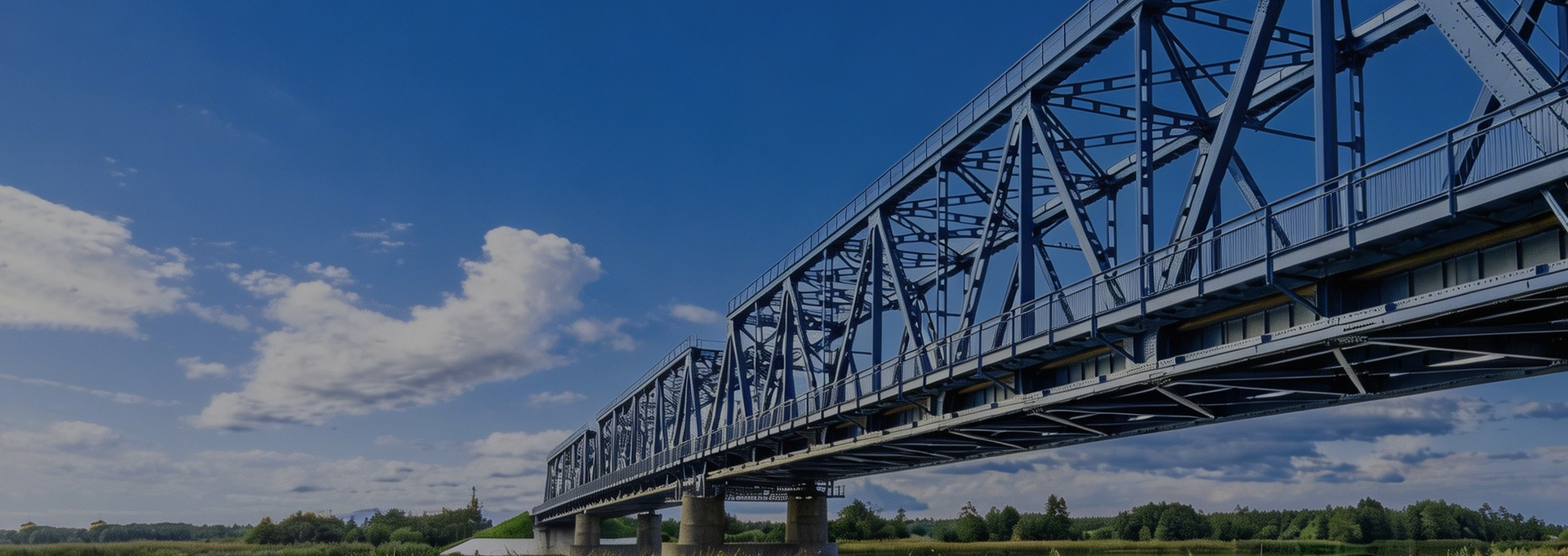
When a flood wipes out a crossing, when a conflict zone severes a critical supply route, or when a construction programme demands temporary load-bearing access across a span, the difference between an adequate bridge solution and an exceptional one is measured in hours. The Type 321 Bailey Truss system has defined that standard for decades -- and in a landscape where both speed of deployment and long-term sustainability are non-negotiable infrastructure criteria, understanding its full operational and logistical capability is essential.
The Engineering Legacy of the Bailey Truss
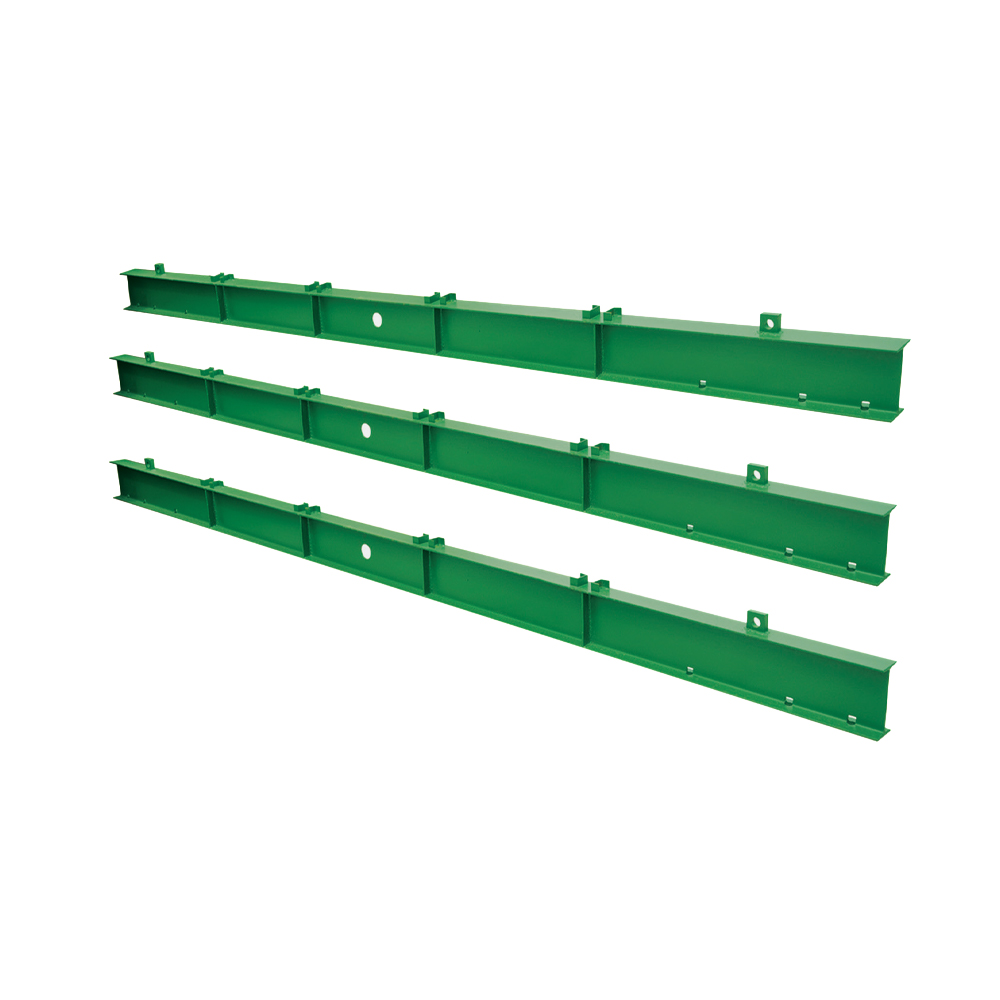
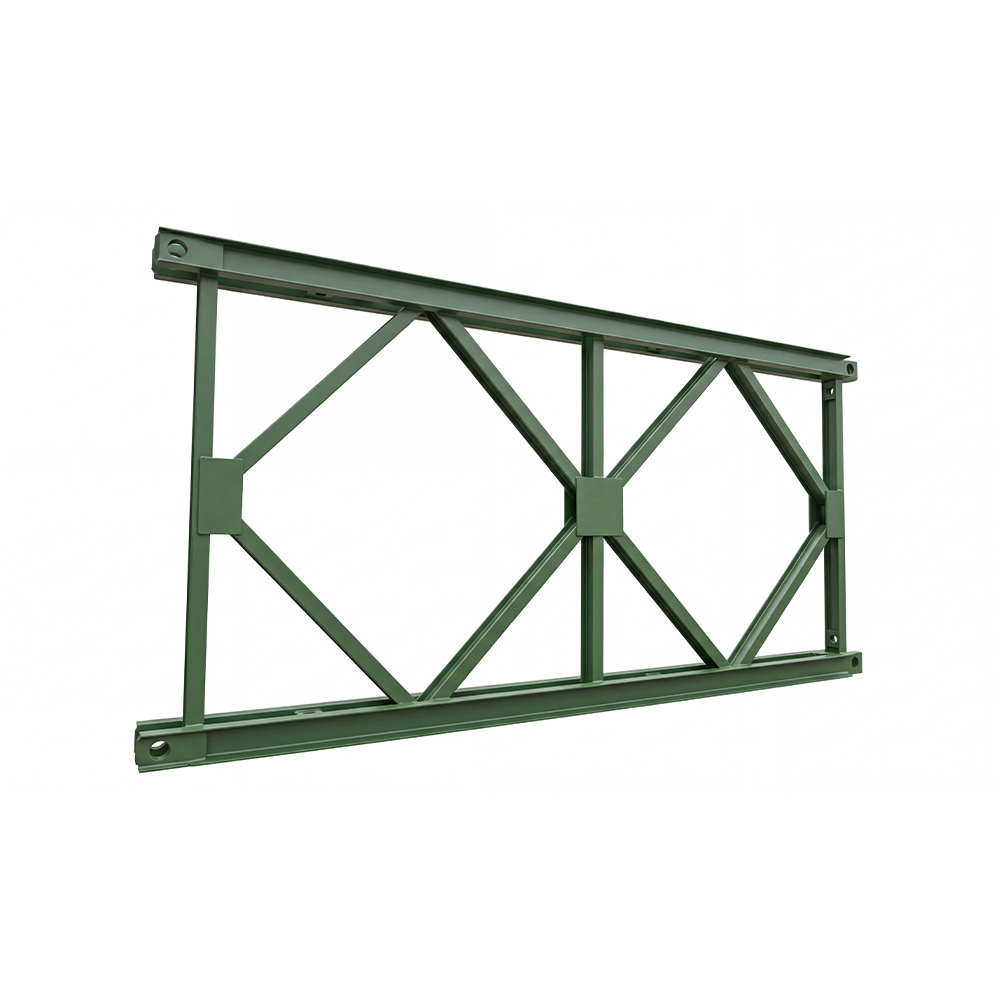
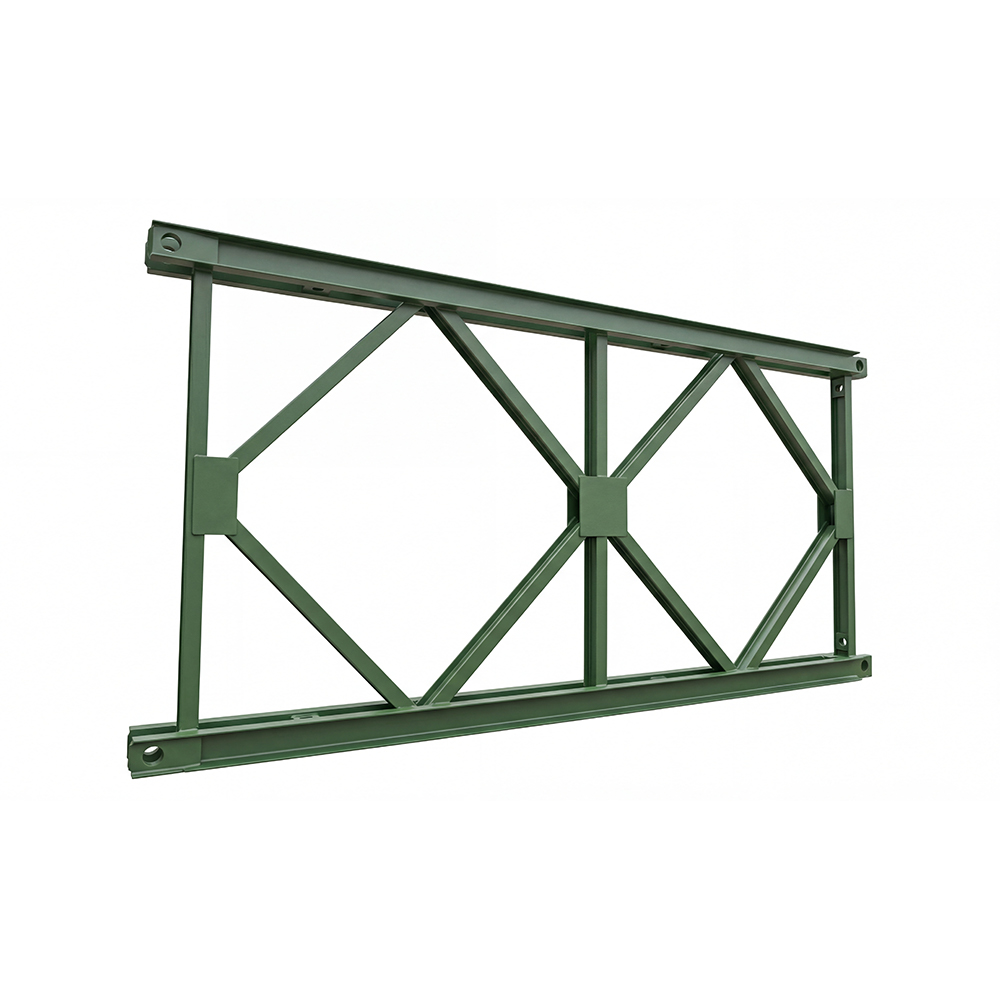
The Bailey panel bridge was conceived during the Second World War by Sir Donald Bailey as a modular, manually portable bridging system that could be assembled by unskilled labour without heavy lifting equipment. Its genius lay not in any single structural innovation but in the principle of standardised interchangeable panels -- each small enough for six men to carry, each identical in dimension and connection geometry, each combinable in virtually unlimited configurations to achieve the required span and load capacity.
The Type 321 designation defines a specific configuration within the broader Bailey system: a triple-truss, double-story arrangement of standard Bailey panels that delivers significantly enhanced load capacity and spanning capability compared to single or double configurations. The numeric designation reflects the panel arrangement -- three trusses in parallel, two panels in height -- and the structural implications of that geometry are substantial.
What has kept the Bailey Truss relevant into the 21st century is not nostalgia but engineering practicality. The fundamental panel geometry has remained largely unchanged since the 1940s, which means a global inventory of compatible components exists, interoperability between systems from different eras and different manufacturers is possible, and field repair using locally sourced spares is a realistic operational scenario even in austere logistic environments.
Type 321 Configuration: Technical Parameters
The structural performance of the Type 321 Bailey Truss is a direct product of its configuration. Tripling the truss width distributes longitudinal bending loads across three parallel chord systems, while the double-story height dramatically increases the second moment of area of the composite section, enabling longer spans and higher live load ratings without proportional increases in component mass.
| Parameter | Type 321 Specification | Significance |
|---|---|---|
| Truss Configuration | Triple, Double-Story | Maximum load capacity in the Bailey panel system |
| Standard Panel Length | 3.048 m (10 ft) | Modular increment for span adjustment |
| Typical Span Range | 30 m to 60 m+ | Covers most emergency river and gap crossing scenarios |
| Deck Width (roadway) | 4.2 m nominal | Accommodates standard military and civilian vehicles |
| Military Load Class | MLC 70 to MLC 100+ | Supports main battle tank and heavy logistics vehicles |
| Assembly Method | Cantilevered launching | No in-water falsework required |
| Crew Requirement | 30 to 60 personnel | Varies by span and terrain; no specialist trades required |
| Assembly Time (40 m span) | 4 to 8 hours | Determined by crew size, site conditions, and preparation |
| Primary Material | High-tensile steel alloy | Corrosion-resistant grades available for permanent installations |
| Design Service Life | 25 to 50+ years | Dependent on maintenance regime and loading history |
Military Load Class ratings follow NATO STANAG 2021 definitions. An MLC 70 rating indicates the bridge can carry a tracked vehicle or wheeled vehicle with a gross weight index of 70, correlating to approximately 62 tonnes for tracked vehicles. Type 321 configurations routinely achieve MLC 80 to MLC 100 ratings depending on span, panel age, and connection condition.
High-Efficiency Deployment: The Operational Framework
Rapid assembly is the defining operational characteristic of the Bailey Truss system, but in the context of the Type 321, "rapid" must be understood relative to the complexity of what is being achieved. A 40-metre double-story triple-truss bridge, capable of carrying main battle tanks, assembled without cranes or falsework in under eight hours by a field engineering team -- this is an extraordinary capability that no comparable permanent structure technology can approach.
Achieving that performance consistently requires a systematic deployment framework that addresses site assessment, component logistics, assembly sequencing, and quality verification as a unified operational process rather than as sequential steps.
The Six-Phase Deployment Sequence
-
01Site Assessment and Abutment Preparation
Geotechnical assessment of bearing capacity at both abutment locations, gap measurement, approach gradient survey, and soil preparation or temporary sill beam placement. Inadequate abutment preparation is the most common source of Bailey bridge settlement and misalignment during service.
-
02Component Inventory and Staging
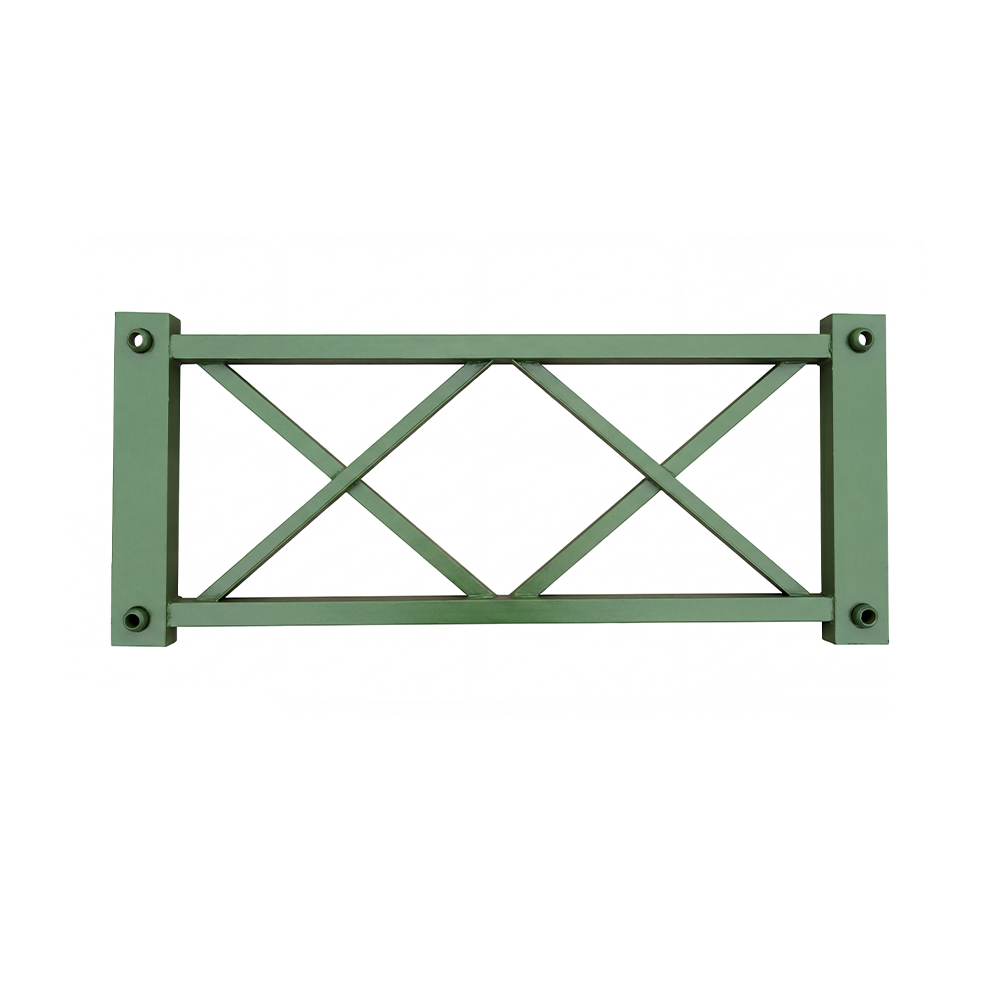
Full inventory verification of panels, transoms, stringers, raker frames, sway braces, and deck units against the build table. Components are staged in assembly sequence, not in delivery order. This phase determines whether the planned span is achievable with available stock before assembly commitment.
-
03Roller Bay and Launching Nose Construction
Roller bays are positioned at the near abutment to allow the bridge to slide forward during launching. The launching nose -- a lightweight steel extension attached to the leading end of the bridge -- prevents the tip of the cantilever from deflecting excessively during the launch phase before it reaches the far abutment.
-
04Incremental Panel Build and Launching
Panels are connected in the build bay behind the near abutment and the assembly is pushed forward incrementally. For double-story configurations, upper panels and raker frames are added progressively. This phase demands coordinated crew management and continuous alignment monitoring to prevent lateral deviation during launch.
-
05Far Abutment Seating and Nose Removal
Once the launching nose reaches and rests on the far abutment bearing point, the bridge is drawn back to seat correctly on both abutment sill beams. The launching nose is removed, end rakers are installed, and the structure is checked for alignment and bearing contact across its full width.
-
06Decking, Approach Ramps, and Load Testing
Deck chess (timber or steel grid decking) is laid across transoms from both ends inward. Approach ramps are constructed to eliminate abrupt transitions. A controlled proof load -- typically a single vehicle at the anticipated maximum load class -- crosses at low speed before the bridge is opened to traffic.
Factors Governing Deployment Efficiency
The theoretical assembly time for a Type 321 Bailey Truss across a given span is only achievable when the conditions governing real-world deployment are proactively managed. Understanding these factors is essential for logistics planners, military engineers, and civilian infrastructure emergency response teams.
Worn or corroded pin holes, bent panel chords, and incompatible panel generations from different manufacturers are the primary causes of assembly delay in operational conditions. Pre-deployment inspection and replacement of sub-standard components is essential.
A trained Royal Engineer platoon or equivalent force will consistently outperform an untrained civilian crew of the same size by a factor of two or more. Periodic rehearsal exercises against timed standards are the only reliable way to maintain deployment speed capability.
Components must arrive at the assembly point in the correct sequence. A bottleneck at any vehicle unloading point propagates directly into assembly delay. Multi-vehicle convoys require choreographed offloading plans, not ad hoc stacking.
Soft approaches, steep embankments, or night-time operations each add measurable time to deployment. Night operations with adequate task lighting are achievable and frequently necessary in emergency scenarios, but must be planned for explicitly.
Sustainable Infrastructure Solutions: Redefining the Lifecycle
The sustainability credentials of the Bailey Truss system are often overlooked in favour of its more dramatic rapid-deployment attributes, yet they represent a compelling case for the system's continued relevance in contemporary infrastructure planning -- including civilian applications where sustainability frameworks and whole-life cost accounting are now mandatory.
Sustainability in steel bridge infrastructure encompasses three dimensions: material circularity, operational longevity, and infrastructure adaptability. The Type 321 Bailey Truss performs credibly on all three.
Material Circularity and Reuse
The modular panel system is inherently circular by design. A Bailey bridge erected for an emergency crossing can be dismantled, components inspected, sub-standard parts replaced, and the system redeployed to a new location with no primary material waste. In contrast to a cast-in-place concrete bridge, which is effectively a single-use infrastructure asset, a well-maintained Bailey panel inventory supports multiple deployment cycles over a service life that can extend to 50 years or beyond.
Steel as a construction material carries a high embedded carbon burden at primary production, but this is amortised effectively across repeated reuse cycles. When components are eventually retired from structural service, steel recycling rates approach 90 percent in developed markets, closing the material loop in a way that no other construction material currently achieves at comparable scale.
Longevity Through Maintenance
A Type 321 Bailey bridge operated under an appropriate inspection and maintenance regime will sustain its structural capacity for decades. The critical maintenance interventions are well understood: corrosion protection of panel chord members and pin connections, replacement of worn deck chess, periodic re-torquing of sway brace connections, and abutment settlement monitoring. None of these interventions requires specialist structural engineering skills or heavy equipment -- the same accessibility that enables rapid assembly also enables effective in-situ maintenance.
Modern hot-dip galvanised and epoxy-coated Bailey panel variants extend the corrosion protection service life substantially compared to the painted steel panels of legacy inventory. For installations in aggressive environments -- coastal, tropical, or high-humidity -- specification of galvanised component sets from the outset reduces lifetime maintenance cost and extends the interval between major refurbishment interventions.
A lifecycle analysis of a 40-metre Type 321 Bailey Truss installed as a semi-permanent rural access bridge, compared to an equivalent cast-in-situ reinforced concrete bridge of the same span, consistently shows a lower whole-life carbon footprint when three or more reuse cycles are accounted for. The crossover point occurs between the first and second redeployment of the steel component set.
Infrastructure Adaptability
Perhaps the most underappreciated sustainability attribute of the Bailey Truss is its adaptability. A bridge configuration built to span 30 metres can be extended to 40 metres by the addition of further panels. A single-story configuration can be upgraded to double-story by the addition of upper chord panels and raker frames. A single-truss configuration can be widened to double or triple by adding parallel truss lines on new transoms. This modular adaptability means the physical infrastructure asset can evolve with changing load requirements or span needs without abandonment of the original investment.
In development contexts where infrastructure needs evolve incrementally -- a rural access route that progressively supports heavier agricultural machinery, a post-conflict reconstruction route with growing freight volumes -- the ability to upgrade the bridge in service without replacement is a significant economic and sustainability advantage over fixed concrete alternatives.
Civil and Military Application Landscape
The operational range of the Type 321 Bailey Truss spans a broader application landscape than its military origins might suggest. Understanding the full deployment context is important for procurement decisions, specification development, and operational planning.
- Military Tactical river crossing during offensive and defensive operations, forward logistics route establishment, gap bridging over anti-tank ditches and damaged infrastructure in conflict zones. Type 321 provides the highest load class in the Bailey system family, accommodating main battle tanks and armoured recovery vehicles.
- Disaster Relief Post-flood, post-earthquake, and post-typhoon bridge replacement for isolated communities. The ability to transport components by helicopter in austere environments where road access has been lost is a critical attribute. Individual Bailey panels weigh approximately 270 kg, within the slung load capacity of medium utility helicopters.
- Construction Access Temporary heavy plant access bridges for dam construction, quarrying, pipeline laying, and large civil engineering works where a temporary crossing carrying excavators and articulated dump trucks is required without the commitment and cost of permanent bridge construction.
- Rural Development Semi-permanent or permanent replacement for low-traffic rural crossings, particularly in developing economies where the cost and technical complexity of conventional bridge construction create access gaps. The Bailey system has been widely used by NGOs and development banks for this purpose across Sub-Saharan Africa and South and Southeast Asia.
- Event Infrastructure Temporary pedestrian and light vehicle crossings for large outdoor events, festivals, and sporting competitions. Double or triple truss configurations with dedicated pedestrian decking provide high-capacity crowd crossing with full load certification and rapid post-event demounting.
- Infrastructure Maintenance Bypass bridging while permanent bridges undergo inspection, rehabilitation, or seismic retrofitting. The Type 321 system can maintain full traffic capacity on a route while the primary crossing is taken out of service, eliminating the economic disruption of extended road closure.
Procurement, Inventory Management, and Component Standardisation
For organisations maintaining a Bailey bridge inventory -- whether military engineer units, national disaster management agencies, or civil infrastructure authorities -- the strategic management of the component pool is as important as the technical deployment capability. A poorly managed inventory degrades deployment speed and load capacity just as effectively as inadequate crew training.
Standardisation discipline is the foundation of inventory management. Mixed inventories containing panels from different manufacturers with subtly different panel hole spacings, chord thicknesses, or pin diameters create compatibility problems at the worst possible moment. Procurement policies should specify dimensional compatibility standards explicitly, and all incoming stock should be dimensionally verified against master gauges before acceptance.
Condition grading of panels on a three-tier system -- serviceable, limited-use, unserviceable -- allows inventory managers to track the proportion of the component pool that is available for full-load deployment versus reduced-load applications versus scrap and replacement. Maintaining a minimum serviceable-pool percentage against required deployment capability is a planning metric that is frequently neglected until a deployment is underway.
Storage environment has a direct and measurable impact on component corrosion rates and therefore on useful service life. Covered, ventilated storage on pallets that keep components off soil contact extends the interval between refurbishment cycles substantially. Open storage on unprepared ground is the single largest cause of premature panel degradation in operational Bailey inventories worldwide.
Full dimensional and corrosion inspection of all inventory panels on a three-year cycle, with visual inspection and pin-hole condition check after every deployment and recovery cycle.
Chord member corrosion at pin connections, cracked welds at panel corner gussets, and deformed pin holes that prevent correct locking pin seating are the three conditions requiring immediate removal from serviceable inventory.
Component refurbishment -- blasting, recoating, pin-hole reaming, and chord straightening -- consistently costs 15 to 30 percent of equivalent new component cost, making a structured refurbishment programme economically essential for large inventories.
RFID or QR-tagged panels with digital deployment history records allow condition-based maintenance scheduling and enable rapid build table verification during time-critical deployments. Adoption rates remain low but are increasing among professional military engineer units.
Evolving the Standard: Next-Generation Bailey Systems
The core Bailey panel geometry has remained stable for decades, but the ecosystem around it continues to evolve in response to contemporary infrastructure demands. High-strength aluminium alloy panels, available from several manufacturers, reduce component weight by approximately 40 percent compared to steel equivalents while maintaining compatible dimensional geometry. For helicopter-portable applications or operations where manhandling distance is significant, the weight reduction translates directly into deployment speed and reduces personnel injury risk.
Composite deck systems -- using fibre-reinforced polymer grid sections in place of traditional timber chess -- offer significant maintenance advantages in wet and tropical environments, eliminating the rot and delamination cycles that make timber decking the highest-frequency consumable in a Bailey bridge lifecycle. FRP decks are lighter, have a service life three to five times that of treated timber, and can be cut to size on site with hand tools, maintaining the system's in-field adaptability.
Digital monitoring integration is emerging as a capability enhancement for semi-permanent and permanent Bailey installations. Strain gauge arrays on chord members, combined with wireless data transmission and cloud-based monitoring platforms, enable continuous structural health monitoring without the cost of periodic specialist inspection visits. For bridges in remote locations or post-disaster environments where access for inspection is itself hazardous, this capability represents a meaningful advance in the sustainable operational management of the asset.
Conclusion
The Type 321 Bailey Truss endures as the global benchmark for emergency rapid-assembly steel bridge deployment not because it has failed to be superseded, but because the combination of attributes it embodies -- modular panel simplicity, high load capacity, no-crane assembly, speed of erection, and lifetime reusability -- has proved impossible to replicate in a single alternative system. High-efficiency deployment and sustainable infrastructure solutions are not competing objectives for the Bailey system; they are complementary properties arising from the same fundamental design philosophy.
For military engineer units maintaining tactical crossing capability, for disaster management agencies preparing for infrastructure disruption, and for infrastructure planners seeking whole-life-value solutions in resource-constrained environments, investment in Type 321 Bailey Truss inventory, training, and maintenance capability remains one of the highest-return infrastructure decisions available. The bridge has crossed rivers and ravines on every continent for eight decades. The engineering logic that made it indispensable then has not diminished -- it has only been confirmed by experience.