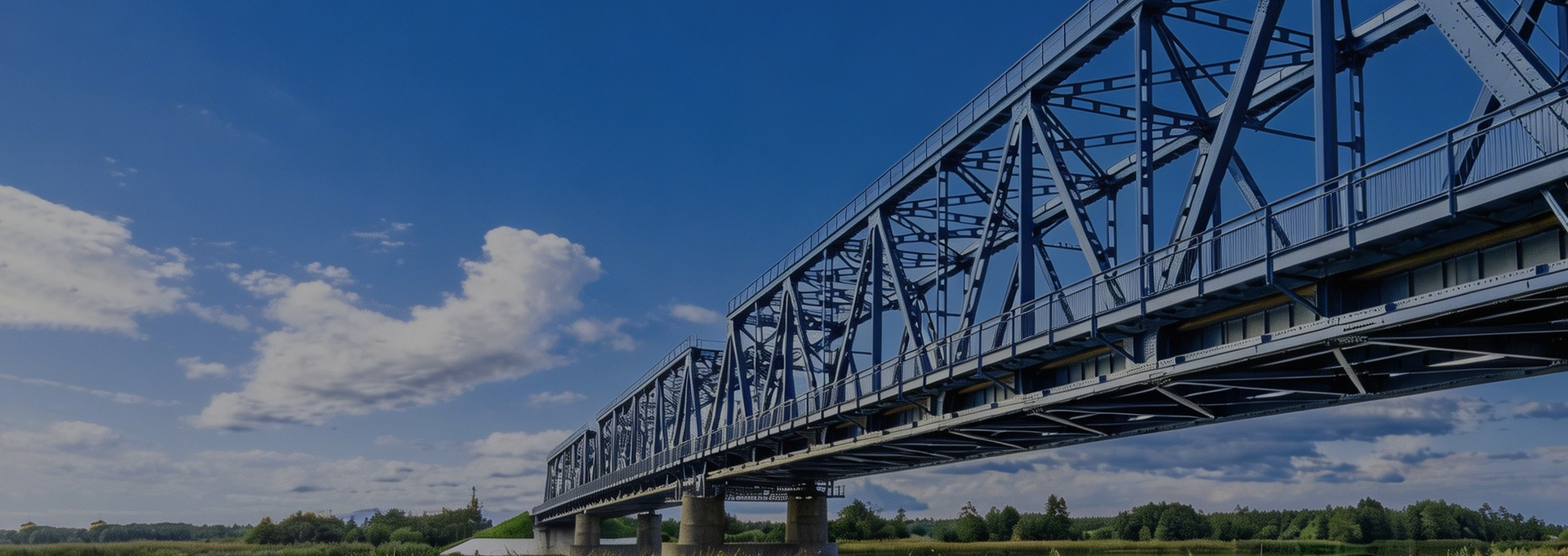
The cantilever method of bridge construction is a technique in which the bridge structure is built progressively outward from fixed support piers, extending in balanced segments on either side without the need for temporary falsework or scaffolding below. Each extending arm — known as a cantilever — projects horizontally beyond its support, held in place by the structural rigidity of the material and the counterbalancing weight or anchorage on the opposite side.
The principle draws directly from classical physics: a cantilever is any rigid structural element anchored at only one end, capable of bearing loads along its unsupported length. Think of a diving board, or a shelf bracket. In bridge engineering, this concept is scaled up dramatically, with concrete or steel arms reaching hundreds of meters into open air, counter-balanced and stressed to achieve both structural equilibrium and extraordinary span.
The cantilever principle was formally applied to large-scale bridge construction in the mid-19th century. The Firth of Forth Bridge in Scotland (opened 1890) remains the world's most iconic cantilever structure, and its tubular steel design became a reference point for engineers globally.
Structural Principles Behind Cantilever Construction
Understanding the cantilever method requires a grasp of how forces behave in extended structures. When a beam projects horizontally from a fixed point, its own weight and any applied loads create a bending moment — a rotational force that tends to curve the beam downward at its tip and upward at its root. In a cantilever:
- Tension develops along the top surface of the projecting arm (it is being "pulled apart" from above).
- Compression builds along the bottom surface (it is being "pushed together" from below).
- Shear forces act vertically at the support point, where the entire load transfers into the pier.
In a balanced cantilever, two arms extend symmetrically from a central pier. This balance is critical during construction: as each new segment is added to one side, a matching segment must be added to the other, keeping the pier loaded equally and preventing dangerous tilting moments. The precision of this balancing act is one of the most demanding aspects of cantilever construction management.
There are two primary variants of the cantilever method, each suited to different materials, span requirements, and site conditions:
Balanced Cantilever (Cast-in-Place)
Concrete is poured in situ using traveling formwork (a "form traveler") that advances after each segment cures. Typically used for long-span concrete box girder bridges over deep valleys or water where scaffolding is impractical.
Precast Segmental Cantilever
Prefabricated concrete segments are transported to the site and lifted into position by a launching gantry or crane. Offers faster construction timelines, superior quality control, and is well-suited to urban environments.
Steel Cantilever (Truss or Box Girder)
Fabricated steel sections are erected by cranes, often over navigable waterways. The Firth of Forth Bridge uses this approach with massive steel tubes forming the cantilever arms and suspended span between them.
Cable-Stayed Cantilever Hybrid
Modern hybrid designs incorporate stay cables during construction to temporarily reduce bending moments in the cantilever arms, allowing longer reaches per segment before closure at midspan.
The Step-by-Step Construction Process
While specific procedures vary by material and bridge type, the general sequence of cantilever construction follows a well-established pattern:
Phase 1 — Foundation and Pier Construction
Deep foundations (piles or caissons) are installed and the main piers are constructed to their full height. The pier cap — a wide reinforced platform at the top — is formed to receive the balanced arms. This phase is often the most time-consuming and technically demanding, particularly in water crossings.
Phase 2 — Construction of the Pier Table (Segment 0)
The "pier table" is the first segment, built symmetrically on top of the pier using conventional formwork. It serves as the anchor and launching point for all subsequent cantilever segments. Temporary ties or prestressing tendons fix this segment firmly to the pier to resist early construction moments.
Phase 3 — Balanced Cantilever Extension
Working outward from each pier table simultaneously on both sides, new segments are added alternately left and right. Each segment is typically 3–5 metres in length for cast-in-place construction, or a full precast unit for segmental bridges. After each addition, longitudinal post-tensioning tendons are stressed to integrate the new segment into the structure.
Phase 4 — Closure at Midspan
When cantilever arms from adjacent piers approach each other, a final "closure pour" — or closure segment — joins them at midspan. This is a critical operation requiring careful thermal management and timing, as the two arms must align within millimeter tolerances. Once closed, the bridge transitions from a cantilever system to a continuous beam, redistributing forces significantly.
Phase 5 — Final Stressing and Deck Completion
With all spans closed, final continuity tendons are stressed along the full length of the bridge. Roadway surfacing, barriers, drainage systems, and other finishes are then installed. Temporary construction supports and formwork travelers are dismantled and removed.
Post-Tensioning: The Engineering Heart of Modern Cantilever Bridges
The cantilever method is nearly inseparable from prestressed concrete technology, specifically post-tensioning. Without it, concrete — which is weak in tension — could not function effectively as a cantilever material. The process works as follows:
High-strength steel tendons (bundles of steel wires or strands) are threaded through ducts cast into each concrete segment. Once a segment has hardened, hydraulic jacks pull these tendons to an extremely high tension — often exceeding 1,300 MPa — before anchoring them at the segment end. This pre-compresses the concrete, converting what would be tensile stress (which concrete resists poorly) into compressive stress (which concrete resists excellently).
The geometry of the tendon profile is engineered to precisely counteract the bending moments at every section of the cantilever. At the pier, where bending moments are highest during construction, tendons run along the top of the cross-section. As the span closes and moments shift, additional tendons are added along the bottom. This adaptive prestressing strategy allows engineers to control stress distributions with extraordinary precision throughout all stages of construction and service.
Key fact: A typical long-span cantilever bridge may contain several thousand tonnes of prestressing steel. The force in a single tendon bundle can exceed 10,000 kilonewtons — enough to lift a loaded freight train.
Advantages and Limitations
Advantages
- No falsework needed below — ideal for deep gorges, navigable rivers, and high-traffic areas
- Capable of spanning 100–300+ metres economically with concrete
- Excellent long-term durability when properly post-tensioned and maintained
- Precast segmental variant offers factory-level quality control
- Can be executed with relatively modest on-site equipment compared to arch or suspension construction
- Progressive nature allows phased traffic management in urban environments
Limitations
- Requires extremely precise balancing during construction — errors can cause catastrophic failure
- Higher sensitivity to creep and shrinkage in concrete, which must be accurately predicted
- The closure joint is a structural discontinuity that demands careful design
- Long-term tendon corrosion is a known maintenance challenge
- Less efficient than cable-stayed designs for very long spans (above ~300 m)
- Complex temporary post-tensioning schemes add cost and programme time
Notable Examples of Cantilever Bridge Construction
- Firth of Forth Bridge, Scotland (1890) The grandfather of all cantilever bridges. Three massive double cantilever towers of tubular steel span 521 metres each. A UNESCO World Heritage Site, it remains in railway service and is one of the most visited bridges in the world.
- Quebec Bridge, Canada (1917) The longest cantilever span in the world at 549 metres between anchor piers. Its history is marked by two catastrophic collapses during construction (1907 and 1916), making it one of the most instructive case studies in structural engineering failure analysis.
- Koror–Babeldaob Bridge, Palau (1977) A celebrated concrete balanced cantilever bridge notable for a long-term deflection mystery: the mid-span sagged far more than predicted over decades, eventually collapsing in 1996. It remains a key case study in concrete creep modelling.
- Millau Viaduct, France (2004) While primarily a cable-stayed structure, its construction used a cantilever launching technique to push steel deck sections horizontally from both valley walls toward the central piers — a modern evolution of the cantilever principle on a viaduct carrying the A75 motorway.
- Viaducto Bicentenario, Mexico (2012) A long prestressed concrete segmental viaduct built using the precast balanced cantilever method in a densely urban context, demonstrating how the technique adapts effectively to modern infrastructure demands.
Cantilever Construction vs. Other Bridge Methods
Choosing the cantilever method over alternatives such as incremental launching, the arch method, or cable-stayed construction depends on a combination of span length, site accessibility, material availability, and budget. As a general guide:
For spans of 50–120 metres, incremental launching or precast beam erection is often more economical. For spans of 120–300 metres, the balanced cantilever is typically the most cost-effective concrete solution, competing with cable-stayed designs at the upper end. For spans above 300 metres, cable-stayed or suspension designs generally become more structurally efficient, though hybrid cantilever-cable-stayed approaches continue to blur these boundaries.
In mountainous or heavily forested terrain, where access roads and crane pads are impossible to build, the cantilever method's independence from ground-level support makes it irreplaceable — a quality no incremental launching scheme can match.
Modern Innovations in Cantilever Bridge Engineering
Contemporary cantilever bridge construction benefits from several technological advances that have dramatically improved both safety and efficiency:
Computer-Controlled Geometry Management
Every cantilever segment is surveyed using total stations and GPS equipment after placement. Sophisticated software calculates predicted deflections under self-weight, creep, prestress, and thermal gradients, adjusting the geometry of each new segment's formwork to pre-camber the structure accurately. This ensures that, after closure, the bridge deck meets its design profile to within millimetres.
Intelligent Form Travelers
Modern hydraulic form travelers are semi-automated, with load cells monitoring balance forces in real time. Any asymmetry beyond a threshold immediately alerts construction engineers, preventing dangerous imbalance from developing undetected. Some advanced systems can self-correct minor geometry deviations during the casting cycle.
High-Performance Materials
Ultra-high-performance concrete (UHPC) and high-strength steel tendons allow significantly thinner, lighter cantilever sections than were possible a generation ago. This reduces dead load — one of the primary challenges in long-span cantilever design — and opens up aesthetic possibilities for slender, visually striking bridge profiles.
Real-Time Structural Health Monitoring
Fiber-optic strain sensors embedded in key sections of the bridge during construction provide continuous data on the structure's stress state throughout its service life. For cantilever bridges — which experienced some of the landmark structural failures of the 20th century — this monitoring capability represents a profound advance in long-term safety assurance.
The cantilever method of bridge construction is far more than a building technique — it is a philosophy of engineering confidence. It demands that engineers understand their structure so deeply that they can commit to each segment of a bridge before the whole can be seen or supported. In this sense, every cantilever bridge is a monument to calculation, trust in material science, and the systematic management of risk.
From the iron giants of Victorian Scotland to the slender prestressed concrete ribbons crossing tropical gorges today, the cantilever principle has proven itself endlessly adaptable. As infrastructure demands grow — longer spans, more challenging terrain, faster construction timelines — the method continues to evolve, absorbing new materials, digital tools, and construction automation into a framework that has remained conceptually unchanged since engineers first dared to build horizontally into open air.


 Français
 Español
 عربى
عربى