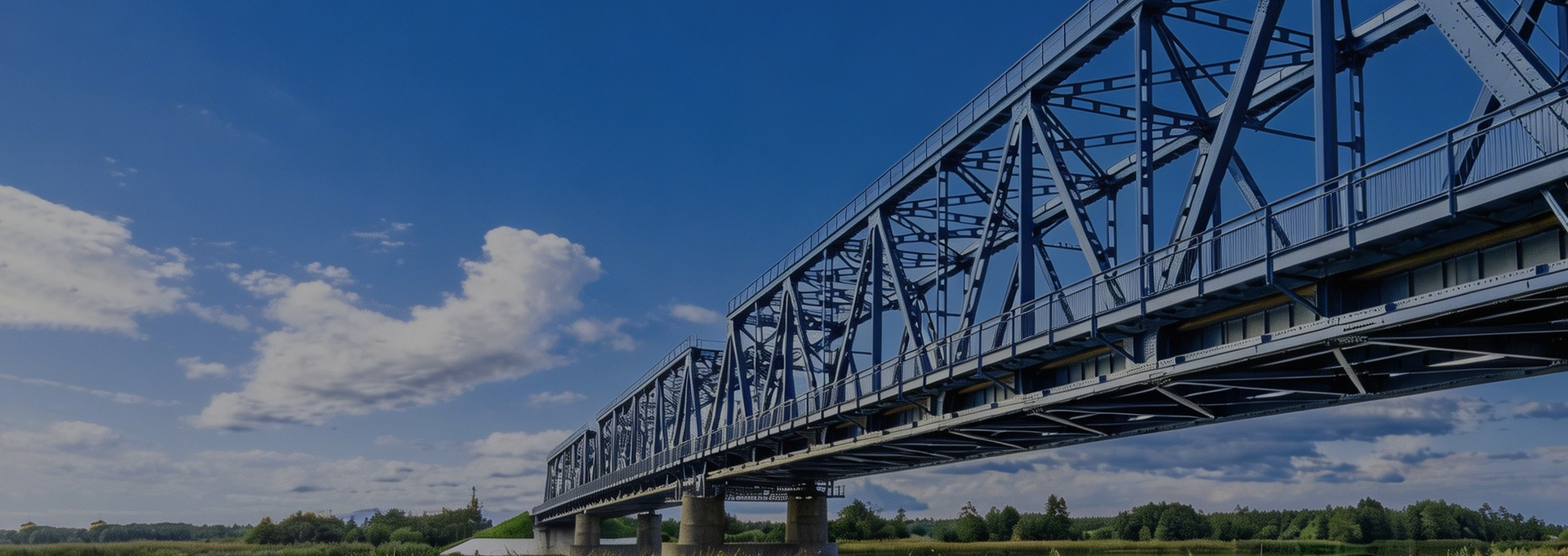
In the engineering of large-scale infrastructure across mountainous terrain, deep gorges, and complex urban environments, the smart high-altitude cantilevered launching gantry has emerged as one of the most consequential advances in bridge and elevated structure construction of the past two decades. By combining cantilever mechanics with intelligent sensing, adaptive load management, and real-time structural monitoring, these systems allow construction crews to erect precast segments and steel girders at heights and spans that earlier equipment categories could not safely or economically address. Understanding the technology, operational logic, and engineering principles behind these machines is essential for any organization involved in the design or delivery of high-altitude infrastructure projects.
Foundations of Cantilevered Launching Gantry Engineering
A launching gantry is a purpose-built temporary structure that travels along the alignment of a bridge or elevated roadway, lifting and positioning prefabricated segments or girders into their final structural positions. The cantilevered variant extends a portion of its working length beyond the last completed pier or abutment, allowing the machine to reach across a span under construction without requiring ground support beneath the active work zone. This cantilevering capability is what makes the system viable in high-altitude environments where terrain below the structure is inaccessible, unstable, or prohibitively expensive to prepare for conventional crane or falsework operations.
The fundamental structural challenge of cantilever operation is that the overhanging portion of the gantry must carry substantial live loads, including the weight of segments being lifted and positioned, while the reaction forces are transmitted back through the machine to the completed structure behind it. The ratio of cantilever length to total gantry length, the magnitude of segment weights, and the dynamic effects of lifting and lowering operations combine to create a demanding structural environment that requires careful engineering of both the gantry frame and its connections to the supporting piers.
At high altitudes, these baseline engineering challenges are compounded by environmental factors that have no equivalent at lower elevations. Wind loading increases with altitude and is more variable and turbulent in mountainous terrain than in flat lowland environments. Temperature differentials between day and night create thermal cycling effects in steel gantry members that cause dimensional changes affecting the precision of segment placement. Reduced oxygen availability affects both human crew performance and the combustion efficiency of diesel power systems. Each of these factors must be addressed systematically in the design of a gantry intended for high-altitude deployment.
What Makes a Launching Gantry Smart
The intelligence embedded in a smart high-altitude cantilevered launching gantry is not a single technology but a layered architecture of sensing, computation, communication, and actuation systems that work together to give the machine situational awareness of its own structural state, its operational environment, and the progress of the construction sequence it is executing. This intelligence transforms the gantry from a passive mechanical tool into an active participant in the construction process, capable of detecting hazardous conditions, optimizing its own operations, and communicating actionable information to the engineering team in real time.
The sensing layer of a smart gantry encompasses strain gauges distributed across critical structural members, tilt sensors and inclinometers at pier connection points and along the main girder, accelerometers that capture dynamic responses to wind and lifting operations, load cells integrated into hoisting winches and support saddles, displacement sensors monitoring deflection under load, and weather stations measuring wind speed, wind direction, temperature, and humidity at the gantry elevation. The density and placement of these sensors is determined by structural analysis of the gantry under its design load cases, with higher sensor density in areas of greatest stress concentration or greatest consequence if a deviation occurs.
The computation layer processes the continuous data streams from the sensor network, running structural monitoring algorithms that compare measured stress and deformation states against design envelopes, detecting anomalies that may indicate developing structural problems. Machine learning models trained on historical operational data from similar gantries can identify patterns in sensor data that precede equipment faults, enabling predictive maintenance interventions before failures occur. Real-time finite element model updating, where the computational structural model is continuously calibrated against measured responses, provides a dynamic virtual representation of the gantry state that supports engineering decision-making throughout the construction operation.
The communication layer transmits processed data and alerts to the operations center, where project engineers and safety officers can monitor gantry status remotely and respond to alerts regardless of their physical location on the project site. Satellite communication links ensure connectivity at high-altitude sites where terrestrial network coverage is absent. Edge computing capabilities embedded in the gantry control system allow critical safety functions to operate autonomously without depending on communication link availability, ensuring that automatic load limiters and wind shutdown protocols remain active even if the remote communication link is interrupted.
Structural Architecture of High-Altitude Gantry Systems
The main girder of a high-altitude cantilevered launching gantry is typically a box section steel structure fabricated in segments that can be transported to site by road or helicopter and assembled at the working elevation. Box section geometry provides the torsional stiffness essential for resisting the asymmetric loading that occurs during segment lifting operations, where the load is applied at one lateral position on the gantry while the machine is supported at points that may not be directly beneath the applied load.
The length of the main girder must accommodate the full span of the bridge being constructed plus the additional cantilever extension required to reach the next pier position. For long-span bridges in deep mountain gorges, this may require gantry girders of 80 to 120 meters or more, imposing significant transport and assembly challenges that the modular segmental construction approach addresses by breaking the girder into manageable sections of 10 to 15 meters that are connected by high-strength bolted splices at the assembly site.
Pier connection systems are among the most critically engineered components of a high-altitude cantilevered gantry. The connection must transfer large vertical reactions from segment weight and lifting operations, significant longitudinal forces from the cantilever moment, and lateral forces from wind loading, all while allowing the gantry to advance to the next span without requiring dismantling and reconstruction of the connection at each pier. Roller beam systems that allow the main girder to slide longitudinally on pier-mounted saddles are the most common solution, with hydraulic clamping mechanisms that lock the gantry in position during lifting operations and release for longitudinal travel during launching.
At high altitudes, material selection for structural components must account for the reduced toughness of steel at very low temperatures. High-altitude sites in mountain regions can experience ambient temperatures well below minus 20 degrees Celsius, conditions under which standard structural steels may experience brittle fracture at stress levels far below their room-temperature yield strength. Smart high-altitude gantries specify low-temperature impact-tested steel grades for all primary structural members, with toughness certification at the minimum anticipated service temperature providing documented assurance of adequate fracture resistance.
Real-Time Structural Health Monitoring Systems
Structural health monitoring is the cornerstone capability that distinguishes a smart launching gantry from its conventional predecessors. Where conventional gantries relied on periodic manual inspection and the judgment of experienced operators to assess structural condition, smart systems provide continuous automated monitoring that detects deviations from design behavior in real time and triggers appropriate responses before those deviations develop into safety incidents.
Strain monitoring of primary structural members provides the most direct measure of structural utilization. Strain gauges bonded to the outer flanges of the main box girder at midspan, at the cantilever tip, and at the pier connection regions provide continuous measurement of bending stress that is compared in real time to allowable stress limits derived from the structural design. When measured stress approaches the warning threshold, the monitoring system generates an alert that may require suspension of the current lifting operation pending engineering review. If stress reaches the action threshold, automatic load limiters can halt hoist operations without requiring human intervention.
Dynamic monitoring using accelerometers captures the vibration behavior of the gantry under operational and environmental loading. The natural frequencies of the main girder and its components are characteristic of the structural integrity of the system, and changes in natural frequency can indicate developing structural damage, loose connections, or changes in boundary conditions at support points that warrant investigation. Modal analysis algorithms running on the edge computing system extract natural frequency data from the accelerometer signals continuously, tracking changes over time that might be invisible to routine visual inspection.
Thermal monitoring addresses the dimensional effects of temperature cycling at high altitude. The thermal expansion coefficient of steel means that a 100-meter gantry girder will change length by approximately 12 millimeters for each 10-degree-Celsius change in temperature. At high-altitude sites with large diurnal temperature ranges, this thermal movement must be accommodated in the girder's expansion joints and pier connection systems, and the monitoring system must account for temperature-induced changes in measured strains when interpreting structural health data to avoid false alarms triggered by thermal effects rather than structural anomalies.
Wind Management and Automated Safety Protocols
Wind is the dominant environmental hazard for high-altitude cantilevered launching gantry operations. The combination of high elevation, mountain terrain amplification of wind speed and turbulence, and the large exposed surface area of both the gantry structure and the segments being handled creates wind load scenarios that must be addressed through both design and operational protocols to ensure safe construction.
The design wind loads for a high-altitude gantry are derived from site-specific wind studies that combine meteorological records, topographic analysis, and wind tunnel testing or computational fluid dynamics modeling of the site terrain. These studies establish the design wind speed at the gantry working elevation and characterize the gust factor and turbulence intensity that determine dynamic wind loads on the structure. The gantry structure is designed to remain stable and serviceable under the design wind speed without any operational restrictions, and a higher extreme wind load case is defined for which the gantry must remain structurally safe in a parked condition.
Operational wind limits, below which lifting and positioning of segments is permitted, are established based on the aerodynamic response of the segment being handled and the capacity of the gantry positioning system to maintain adequate control of segment position during placement. Smart gantry systems implement these operational wind limits through automated protocols that monitor real-time wind speed and direction data from the onboard weather station and compare measured conditions against the applicable operational limit for the current construction activity.
When wind speed exceeds the operational limit, the smart system can automatically suspend hoist operations and trigger a controlled lowering sequence that places any suspended load on a safe temporary support before the wind loading reaches the level that would compromise positional control. This automated response capability is particularly important at high-altitude sites where weather can change rapidly and the communication delays associated with notifying an operator and waiting for a human decision could allow conditions to deteriorate to a dangerous level before the machine response is initiated.
Wind-induced vibration of the gantry structure itself is managed through dynamic analysis that identifies resonance conditions where the vortex shedding frequency of wind flow around gantry members coincides with structural natural frequencies. Aerodynamic fairing of exposed members, tuned mass dampers installed in long slender members susceptible to vortex-induced vibration, and operational restrictions during conditions that produce resonant excitation are all tools that smart high-altitude gantry designers employ to manage this hazard.
Precision Segment Positioning and Alignment Technology
The geometric precision required for precast segment installation in a segmental bridge is demanding under any conditions. Segments must be positioned with tolerances of a few millimeters in all three translational directions and fractions of a degree in all three rotational directions to ensure that epoxy joint faces make full contact, that the cumulative geometry of the completed span meets the design profile, and that structural continuity is achieved at each joint. At high altitude in wind and cold, achieving this precision requires intelligent positioning systems that go well beyond what manual operation of conventional gantry hoisting systems can deliver.
Total station surveying integrated with the gantry control system provides continuous measurement of segment position as it is maneuvered into its target location. Prism targets mounted on the segment being positioned are tracked by motorized total stations mounted at fixed reference points on the completed structure, providing three-dimensional position data that is fed to the gantry positioning system in real time. The positioning system uses this data to generate correction commands to the hydraulic positioning actuators that fine-tune segment position until the measured coordinates match the design target within the specified tolerance.
Laser scanning technology is increasingly deployed in smart high-altitude gantry applications to verify the as-built geometry of completed segments and to generate updated geometric targets for subsequent segments that compensate for any accumulated positioning errors in the completed portion of the span. By comparing the laser-scanned as-built geometry of the completed deck against the design geometry, engineers can calculate the exact positioning adjustments required for the next segment to bring the cumulative geometry back into compliance with design tolerances, preventing the error accumulation that in a conventional construction process would only be detected when the span closure segment fails to fit.
Machine vision systems that automatically identify match-cast joint faces and epoxy application coverage on precast segments are emerging as a quality assurance tool in smart gantry operations. By imaging the joint face of the new segment against the joint face of the previously placed segment before closing the epoxy joint, the vision system can confirm full contact coverage and identify any areas where insufficient epoxy or debris between joint faces could compromise the joint integrity. This automated verification step replaces manual inspection that is difficult to perform safely at the working height and in the time window before the epoxy begins to set.
Digital Control Architecture and Human-Machine Interface
The control architecture of a smart high-altitude cantilevered launching gantry integrates multiple functional subsystems, including main hoist control, auxiliary positioning actuators, pier connection clamping systems, launching drives, and safety interlock logic, within a unified programmable logic controller framework that enforces safe operating sequences and prevents conflicting commands that could create hazardous conditions.
The human-machine interface provides operators with a comprehensive real-time display of gantry state, including active loads on each hoist and support point, structural monitoring status, environmental conditions, and the current step in the prescribed construction sequence. Touchscreen displays with intuitive graphical representations of the gantry and the segment being positioned allow operators to monitor the positioning process and issue fine adjustment commands without requiring specialized engineering expertise to interpret raw sensor data. Color-coded status indicators provide immediate visual feedback on whether each monitored parameter is within normal limits, at a warning level, or has reached a limit that requires action.
Sequence control programming encodes the prescribed construction method for each span type into the control system, guiding operators through the correct sequence of operations and preventing actions that are out of sequence or that would violate structural safety constraints. When the control system detects that an operator command would result in an unsafe condition, it generates a clear alarm message explaining the conflict and refuses to execute the command until the conflict is resolved. This safety interlock architecture provides a systematic defense against the human errors that have been the primary cause of launching gantry incidents in conventional non-smart systems.
Remote access capability allows project engineers and equipment specialists to connect to the gantry control system from off-site locations, reviewing real-time data, retrieving historical logs, and in appropriate circumstances providing remote support for troubleshooting and parameter adjustment. This remote access capability reduces the need to maintain specialist support staff continuously on a high-altitude site where access is difficult and living conditions are demanding, without sacrificing the technical oversight that complex equipment operations require.
Power Systems and Operational Reliability at Altitude
Reliable power supply is a fundamental operational requirement for a smart high-altitude cantilevered launching gantry, given that power interruptions during segment lifting operations can create hazardous suspended load situations and that the intelligence systems of the gantry require continuous power for monitoring and safety functions even when construction operations are not in progress. Power system design for high-altitude gantry applications must address the constraints imposed by the site environment and the limited infrastructure available at remote high-altitude locations.
Diesel generator sets are the primary power source for most high-altitude launching gantry installations, providing independence from grid infrastructure that is rarely available at remote mountain construction sites. High-altitude operation reduces diesel engine power output due to reduced air density, typically by approximately 3 percent per 300 meters of elevation above sea level. Turbocharged engine designs recover much of this altitude-induced power loss, but the generator sets for high-altitude gantry applications must be specified with appropriate altitude derating factors applied to their rated output to ensure adequate power availability at the operating elevation.
Uninterruptible power supply systems protect the monitoring and control electronics against the power quality variations and brief outages that are common with generator-based power supply. The UPS provides conditioned power to the control systems continuously and maintains power to critical monitoring functions during generator switchover events or brief generator faults, preventing data loss and ensuring that the structural health monitoring system remains active without interruption.
Redundant hydraulic power units ensure that positioning and clamping functions remain available if a primary hydraulic unit requires maintenance or experiences a fault during operations. The ability to complete a segment installation cycle and secure the gantry in a safe parked condition using backup hydraulic power, even with a primary power unit unavailable, is a fundamental reliability requirement that the design of smart high-altitude gantry hydraulic systems must satisfy.
Construction Sequence Planning and BIM Integration
The operational effectiveness of a smart high-altitude cantilevered launching gantry is strongly dependent on the quality of pre-construction planning that defines the construction sequence, the gantry configuration at each stage, the critical lift parameters for each segment, and the interface between gantry operations and other site activities. Building Information Modeling tools that integrate the gantry geometry with the structure being constructed provide the platform for this planning in modern high-altitude bridge projects.
Four-dimensional BIM models that add construction sequence timing to three-dimensional geometric models allow project planners to simulate the complete erection sequence digitally before any physical operations commence. These simulations identify potential conflicts between the advancing gantry and the structure below, verify that clearance requirements are satisfied at each stage of gantry launching and segment installation, and validate that the construction method assumed in the structural design of temporary works is accurately reflected in the planned field operations.
Clash detection algorithms applied to the 4D BIM model can identify interference conditions that would only become apparent during physical operations if the simulation were not performed, providing an opportunity to modify the construction sequence or temporary works design before the cost and schedule impact of a field interference is incurred. For high-altitude projects where the consequences of a construction sequence conflict discovered in the field can include weeks of delay and expensive remedial works, the value of pre-construction BIM simulation is very high relative to its modest incremental cost.
Lift planning data extracted from the BIM model, including segment weights, center of gravity locations, and required hoist attachment point configurations, can be imported directly into the gantry control system, eliminating manual data entry and the transcription errors it introduces. As-built data captured by the gantry monitoring system during each lift can be exported back to the BIM model, creating a continuously updated as-built record that supports quality management, structural handover documentation, and future asset management activities across the operational life of the structure.
Safety Management and Risk Mitigation Frameworks
The safety management framework for smart high-altitude cantilevered launching gantry operations must address the compound risk profile created by working at height, handling heavy loads, operating in challenging environmental conditions, and managing complex equipment with multiple failure modes. A systematic risk management approach that identifies hazards, evaluates their likelihood and consequence, and implements appropriate control measures is the foundation of safe high-altitude gantry operations.
Formal hazard identification processes applied at the design stage identify failure modes in the gantry structure, mechanical systems, and control systems and specify the engineering controls, procedural controls, and monitoring requirements that reduce each identified risk to an acceptable level. The structural monitoring system, automated load limiters, wind shutdown protocols, and safety interlock logic of the smart gantry are all engineering controls identified through this design-stage hazard analysis as necessary to manage specific risks to acceptable levels.
Pre-lift risk assessments conducted before each segment installation operation confirm that current conditions, including wind speed, structural monitoring status, crew complement and competency, and equipment operational status, are consistent with the requirements for safe execution of the planned operation. Smart gantry monitoring data provides objective, real-time input to this pre-lift assessment that replaces the more subjective assessments that operators of conventional gantries must make based on observation and experience alone.
Emergency response planning for high-altitude gantry operations must address the specific scenarios created by remote site location and altitude-related access constraints. Rescue planning for personnel working at the gantry level, procedures for safely managing a suspended load in the event of power failure or structural emergency, and communication protocols for coordinating emergency response with project management and emergency services are all components of the emergency response plan that must be developed specifically for each high-altitude gantry installation.
Training and competency management for smart gantry operators recognizes that the additional capabilities of intelligent systems require additional knowledge and skills compared to conventional gantry operation. Operators must understand not only the mechanical operation of the gantry but also the interpretation of monitoring system displays, the significance of alert conditions, the correct response to automated safety interventions, and the limitations of the smart systems that require continued human vigilance rather than uncritical reliance on automated monitoring.
Notable High-Altitude Applications and Case Lessons
High-altitude bridge construction in the mountain regions of China, including the extensive high-speed railway network expansion into the Yunnan, Guizhou, and Tibetan plateau regions, has provided the most demanding real-world proving ground for smart cantilevered launching gantry technology. Projects at elevations exceeding 3,000 meters above sea level, with spans crossing gorges hundreds of meters deep and ambient temperatures ranging from extreme summer heat to severe winter cold, have driven the development of gantry designs and smart monitoring systems that address altitude-specific challenges that earlier generation equipment was not designed to handle.
The operational experience accumulated on these projects has yielded important lessons about the practical performance of smart monitoring systems in field conditions. Sensor durability in environments with high UV exposure, extreme temperature cycling, and occasional exposure to construction dust and vibration proved to be a more significant design challenge than laboratory evaluation suggested. Smart gantry designs have progressively improved sensor enclosure protection, cable management, and sensor redundancy to address field durability requirements that only became fully apparent through operational experience.
Communication reliability at remote high-altitude sites presented challenges that required the development of robust edge computing capabilities within the gantry control system. Early deployments that relied heavily on remote server processing for monitoring algorithms experienced performance degradation when communication links were interrupted by weather or terrain masking of satellite signals. Moving critical monitoring and safety functions to edge computing hardware embedded in the gantry resolved this dependency and improved system reliability in conditions of intermittent connectivity.
The integration of smart gantry monitoring data with project management systems provided value that extended beyond the immediate safety and quality benefits of real-time monitoring. Historical operational data from smart gantries has been used to calibrate productivity planning models, improve the accuracy of cycle time estimates for future similar projects, and support forensic analysis of quality incidents that helped identify systematic construction method improvements applicable across the project fleet.
The Future Trajectory of Smart High-Altitude Cantilevered Launching Gantries
The development trajectory of smart high-altitude cantilevered launching gantry technology points toward increasing levels of automation, more sophisticated artificial intelligence integration, and deeper connectivity with the broader digital infrastructure of major construction projects. Autonomous segment positioning systems that complete the fine positioning of segments to design tolerance without manual operator input are in advanced development, with machine vision and sensor fusion providing the spatial awareness necessary for reliable autonomous operation in the complex geometric environment of a high-altitude bridge construction site.
The application of physics-informed machine learning models that combine the fundamental mechanics of gantry structural behavior with data-driven learning from operational monitoring data promises structural health monitoring systems of greater sensitivity and specificity than current purely data-driven approaches can achieve. These models will be capable of detecting structural anomalies at an earlier stage and providing more reliable differentiation between genuine structural concerns and benign variations caused by environmental effects, reducing both false alarm rates and the risk of genuine anomalies being missed.
Fleet-level connectivity that shares operational data across multiple gantries deployed on a single large project or across a contractor's global fleet will enable collective learning that accelerates the development of optimal operating practices and maintenance strategies. Patterns detected across a fleet of gantries can identify design features or operating conditions that correlate with component wear or performance variation, informing both equipment design improvements and operational protocol development in ways that analysis of individual unit data cannot support.
As the global infrastructure investment pipeline continues to route high-speed rail lines, expressways, and utility corridors through increasingly challenging mountain and gorge terrain, the demand for high-altitude cantilevered launching gantry capability will grow. Smart systems that deliver safer, more precise, and more productive construction operations in these demanding environments will be at the center of this growth, continuing to evolve in capability as the infrastructure engineering community pushes into terrain and at spans that represent the current frontier of what is constructible with available technology.


 Français
 Español
 عربى
عربى