When the only road into a village crosses a creek on a low-level concrete slab, every wet season turns that community into an island. School buses add 20 kilometres of detour, fresh produce spoils before it reaches market, and an ambulance simply waits for the water to drop. A portable Bailey bridge is usually a quick structural answer to this problem: a prefabricated, pin-connected steel truss that a small crew can assemble in days, that carries farm trucks and fire engines from the first morning, and that can either stay in service as a semi-permanent crossing or be dismantled and moved to the next site. This article walks through how the two main truss families—Type 321 and Type 200 (HD200)—compare for rural work, which span, load and foundation decisions actually drive cost, and how delivery, assembly and support work on a remote site.
Why a Portable Bailey Bridge Fits Rural Access Problems
For gaps between roughly 10 and 50 metres where a cast-in-place concrete bridge is months away or simply uneconomic, a modular steel truss is normally a direct route to a dependable crossing. Three reasons explain why.
First, everything arrives as standard parts. Panels, crossbeams, bracing frames and deck sections are manufactured to fixed dimensions and pinned together, so a bridge can be sized up or down without custom fabrication. Second, assembly tolerates remote conditions: the truss can be built on rollers on one bank and launched across the gap, which means no cranes standing in the creek, no falsework in the channel, and no concrete pours suspended over running water. Third, the structure is an asset, not a consumable. When a permanent bridge is finally built upstream, the panels come back out and serve the next culvert failure, forest road or irrigation crossing.
The design dates to 1940–1941, when it was developed in Britain for military use, and its long post-war career in civilian infrastructure is exactly why it still suits rural work today: low equipment demand, repeatable assembly steps, and load tables that engineers can verify in minutes. For the wider picture, this overview of the advantages of modular steel bridges in modern infrastructure development explains how prefabricated systems compare with traditional construction on schedule and budget.
Type 321 vs. Type 200 (HD200): Picking the Truss Family
Both families work on the same logic—pinned truss panels arranged in single, double or triple rows to reach a target span and load class—but they are not interchangeable in practice. Type 321 is the older, lighter system, which keeps freight and unit costs down on short rural crossings. Type 200 (HD200) panels are larger and carry more per panel, so a long-span crossing or a road that regularly sees loaded aggregate trucks usually closes in fewer pieces with HD200 hardware. Match the family to traffic first, span second, budget third.
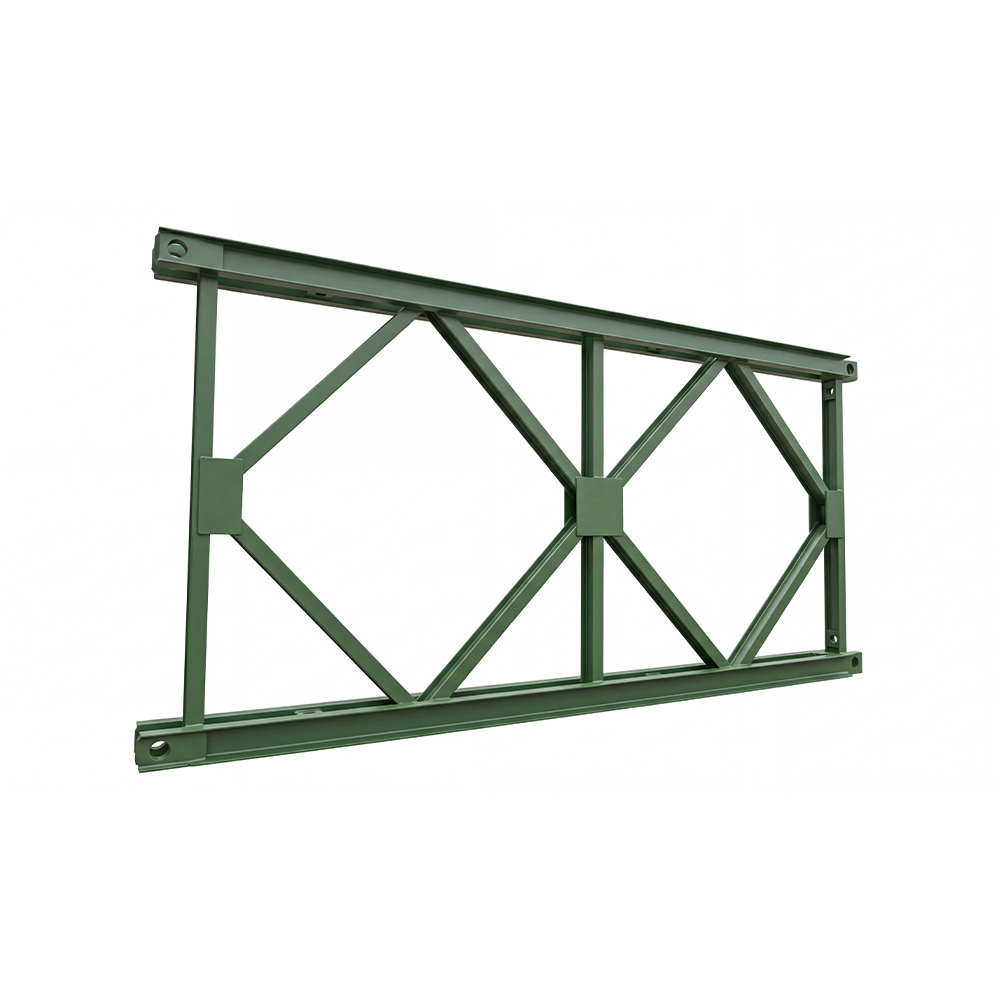
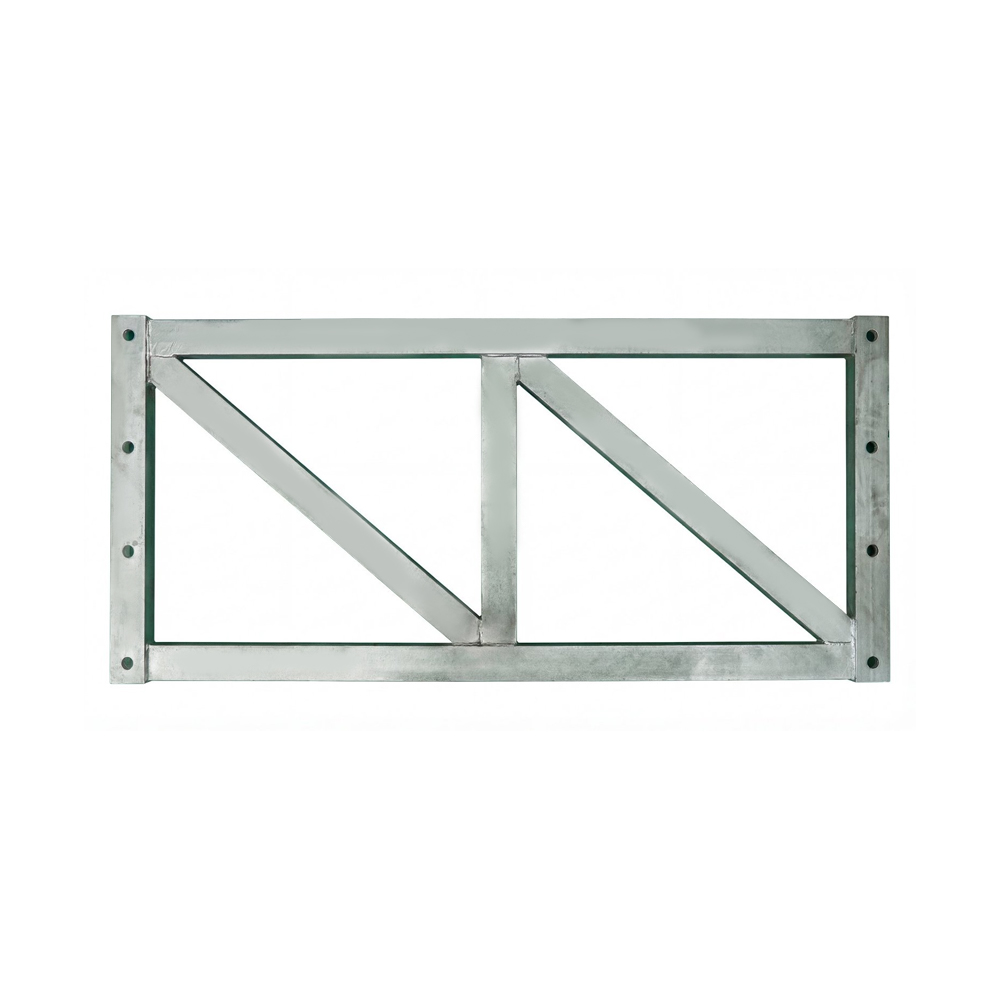
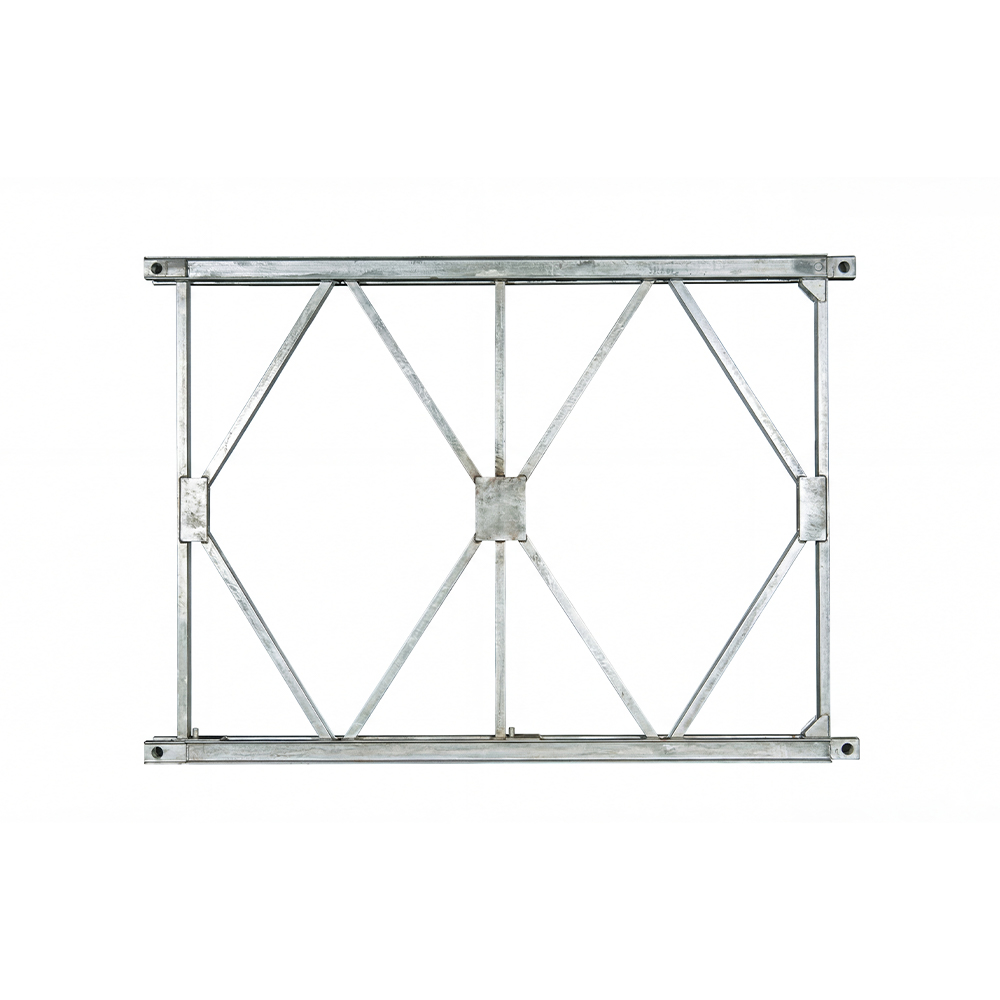
 Type 321 Bailey Truss SectionA lightweight prefabricated Q355B truss panel system for spans of 9 to 63 meters across five load classes. Suited to short rural crossings where lower freight and unit costs matter most.View Product →
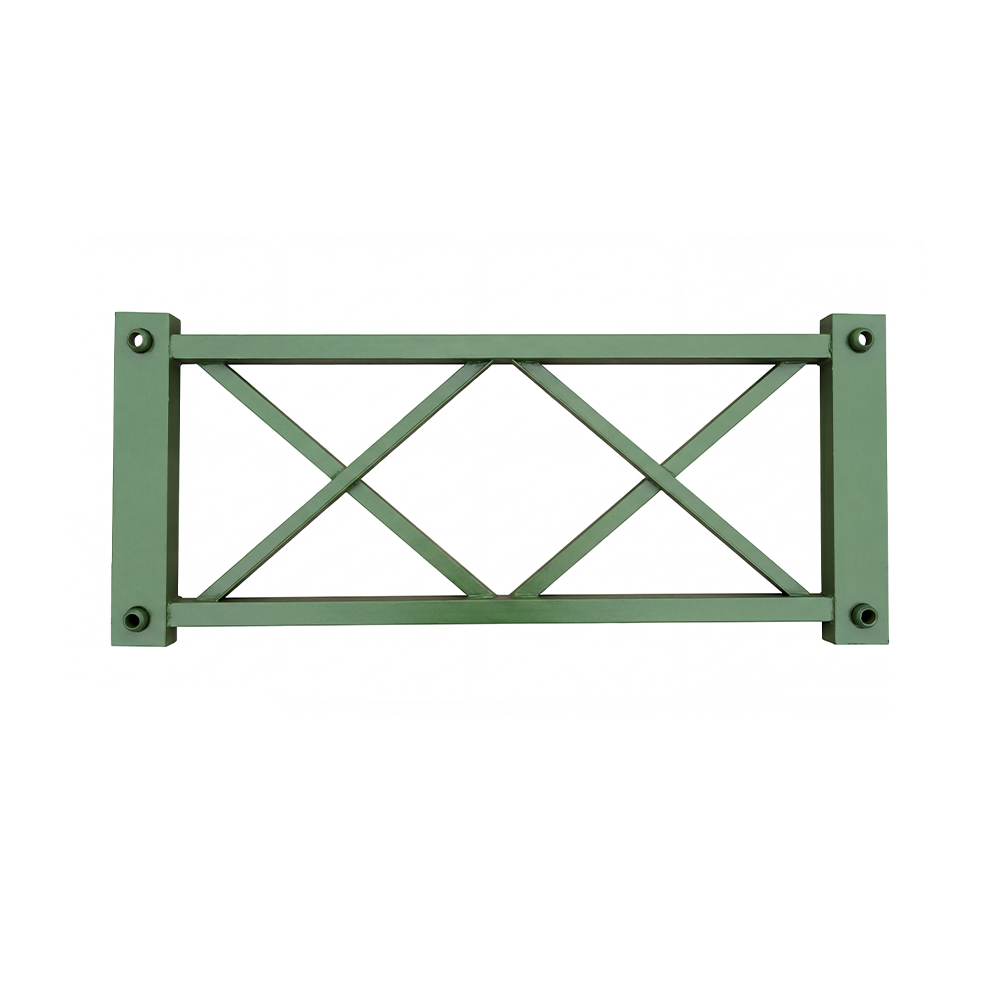
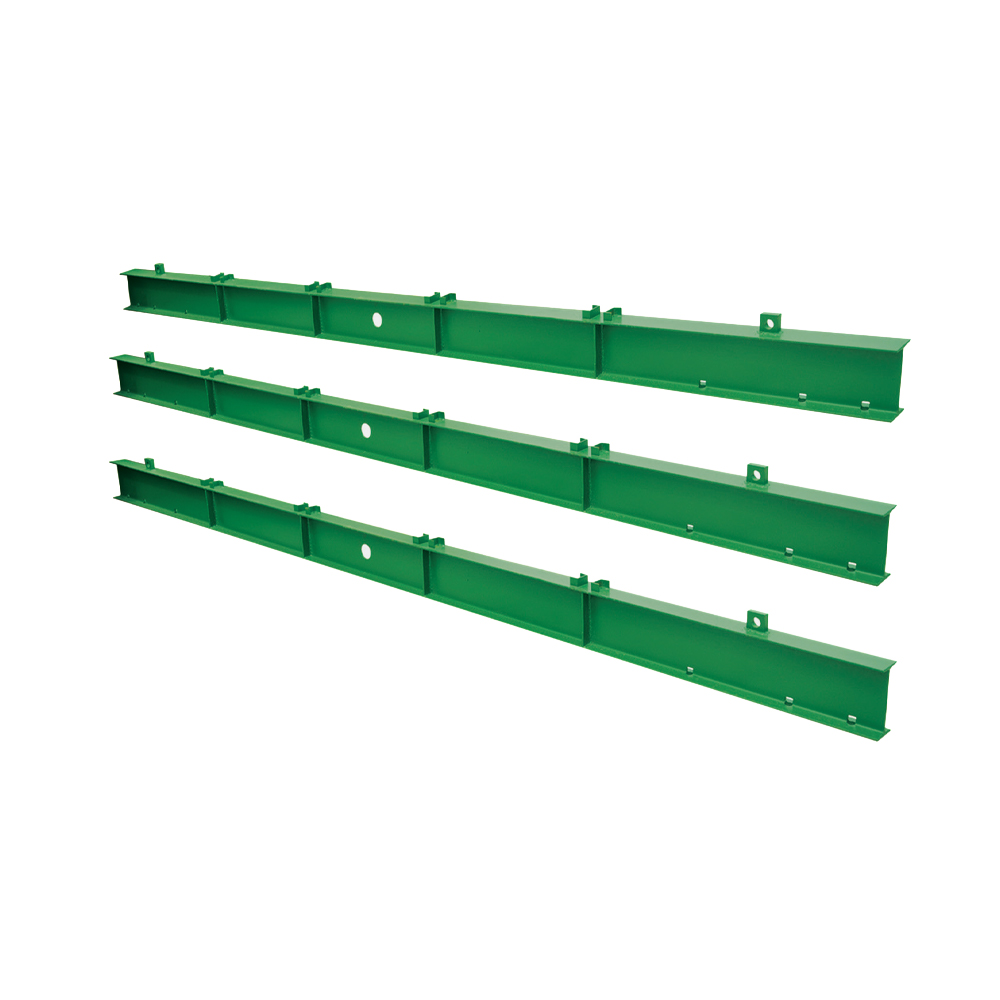
  Type 200 Bailey Truss SectionHD200 panels are larger and carry more per panel, letting long-span or heavy-traffic roads close in fewer pieces. Its compact design allows manual assembly without heavy equipment.View Product →
Practical differences between the two common Bailey truss families when planning a rural crossing
| Selection factor |
Type 321 |
Type 200 (HD200) |
| Standard panel |
3,000 mm × 1,500 mm pin-jointed truss panel |
Larger, deeper panel with more capacity per piece |
| Span strategy |
Longer spans reached by doubling or tripling panel rows |
Reaches longer spans with fewer rows |
| Load fit |
Farm vehicles, buses, fire and utility trucks |
Heavy log, aggregate and grain trucks on semi-permanent routes |
| Economics |
Lower unit and freight cost on short spans |
Higher unit price, fewer components can offset it at long spans |
| Typical rural use |
Temporary detours, culvert replacement, seasonal access |
Semi-permanent crossings on working resource roads |
Planning Span, Load and Foundations for a Rural Site
The truss family is one decision; the site sets the rest. Get these three items right and the bridge will behave the way the load tables promise.
Match the span to the gap—and the launch method
Measure the clear gap between stable banks at design flood level, not at the water line you see in the dry season, then add margin for scour protection and abutment seats. A span chosen from the dry-season creek bed often turns out too short. Decide early whether the bridge will be crane-assembled piece by piece or launched from rollers; launching keeps equipment out of the channel but needs a level assembly apron on one bank roughly as long as the span itself. On tight forest or terraced sites, that apron—not the span—often becomes the limiting factor.
Classify the traffic honestly
Rural crossings fail on paper before they fail in steel, usually because traffic was underestimated. Count what genuinely crosses: a school bus twice a day is a light requirement, but a milk tanker or a loaded grain truck every week is not. Reinforced configurations—extra truss rows, stronger crossbeams, heavier deck panels—exist precisely for this case, so have the supplier run your worst realistic vehicle through their load tables before you fix a configuration.
Abutments, banks and flood clearance
A Bailey truss needs something solid to stand on. Compacted gravel abutments can work for a short-term detour, but for anything semi-permanent, poured or precast abutment seats with bearing plates spread the reaction load and keep the end transom out of the mud. Check vertical clearance against design flood level and floating debris: a bridge set low that catches logs at flood peak costs more in repairs than the extra metre of span would have. Where deflection matters—say the deck also carries an irrigation line or a pedestrian footway—pre-cambered truss builds the upward arch in at manufacture, so the deck settles level under load instead of sagging visibly.
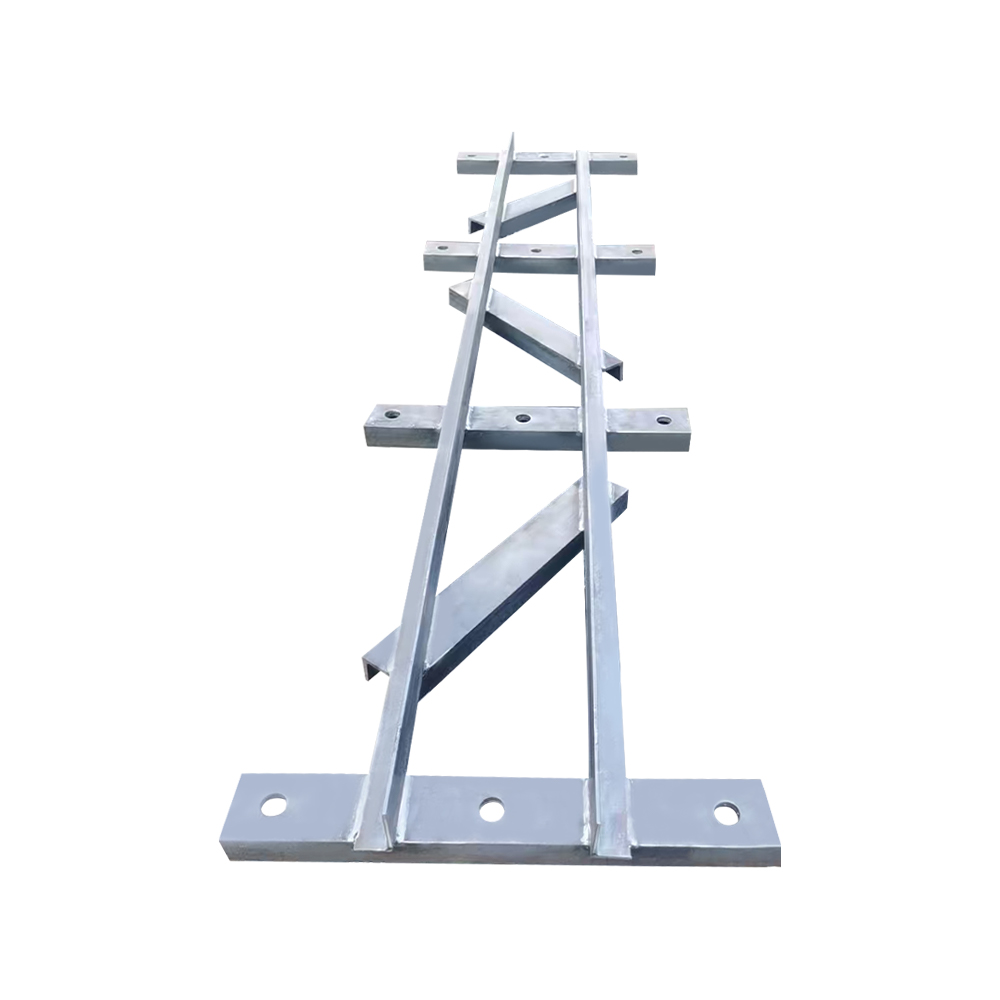
 Pre-Cambered Bailey TrussManufactured with a built-in upward arch that compensates for deflection under load, keeping the deck level. A practical choice when the crossing also carries utilities or pedestrian traffic.View Product →
What Installation Actually Takes on a Remote Site
Rural installations are won or lost on logistics rather than engineering. Plan around four practical items:
- Crew and time: a trained crew of six to eight assembles a typical single-lane rural span in days, not weeks; the pin connections are deliberately simple, but the sequence still needs experienced supervision the first time.
- Delivery: panels ship on flatbed trucks, so confirm the last kilometres of farm or forest road can carry a loaded vehicle, or budget for a transfer to smaller transport at the nearest hard road.
- Lifting: short spans can be assembled largely by hand with bars and rollers; longer or multi-row spans need at least a modest mobile crane for the launch nose and tail sections.
- Weather windows: launch across the creek in the dry season. Assembly over moving water is a common self-inflicted delay on rural jobs.
A supplier that carries its own erection crews changes this arithmetic. Zhenjiang Jinhao, for instance, lists design, manufacturing, erection and rental as one delivery chain rather than four separate contracts, which on a remote site means a single party answers when a launch roller or component question comes up mid-assembly.
Buy, Rent, or Phase the Investment
Conclusion first: if the crossing will serve a detour for one season, rent. If it becomes the village's main road for years, buy, and buy the configuration you would have chosen for a permanent bridge anyway.
Rental makes sense when the need is genuinely temporary—a culvert replacement, a construction detour, a single harvest season—because the supplier takes the panels back and you avoid owning inventory you cannot redeploy. Purchase wins when the crossing earns its keep: the per-year cost of an owned bridge amortised over a decade of daily traffic is far below rental renewed season after season, and owned panels can move to the next failing crossing in the district. When comparing quotations, look past the panel price to the complete package—crossbeams, bracing frames, ramp sections, spare pins, deck surface and the galvanising specification—since rural bridges live with drainage salt, silt and humidity. Browsing complete Bailey bridge systems side by side makes those package differences easier to see than a single line item does.
One last practical note: whatever you buy or rent, request the load tables in writing and keep the erection manual with the bridge. Rural structures outlive the memories of the crews that built them, and the paperwork is what allows the next team to extend, reinforce or relocate the bridge safely years later.


 Français
 Español
 عربى
عربى