For more than eighty years, the Bailey bridge has been one of the most dependable tools in civil and military engineering. Invented during the Second World War as a portable, prefabricated truss bridge, it has outlasted every successor meant to replace it. Standardized panel systems such as Type 321 and Type HD200 are still manufactured worldwide, and engineering teams rely on them whenever a gap must be crossed quickly, affordably, and safely. At Zhenjiang Jinhao Road & Bridge Supporting Engineering, we have built our business around these steel panels: designing, manufacturing, supplying, renting, and erecting Bailey bridges for projects at home and abroad. This guide explains what a Bailey bridge is, how the two main systems compare, and what to consider before you choose one.
What Is a Bailey Bridge?
A Bailey bridge is a portable, prefabricated truss bridge developed in 1940-1941 by British engineers for military use during the Second World War. Crews assemble it from standardized steel panels, cross-beams, and support frames that travel on ordinary trucks and lock together with steel pins. Because no heavy lifting equipment is needed, a small team can launch a Bailey bridge across a river or valley in hours, then dismantle it just as quickly when the job is done.
The design earned its reputation in wartime, carrying tanks, artillery, and supply convoys across the Rhine and countless other rivers. After 1945, the same components spread into civilian infrastructure worldwide, and the Bailey bridge became the default choice for temporary and semi-permanent spans. The engineering genius lies in modularity: every panel is a standardized unit, so parts from different production batches combine with simple pins, and a damaged panel can be replaced without dismantling the whole bridge.
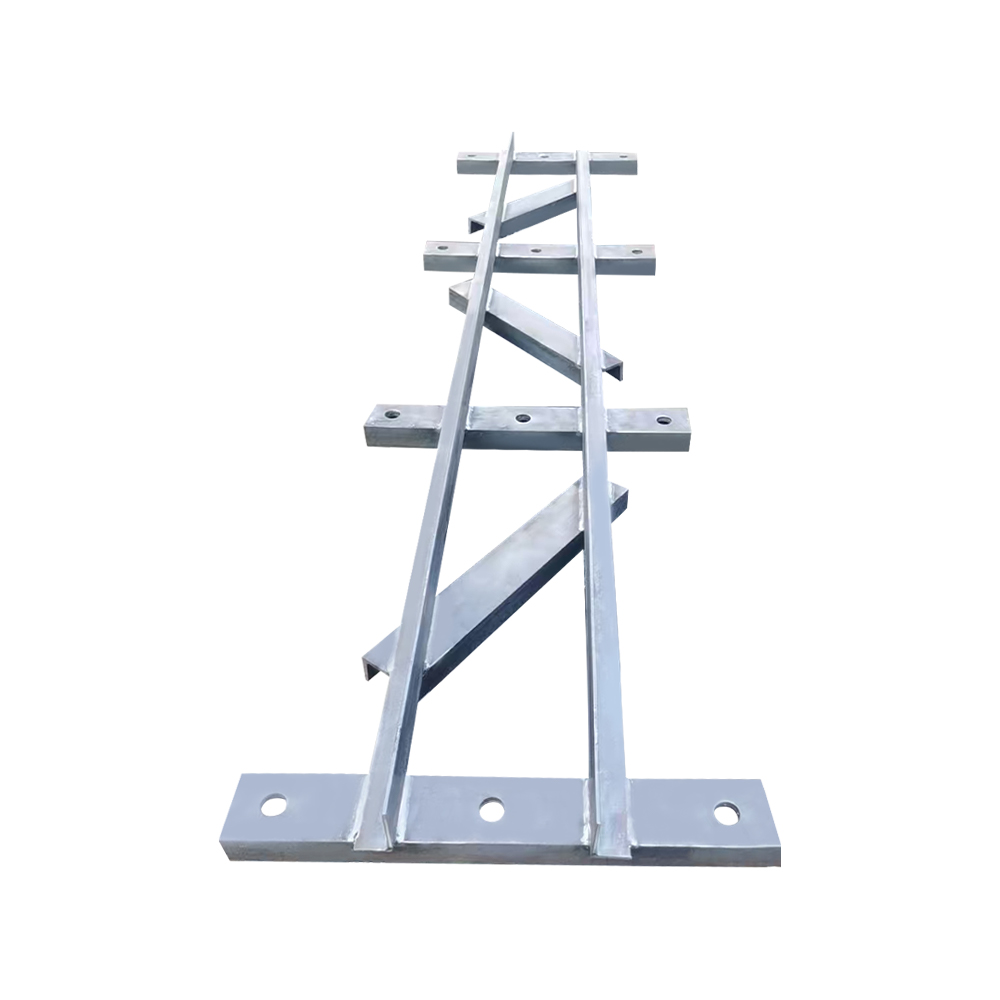
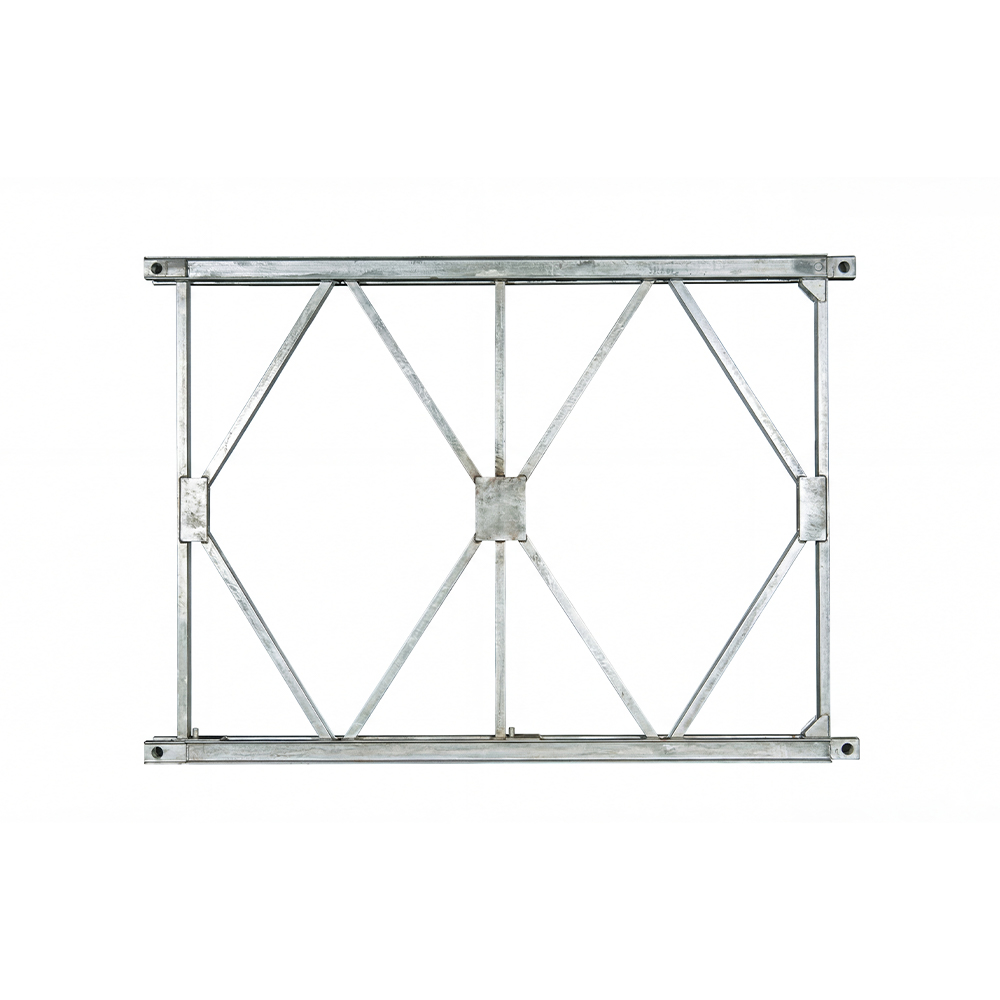
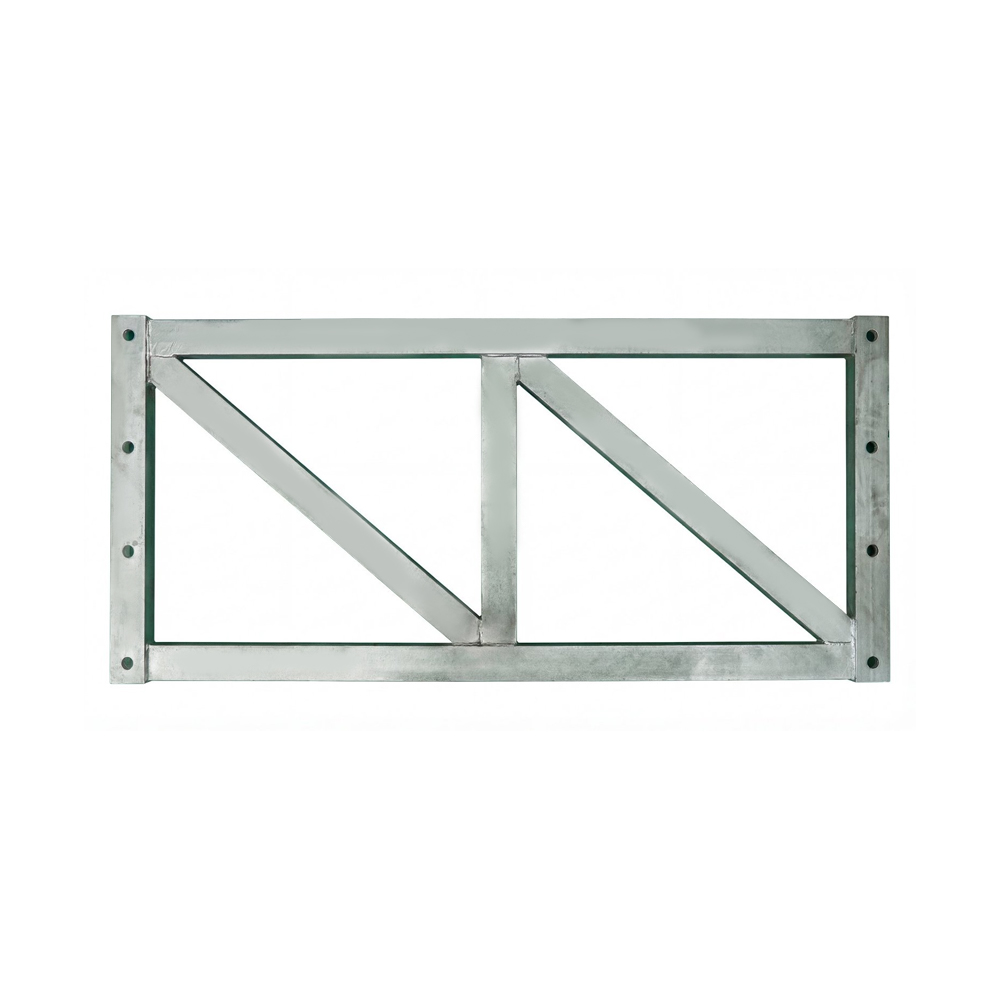
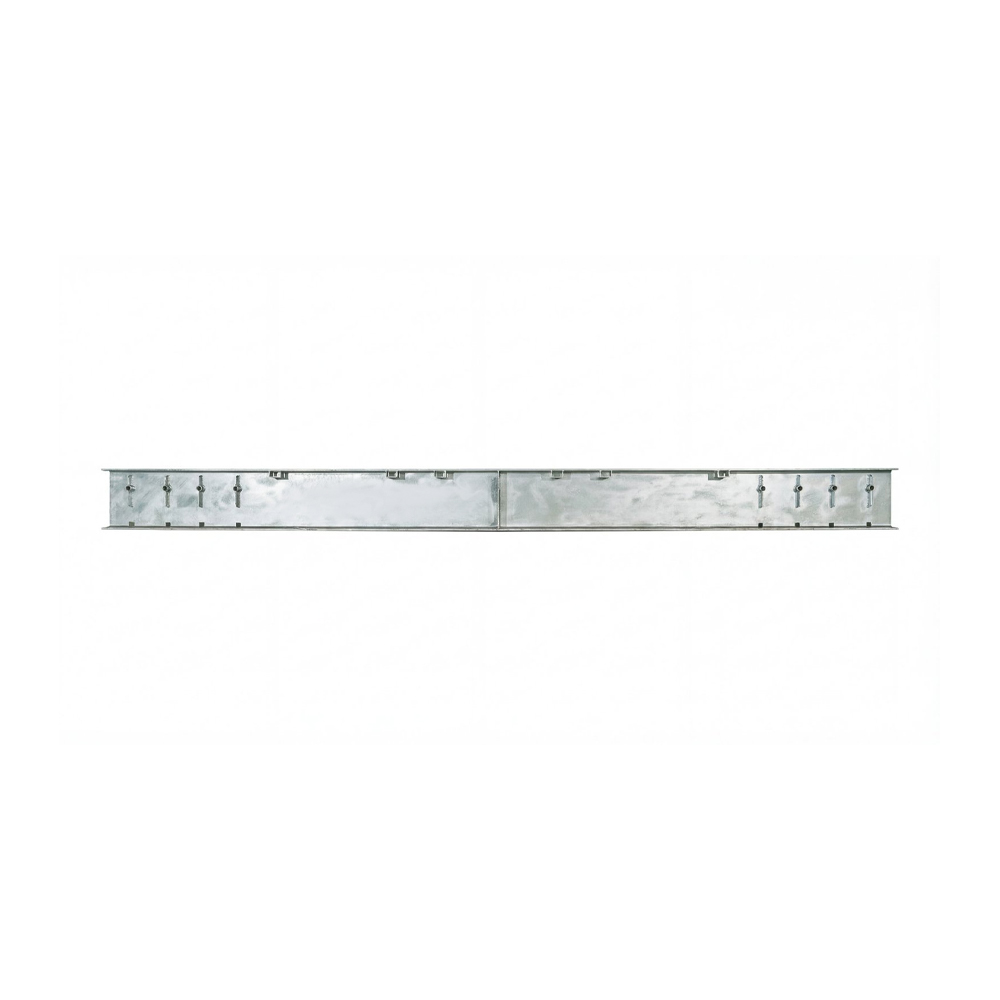
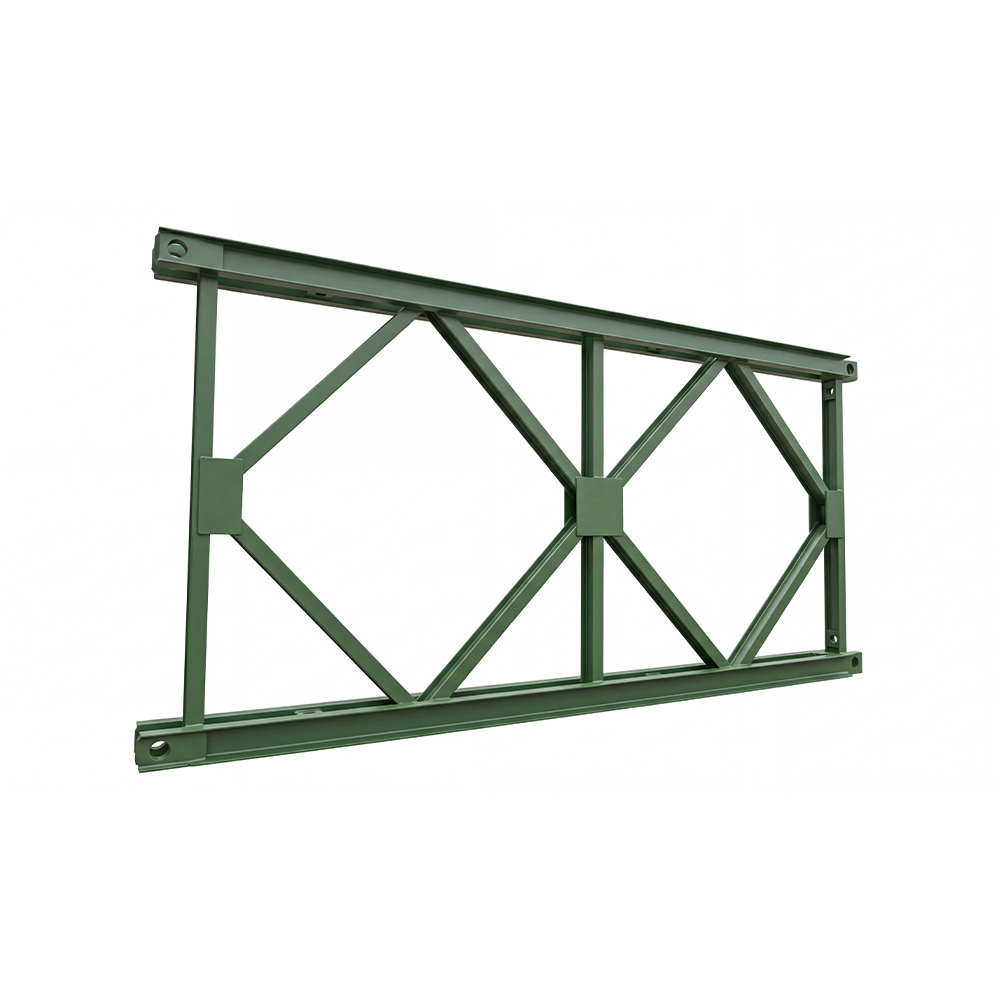
At the heart of the system is the truss panel. Panels connect end to end to form girders, cross-beams carry the deck, and sway braces and support frames resist lateral forces. Stacking panels creates double or triple trusses for higher load capacity, and reinforced chords add strength where it is needed most. Components such as the 321 bridge panel, the 321 cross-beam, and the 321450 support frame all follow the same modular scheme, which is why Bailey bridges remain the cornerstone of temporary and emergency bridging even today.
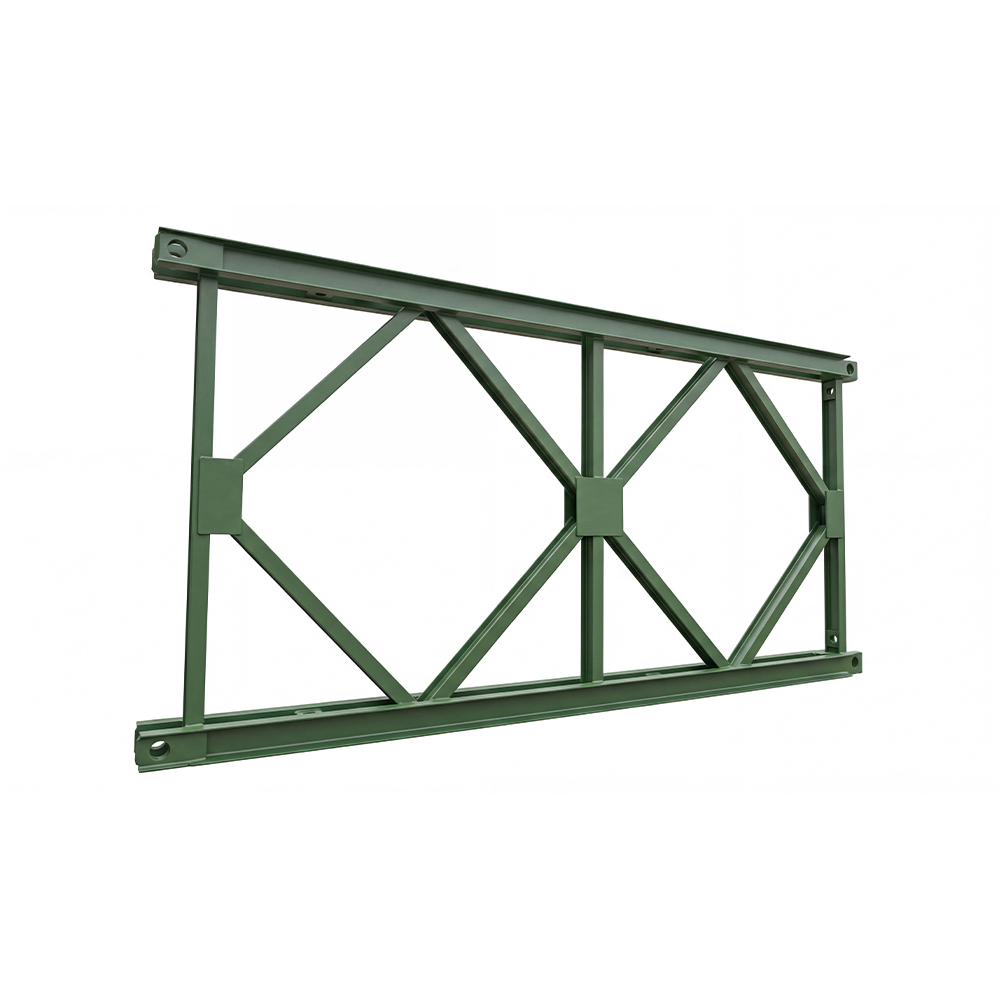 Type 321 Bailey Bridge Panel with Welded Cross-Shaped Steel StructureThis modular truss panel is the main load-bearing unit of the Type 321 system, built from channel and I-beam steel with theoretical chord capacity of 560 kN. It suits engineers comparing Type 321 versus HD200 for cost, assembly, and load performance.View Product →
Type 321 vs. Type HD200: Two Proven Systems
The first question most engineers ask us is simple: Type 321 or Type HD200? Both systems follow the same modular principle but are sized for different workloads, and the choice affects cost, assembly time, and load performance.
Type 321 is the classic Bailey system, derived from the wartime design and the most widely produced panel bridge in the world. Its panels are lighter and easier to handle, making it ideal for quick installations, emergency repairs, and sites with limited access. For most temporary access bridges, working platforms, and disaster-relief work, it offers the best balance of cost and performance.
Type HD200 is the heavier-duty evolution. A taller panel and stronger chord section allow larger loads over longer spans, so it is often chosen for semi-permanent installations, heavy truck crossings, and projects with strict deflection limits. The HD200 family includes horizontal and vertical support frames, reinforced trusses, and heavier cross-beams, so an entire inventory can be built around one standard.
The table below summarizes the main differences.
Table 1. Type 321 and Type HD200 are the two standard Bailey bridge systems used worldwide.
| Feature |
Type 321 |
Type HD200 |
| Panel |
Standard, lighter panel |
Taller, heavier panel |
| Load capacity |
Light to medium |
Heavy |
| Typical span |
Short to medium |
Longer spans |
| Handling |
Easy manual assembly |
More lifting support |
| Typical use |
Temporary and emergency work |
Semi-permanent, heavy traffic |
| Support frames |
321450 support frame |
HD200 horizontal / vertical frames |
| Reinforced option |
321 reinforced truss |
HD200 reinforced truss |
Each system is internally standardized, so you can build single-single, double-single, or double-double configurations from one inventory. If the bridge will stay in place for years or carry heavy vehicles, HD200 is usually the better investment; if you need a fast, economical temporary crossing, Type 321 probably fits best. When in doubt, send us your span and load data and we will calculate the configuration.
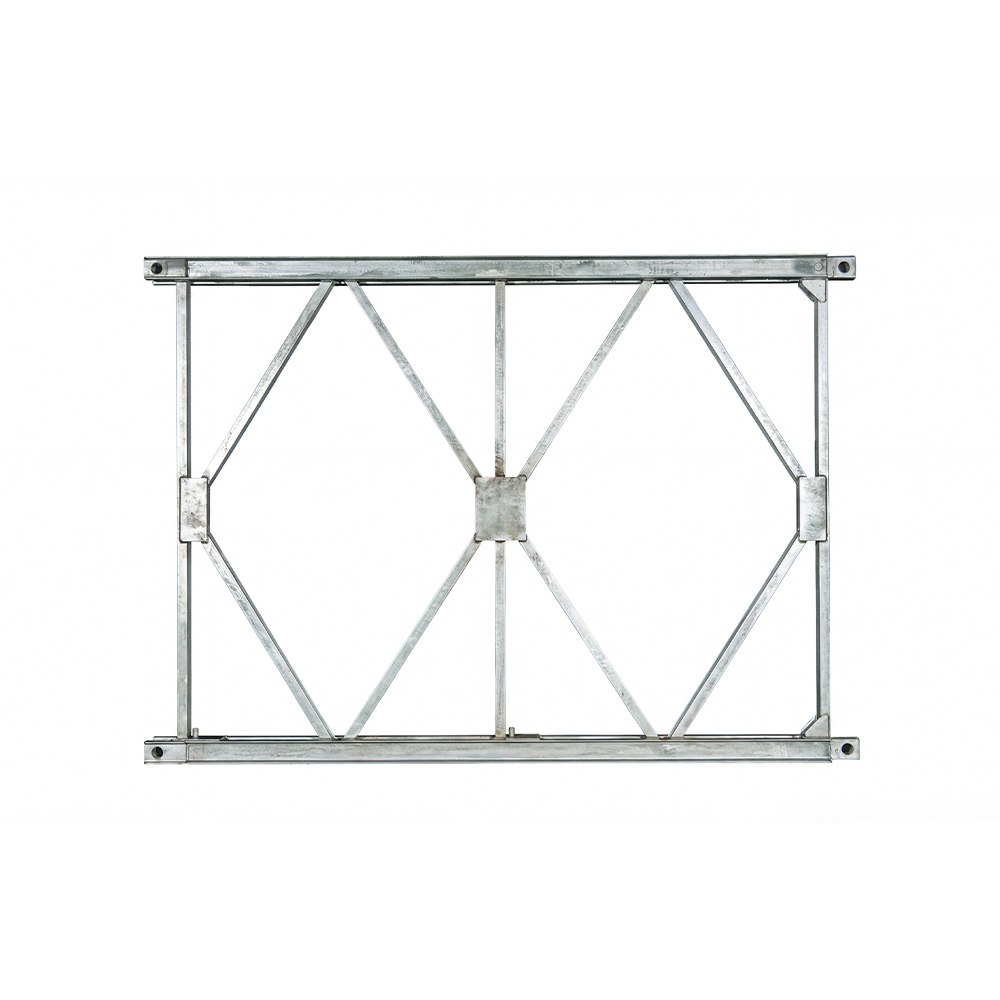 Type HD200 Bailey Bridge Panel for Heavy-Duty Truss SystemsCompared with Type 321, this larger panel improves bending resistance and reduces deflection by increasing section size and moment of inertia. It is recommended when a bridge must remain in place for years or carry heavy vehicles, as discussed in the selection guidance.View Product →
Where Bailey Bridges Are Used Today
Bailey bridges are not a museum piece. They remain a working tool across many sectors, and new applications appear every year. The most common uses in our project experience are:
- Defense and emergency response. Military and rescue teams use them to restore mobility after floods, earthquakes, or combat damage; a complete bridge can be trucked or airlifted to site and erected in hours.
- Highway and transportation projects. When a permanent bridge is closed for repair, a Bailey detour keeps traffic moving, and standard configurations can carry two-way traffic during the works.
- Municipal and utility works. Cities use Bailey spans to keep roads open across excavations, river diversions, and utility crossings during pipeline and drainage construction.
- Water conservancy and irrigation. Temporary access across canals, culverts, and cofferdams is a regular requirement on water-control projects.
- Railway maintenance and construction. Reinforced configurations carry locomotives, maintenance vehicles, and materials where no permanent rail bridge yet exists.
Beyond standalone bridges, Bailey components serve as falsework and support systems for cast-in-place concrete bridges, as launching girders, and as working platforms when combined with prefabricated panels. This flexibility is one reason modular steel bridges have become indispensable in modern infrastructure.
Key Advantages of the Bailey Bridge
Why choose a Bailey bridge over a conventional steel or concrete structure? For temporary works, short spans, and emergencies, the advantages are clear:
- Speed. A Bailey bridge can be erected in days, sometimes hours, while a conventional bridge takes months.
- Standardization and interchangeability. Panels share identical dimensions, so components are interchangeable and spare parts swap without special tools.
- No heavy equipment required. With manual handling and simple rollers, even large bridges can be launched without cranes, which makes them ideal for remote or damaged sites.
- High load capacity. Single, double, and triple truss configurations handle pedestrian to heavy vehicle loads, and reinforced chords increase capacity further.
- Reusable and reconfigurable. A temporary bridge is dismantled after the project, then reused elsewhere or extended by adding panels.
- Cost-effectiveness. For temporary use, a Bailey bridge costs far less than a permanent structure, especially when rental is available.
These advantages are not theoretical; we see them confirmed on every project we supply. For construction teams, the time and money saved often make the difference between staying on schedule and facing costly delays.
How to Choose the Right Bailey Bridge
Choosing the right system and configuration comes down to a few practical factors. This is the checklist we use when advising clients:
- Span. Measure the distance to be crossed, including clearance margins; longer spans call for reinforced or double trusses.
- Load. Consider the heaviest vehicle plus braking forces, wind, and multi-lane traffic, and leave an adequate safety margin.
- Foundation conditions. Bailey bridges sit on simple concrete or timber sills, but soft ground may require bearing pads or piles.
- Erection method. With crane access, panels are lifted into place; on remote sites, a launched or cantilevered method with rollers is often better.
- Duration of use. A few months of construction access may justify Type 321; years of service argue for the heavier HD200 system.
- Existing inventory. If you already own Type 321 or HD200 components, staying within the same system is the most economical choice.
If you are unsure about any of these points, visit our website and get in touch. We can help with layout design, component lists, installation guidance, and rental options. We also manufacture accessories such as support frames, reinforced trusses, and cross-beams, so you can source a complete system from one supplier.
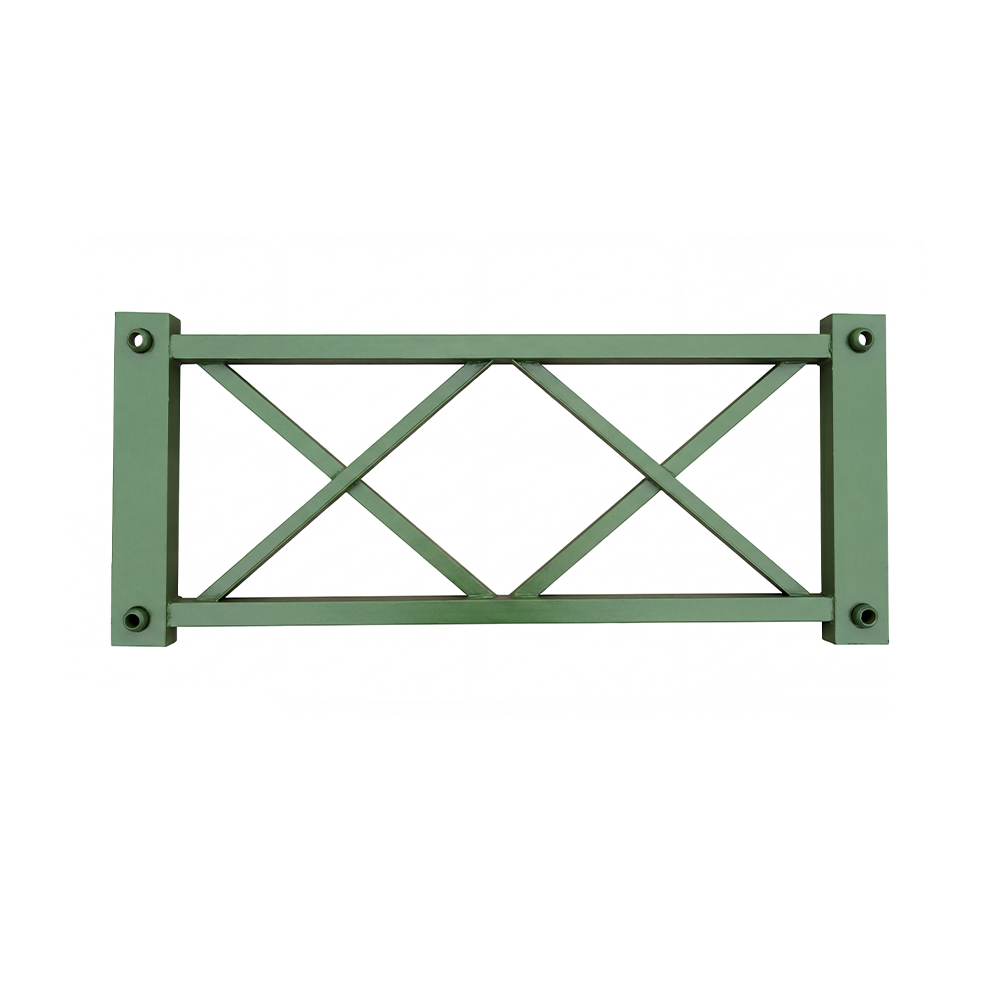
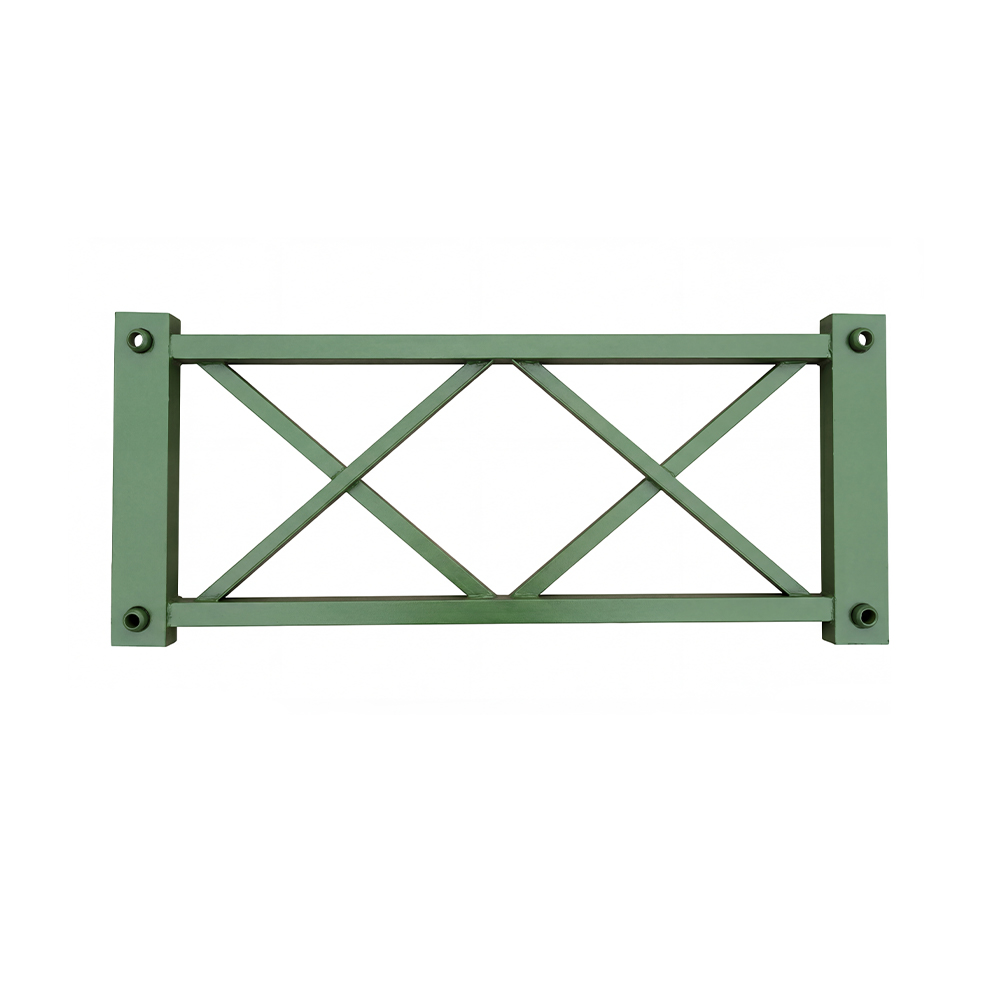 Type 321-450 Support Frame for Lateral StabilizationThis modular frame connects adjacent Type 321 panels to restrain lateral displacement and boost truss stability, matching small-to-medium spans and medium-to-low loads. It is presented as an indispensable accessory when sourcing a complete Bailey bridge system from one supplier.View Product →
Bailey bridges have proven themselves for eight decades. Their simple, standardized design makes them fast to install, easy to maintain, and remarkably adaptable. In our view, no better solution exists for temporary and emergency bridging. Whether you need a construction access bridge, an emergency replacement, or a semi-permanent crossing for heavy vehicles, a well-chosen Bailey bridge is one of the most practical investments you can make, and we would be glad to help you plan it.


 Français
 Español
 عربى
عربى