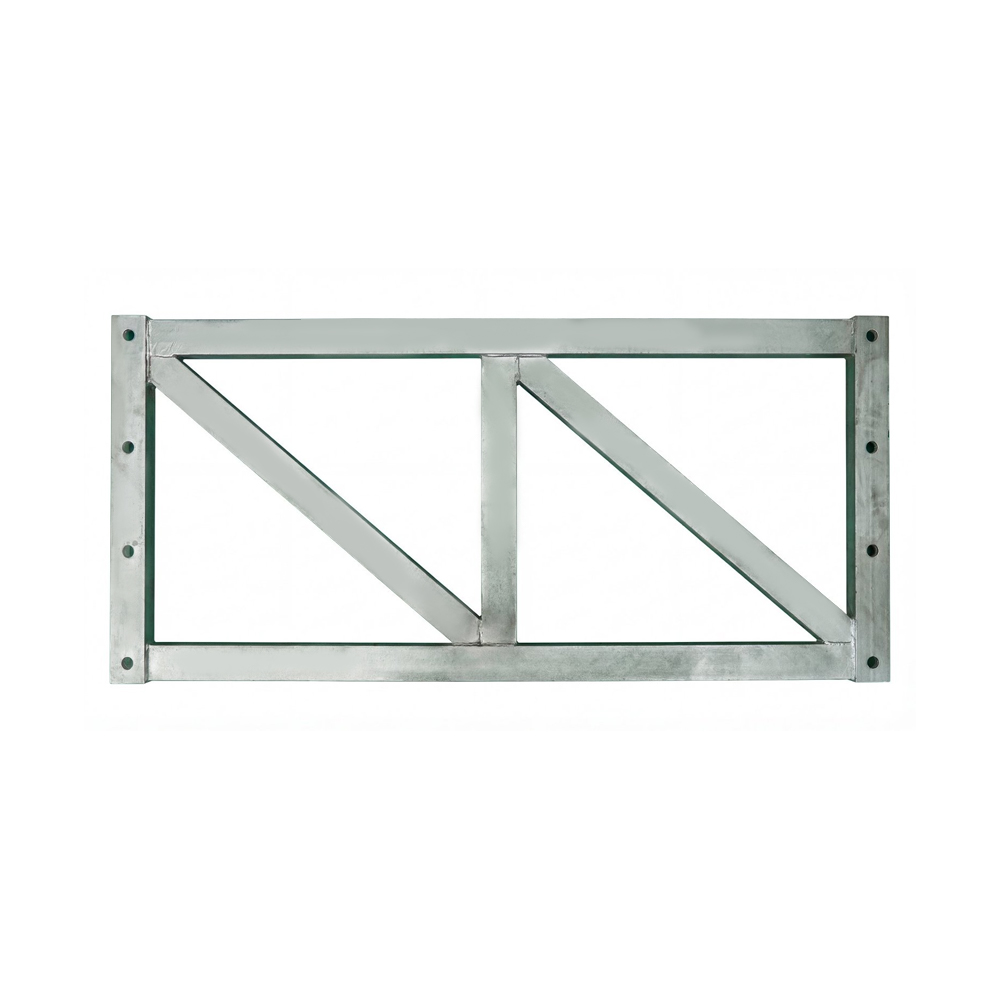
The Smart Cantilevered Launching Gantry is a widely used piece of heavy lifting equipment in modern bridge construction, combining the structural strengths of a traditional cantilevered launching gantry with intelligent control technology. It enables efficient and precise erection of box girders or T-beams for highways, high speed railways, and urban rail transit projects. This article systematically introduces the structural principles, intelligent control systems, construction workflow, technical advantages, and future development trends of the smart cantilevered launching gantry.
1. Basic Concept of the Smart Cantilevered Launching Gantry
A cantilevered launching gantry is specialized erection equipment that completes girder placement by extending its main beam structure forward in a cantilever fashion, supported by front and rear legs. Unlike simply supported launching gantries, the cantilevered type does not depend on previously erected girder segments for support. Instead, it relies on its own leg system resting on pier columns or piers while moving between spans, giving it clear advantages on complex terrain, over obstacles, or where pier heights are substantial. The term smart, or intelligent, refers to the integration of sensing and monitoring devices, automatic control logic, data acquisition, and remote management capabilities on top of the original mechanical structure, giving the equipment the ability to sense its own status, make decisions, and adapt automatically.
1.1 Differences from Traditional Launching Gantries
Traditional cantilevered launching gantries mainly rely on manual operation and operator experience to complete travel, span shifting, lifting, and lowering actions, so construction efficiency and safety depend heavily on the skill level of the operator. A smart cantilevered launching gantry, by contrast, is fitted with displacement sensors, stress sensors, inclination sensors, and visual recognition devices to continuously monitor key parameters such as equipment posture, load, and deformation. A central control system then automatically adjusts these parameters, significantly reducing the risks associated with human operating error.
2. Structural Composition of the Smart Cantilevered Launching Gantry
A complete smart cantilevered launching gantry system generally consists of five major components: the main beam structure, the supporting leg system, the travel system, the lifting system, and the intelligent control system. These parts work together to complete girder transport, positioning, and erection.
| Component |
Main Function |
Intelligent Feature |
| Main beam structure |
Carries girder load and provides the cantilever support span |
Stress monitoring system provides real time feedback on structural loading |
| Front and rear leg system |
Provides vertical support on pier columns or temporary supports |
Automatic leveling and synchronized hydraulic control |
| Travel system |
Enables longitudinal movement and span shifting |
Automatic positioning and limit protection |
| Lifting and hoisting system |
Performs girder lifting, lateral shifting, and lowering |
Variable frequency speed control and anti sway control |
| Intelligent control system |
Coordinates all mechanisms and collects operational data |
Remote monitoring and fault warning |
2.1 Main Beam and Leg Structure Design
The main beam typically uses a box shaped or truss style steel structure, providing high bending stiffness and stability to meet the load demands of long span cantilevered construction. The leg system is generally arranged as front, middle, and rear legs, with height adjusted through hydraulic cylinders to accommodate different pier heights and uneven ground conditions. In intelligent upgrades, the leg cylinders are commonly equipped with displacement and pressure sensors, allowing the control system to automatically adjust the extension of each leg based on real time feedback, keeping the entire machine level and evenly loaded at all times.
3. Core Technologies of the Intelligent Control System
The intelligent control system is the key feature distinguishing a smart cantilevered launching gantry from a conventional one. Its core lies in achieving comprehensive sensing and refined control of the erection process through multiple sensing technologies and data processing algorithms.
3.1 Sensor Monitoring Network
- Stress and strain sensors: continuously collect force data at key cross sections of the main beam to prevent structural overload.
- Inclination sensors: monitor changes in the posture of the gantry and its legs during operation to prevent instability.
- Displacement and speed sensors: record motion parameters of the travel and lifting systems to improve positioning accuracy.
- Visual recognition systems: assist with girder alignment and reduce errors from manual visual judgment.
3.2 Automated Control Logic
After collecting the sensor data described above, the control system evaluates equipment status using preset algorithm models and automatically adjusts hydraulic output parameters, enabling synchronized leg lifting, synchronized travel movement, and synchronized lifting point operation. Some advanced systems also incorporate fuzzy control and adaptive adjustment algorithms, allowing the equipment to automatically optimize working parameters based on variables such as girder weight, span length, and wind speed, thereby improving the stability and precision of construction.
3.3 Remote Monitoring and Data Management
Through wireless communication modules, a smart cantilevered launching gantry can transmit operational data in real time to a remote monitoring platform, allowing managers to review equipment status away from the construction site. This remote management approach not only improves construction management efficiency but also supports equipment health monitoring, preventive maintenance, and historical data traceability.
The remote data platform of a smart cantilevered launching gantry typically includes an alarm push function. When stress, inclination, load, or other parameters exceed preset thresholds, the system automatically sends warning messages to operators and managers, allowing risks to be addressed before they escalate.
4. Construction Workflow
The standard construction workflow of a smart cantilevered launching gantry can be summarized in the following stages, each relying on precise coordination of the equipment and assistance from the intelligent control system.
- Equipment positioning and leg leveling: the gantry moves into position at the working pier, and the control system automatically adjusts the height of each leg.
- Girder transport and alignment: a girder transport vehicle delivers the girder beneath the gantry, and the lifting equipment performs initial positioning.
- Lifting and lateral shifting: the lifting system raises and laterally shifts the girder at a preset speed.
- Precise lowering: based on sensor feedback, the control system assists the operator in achieving precise alignment and lowering of the girder.
- Span shifting: after completing erection on the current span, the automatic travel system moves the gantry to the next span position.
5. Technical Advantages of the Smart Cantilevered Launching Gantry
Compared with traditional erection equipment, the smart cantilevered launching gantry shows clear advantages in safety, efficiency, and adaptability, as detailed below.
5.1 Improved Construction Safety
By continuously monitoring stress, posture, and load data, the intelligent system can issue early warnings before abnormal conditions occur, effectively reducing the risk of safety incidents caused by structural overload, leg instability, or operational error.
5.2 Higher Erection Precision and Efficiency
Automated control reduces the need for repeated manual adjustment, making girder alignment and lowering smoother and more accurate, which shortens the time required for each span and accelerates overall construction progress.
5.3 Stronger Environmental Adaptability
A smart cantilevered launching gantry can adjust its parameters through the control system to suit different pier heights, span lengths, and geological conditions, making it suitable for mountainous bridges, river crossing bridges, and urban elevated bridges, among other complex engineering environments.
On bridge projects with long spans, tall piers, or complex terrain, a smart cantilevered launching gantry can complete span shifting and erection more reliably than ordinary erection equipment, while reducing dependence on ground based auxiliary equipment.
6. Typical Application Scenarios
The smart cantilevered launching gantry is widely applied in the following project types, fully demonstrating its structural adaptability and intelligent advantages.
- Erection of simply supported or continuous box girders on high speed railway projects.
- Bridge construction on highways crossing rivers, valleys, or existing roads.
- Girder erection work on elevated sections of urban rail transit lines.
- Bridge projects in mountainous terrain with significant variation in pier height.
7. Maintenance and Equipment Management
To ensure long term stable operation of a smart cantilevered launching gantry, a systematic maintenance program is required. The hydraulic system, sensing components, and control software should be inspected and calibrated on a regular basis to ensure the accuracy of monitoring data. In addition, an equipment operating record should be established, and historical data collected through the remote platform can be used to analyze wear trends in key components, helping shift maintenance practices from reactive repair to preventive maintenance.
8. Future Development Trends
With the continuous advancement of automation and information technology, the smart cantilevered launching gantry is evolving toward higher levels of unmanned operation and intelligence. Key future development directions include the following.
- Incorporating artificial intelligence algorithms to enable autonomous decision making and path optimization during erection.
- Combining digital twin technology to perform virtual simulation and predictive analysis of equipment operating status.
- Enhancing remote operation and unmanned working capability to further reduce personnel exposure in high risk tasks.
- Strengthening data integration with construction management information systems to achieve digital management across the entire project lifecycle.
Overall, the smart cantilevered launching gantry represents an important milestone in the intelligent upgrading of bridge construction equipment, continually pushing the bridge building industry toward greater efficiency, safety, and precision. As sensing technology, control algorithms, and information systems continue to converge, the smart cantilevered launching gantry is expected to play an increasingly important role across a wider range of complex engineering scenarios.


 Français
 Español
 عربى
عربى