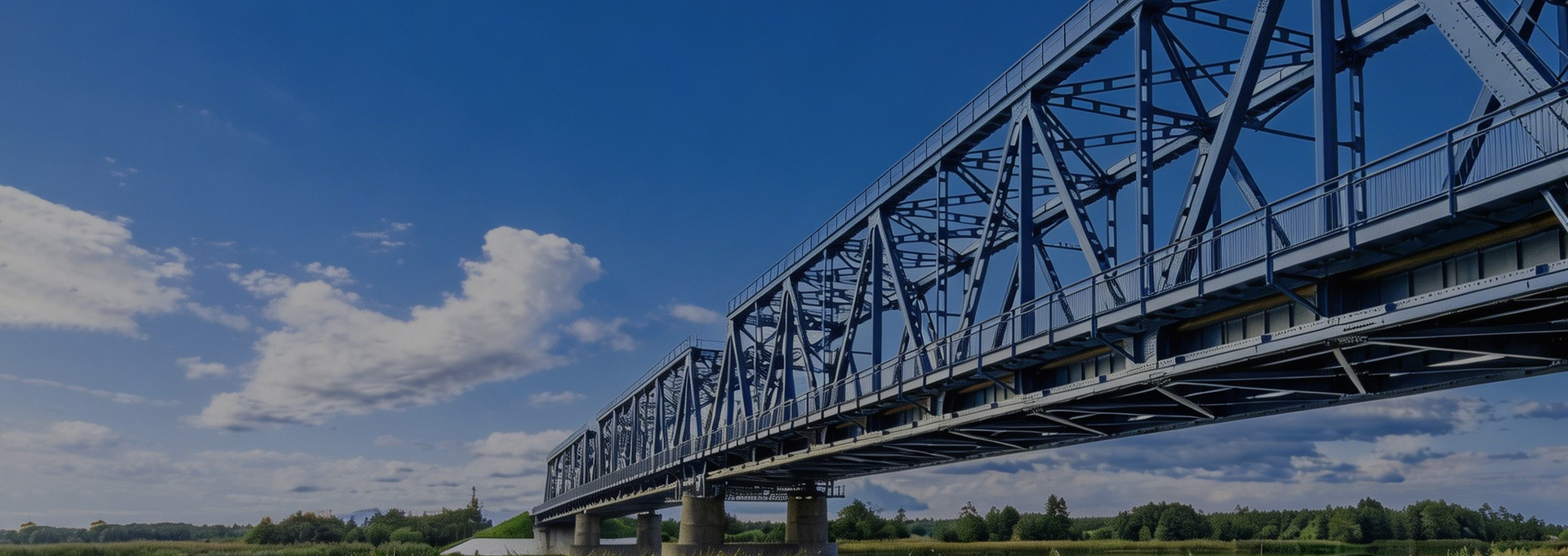
Temporary access bridges rarely get the attention that permanent structures do, yet they carry excavators, concrete trucks, schoolchildren and night-shift crews. When a road is cut by a culvert replacement, when a river crossing is washed out after a flood, or when a new housing site needs a way in before the first permanent road is poured, a modular steel bridge is usually what gets traffic moving again. We have spent years designing, manufacturing, renting and erecting this kind of structure, and the lessons repeat themselves: the bridge itself is seldom the hard part. The planning around it is.
What a Temporary Access Bridge Actually Is
In simple terms, a temporary access bridge is a structure erected for a defined period and then removed, relocated or replaced by something permanent. The line is blurrier than it sounds. Plenty of "temporary" crossings stay in service for five or ten years while funding, permits or a larger road programme work their way through the system. That is why we prefer to think in terms of design life and duty rather than labels.
In day-to-day site work, these bridges usually fall into one of a few roles:
- Site access bridges that carry plant, materials and site traffic over a watercourse, trench or live road
- Public diversion bridges that keep pedestrians, cyclists or vehicles moving while permanent works proceed
- Emergency bridges that restore a route after flooding, landslide or structural failure
- Semi-permanent crossings kept in place for years while a permanent structure is planned and funded
- Service crossings carrying pipes, cables or conveyors alongside a working access route
Each of these carries a different expectation. A pedestrian diversion tolerates a narrow deck and a modest load. A haul route crossed by forty-tonne dumpers does not. Getting that distinction right at the start saves an enormous amount of argument later.
Matching the Bridge to the Job
Before anyone talks about truss types, four questions need answers: how far do you need to span, what will cross it, how wide does the deck need to be, and how will the bridge be launched and later removed? Everything else follows from those.
Clear span drives the truss depth and the number of panels per side. Loading decides whether a single truss line is enough or whether you need double or triple configurations with reinforced chords. Width decides whether traffic runs one way with a controlled flow or two ways without argument. Access decides the erection method, because a bridge that has to be craned into position from a riverside hardstanding is a different proposition from one assembled on rollers and pushed across.
For most site access work, two Bailey truss families cover the ground. The lighter Type 321 system is quick to handle, easy to transport on a standard flatbed and well suited to pedestrian routes, light vehicle crossings and shorter spans. The Type 200, or HD200, family uses deeper panels and is the usual choice where heavy plant, longer spans or higher safety factors are needed. If you are unsure which direction to go, our team can walk through design and system planning with you before any steel is cut.
A simplified comparison of the two Bailey truss families most often used for site access; final selection always depends on span, loading and bearing conditions.
| Consideration |
Type 321 |
Type 200 (HD200) |
| Panel depth |
Around 1.45 m |
Around 2.13 m |
| Standard panel length |
3.05 m |
3.05 m |
| Relative capacity |
Lighter duty |
Higher duty |
| Site handling |
Small crew, light lifting gear |
Larger crew, heavier lifting gear |
| Typical use |
Walkways, light vehicles, short spans |
Heavy plant, haul routes, longer spans |
If the crossing leans towards the lighter end, the
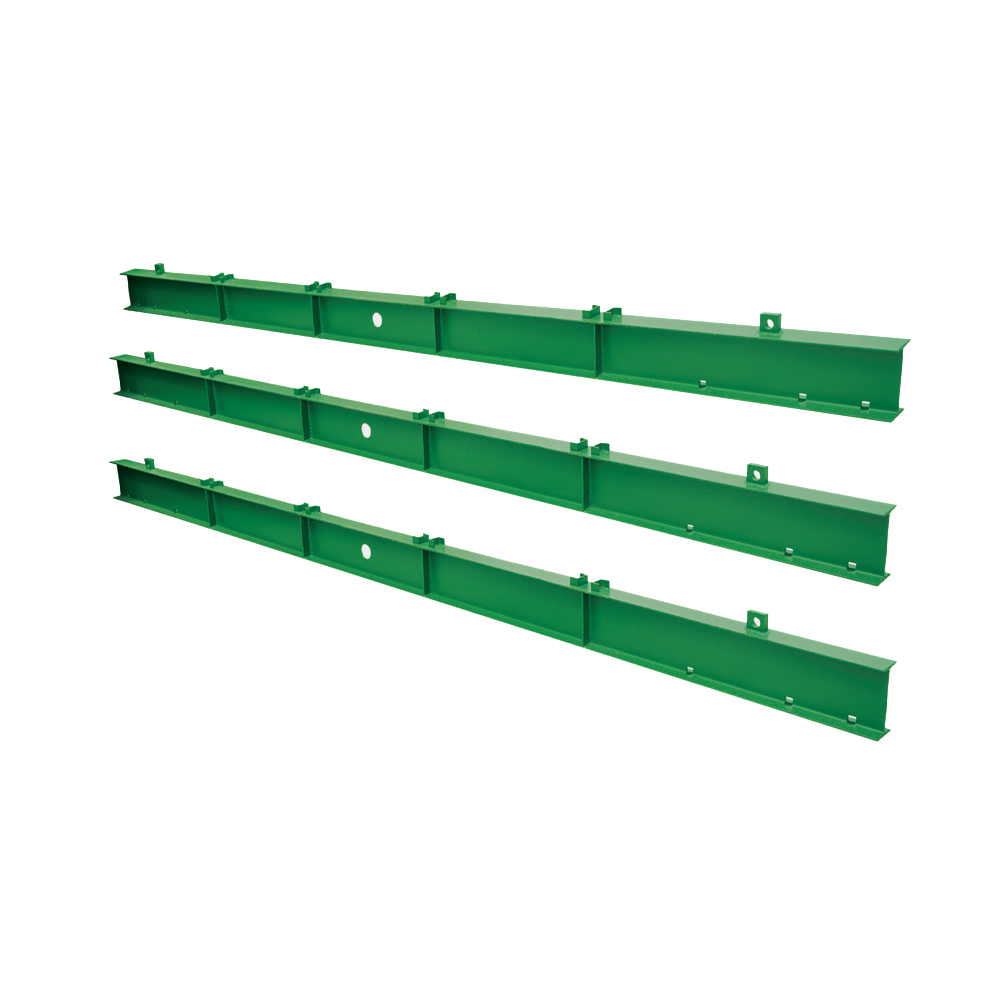 Type 321 Bailey Truss Section for Reusable CrossingsA prefabricated Q355B steel section with interchangeable parts and 9–63 m spans, offering a practical starting point for lighter, reusable bridge crossings.View Product →
is the natural starting point. Where dumpers and concrete mixers are part of the daily traffic, the
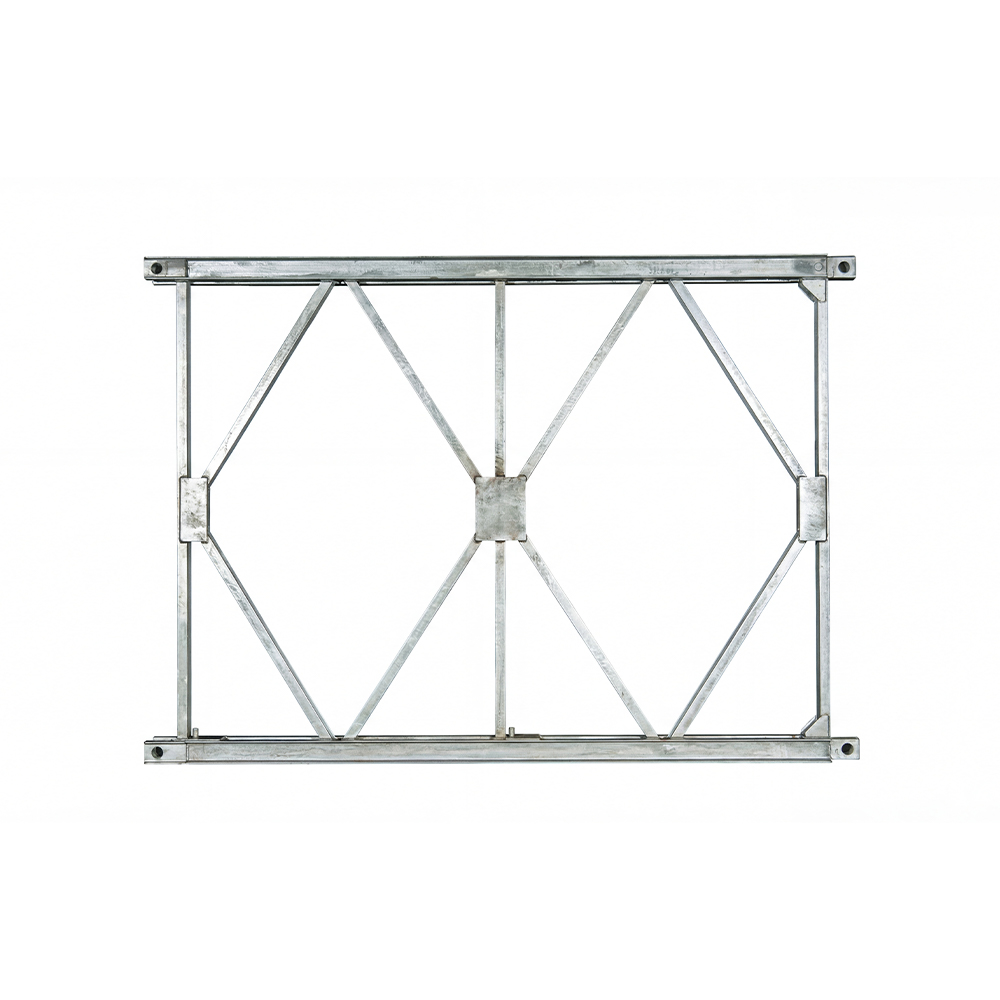 Type 200 Bailey Truss Section for Modular Bridge AssemblyA lightweight modular truss section with 3.0 m panels, 20-ton safe working load and interchangeable parts for manually assembled crossings needing extra stiffness.View Product →
gives you the extra depth and stiffness that heavier duty demands.
The Parts People Forget: Abutments, Approaches and Decking
We have lost count of the enquiries that start with a truss length and end with a problem at each end of the bridge. A strong deck on soft bearing seats is not a bridge; it is a slow-motion failure. The abutments carry everything above them, so they deserve the same attention as the steel.
Bearing seats and settlement
Ground bearing capacity, level tolerance and drainage all matter. We usually ask for a properly compacted and levelled seat, a bearing plate that spreads load into the ground, and a check that water will not pond around the base. On soft ground, a short piled or mass concrete foundation is often cheaper than the remedial work that follows settlement.
Approaches and transitions
The bump at each end of a temporary bridge is a real safety issue, not just an inconvenience. Approach ramps should match the deck level within a few millimetres, and the transition should be wide enough that a vehicle does not drop a wheel off the edge. On public diversions, ramps also need to work for wheelchairs, pushchairs and bicycles.
Decking and edge protection
Deck surface choice follows the traffic. Timber and steel panels suit plant, while anti-slip walkway panels are better for pedestrian routes. Kerbs, handrails and toe boards are not optional extras on a public crossing, and they are frequently the first thing an inspector looks at. For walkway and light-vehicle decks, a
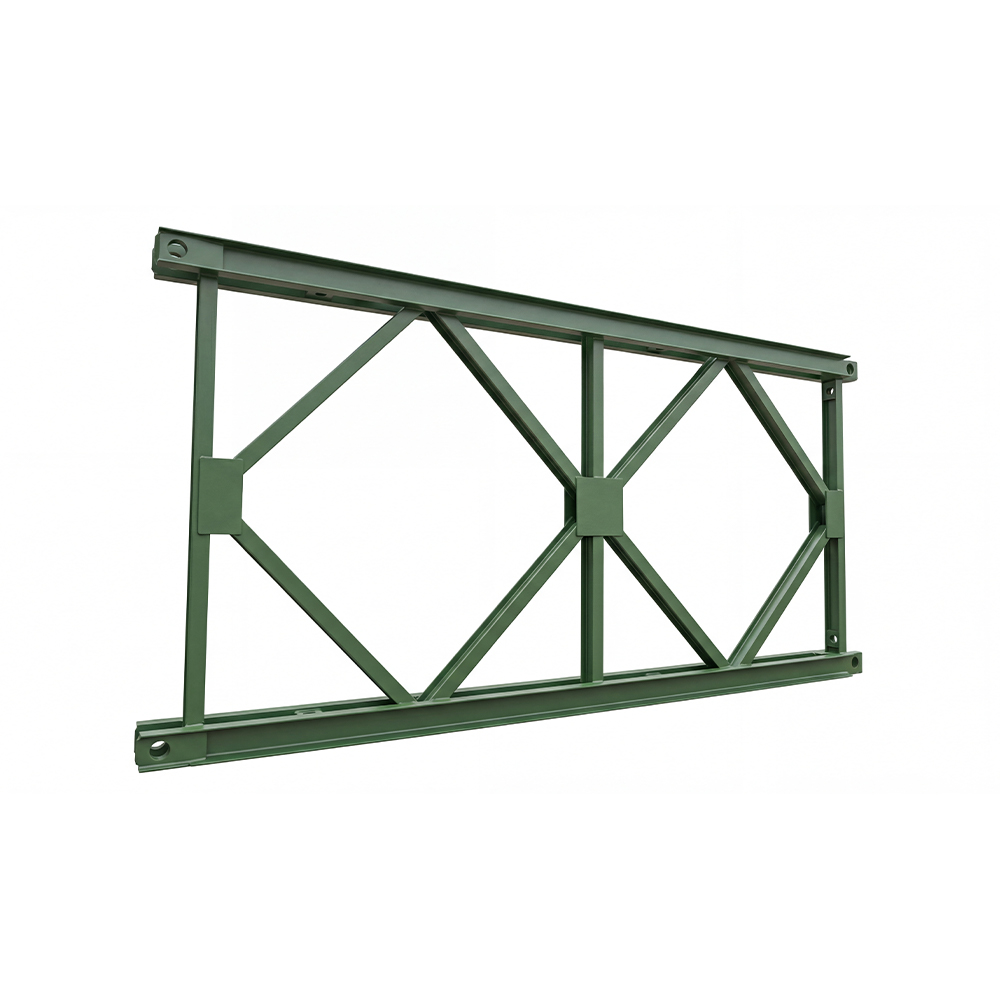 Type 321 Bailey Bridge Panel for Coordinated DecksA Q355B load-bearing panel measuring 3115×1500×176 mm, with Bailey-pin connections for coordinated walkway and light-vehicle deck assemblies.View Product →
can be matched to the truss line so the running surface and the structure arrive as one coordinated package.
How Long Does Installation Really Take?
Crews often ask for a number, and the honest answer is that it depends on the span, the access and the ground. A short single-span footbridge assembled beside the gap and craned in can be open within a day. A multi-span vehicle bridge over a river, with foundations, approach works and a launch from one bank, is a matter of weeks rather than days.
What we can say with confidence is where the time goes. Panel assembly is fast and repetitive once the crew has done it before. Preparation, lifting arrangements, bearings, decking, edge protection and the final inspection eat far more of the programme than the truss build. If you want a realistic sense of the sequence, this piece on how long it takes to build a Bailey bridge walks through it step by step.
Safety, Inspection and Load Discipline
A temporary bridge is only as good as the discipline around it. We recommend a short, written inspection routine from day one: check pins and retaining clips, look for loose deck panels, confirm handrails and kerbs are intact, and clear any debris from the bearings after heavy rain. After a flood, an impact from a vehicle or a vessel, or any unexpected vibration, a fuller inspection should follow before traffic returns.
Load signage matters more than most people expect. A bridge rated for a specific vehicle class will be quietly abused by a delivery driver who sees no sign. Post the limit at both ends, keep the deck clear of spoil, and make sure nobody parks a welfare unit on the span. Where the crossing serves the public, lighting and clear sightlines at the approaches reduce the risk of accidents far more effectively than another layer of paint.
Removal, Reuse and the Rental Question
One of the practical advantages of modular steel is that the end of the project is not the end of the asset. Panels can be dismantled, inspected, re-galvanised where needed and returned to stock. That reuse is exactly why rental makes sense for many contractors: a crossing needed for nine months does not have to become a permanent line item on the balance sheet, and the storage and maintenance burden stays with someone else.
Whether to buy or rent usually comes down to how often you expect to need a crossing and how standard your requirements are. Firms that regularly move plant across gaps tend to buy their own truss stock and rent only the specialised components. Firms with a one-off diversion usually rent the whole system, including decking and edge protection.
Temporary access bridges are unglamorous, and that is rather the point. When they work, nobody notices them; traffic simply keeps flowing and the site keeps moving. When they do not, the failure is almost always in the planning rather than the steel. If you are weighing up a crossing, tell us the span, the traffic and the ground conditions, and we will tell you honestly what will carry it and what will not.


 Français
 Español
 عربى