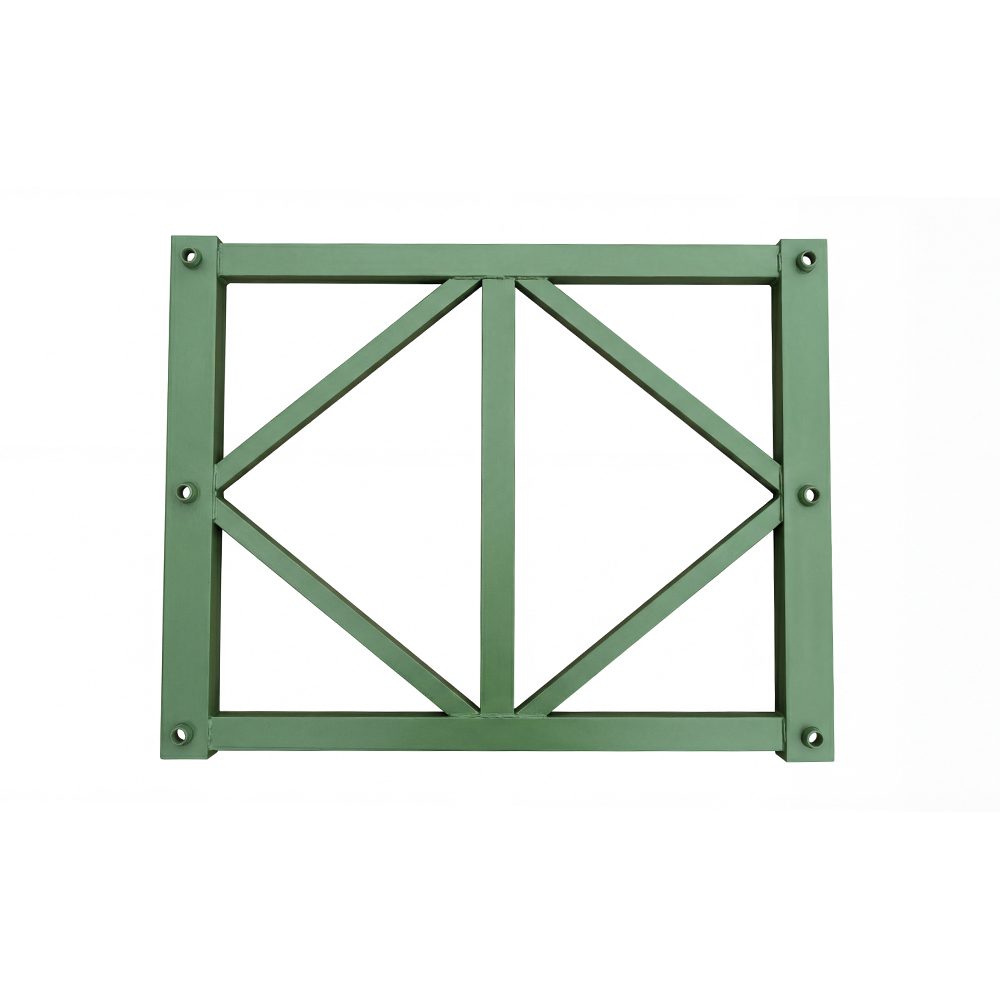
Modular Steel Bridge Enables Rapid Construction in Modern Infrastructure Projects
1. Construction Speed as a Core Driver of Modular Steel Bridge Adoption
A Modular Steel Bridge is fundamentally designed to reduce on-site construction time by shifting a significant portion of the engineering workload from the construction site to controlled factory environments. Unlike traditional cast-in-place concrete bridges or fully site-fabricated steel structures, modular systems rely on pre-engineered, standardized components that are manufactured, tested, and partially assembled off-site. This separation of fabrication and installation processes is the key factor that enables rapid deployment in modern infrastructure development.
In conventional bridge construction, multiple sequential activities must occur on-site: foundation curing, formwork installation, reinforcement tying, concrete pouring, curing time, structural steel fabrication, alignment, welding, and finishing. Each of these steps is highly sensitive to weather conditions, labor availability, and material logistics. In contrast, a Modular Steel Bridge reduces on-site activities to foundation preparation and mechanical assembly of prefabricated modules, which significantly compresses the critical path of the project schedule.
The use of prefabricated steel modules allows engineers to adopt parallel construction workflows. While civil works such as abutments, piers, and foundations are being prepared at the installation site, steel bridge components are simultaneously manufactured in factories. This parallelization reduces idle time and improves coordination efficiency across the supply chain. As a result, the total project duration can be reduced by a substantial margin compared to conventional bridge systems.
In large-scale infrastructure projects such as highway expansions, urban overpasses, and industrial access bridges, minimizing traffic disruption is often a critical requirement. A Modular Steel Bridge can be assembled during short night-time closures or limited access windows, enabling infrastructure upgrades without prolonged shutdowns. This capability is particularly important in densely populated urban environments where road closures can have significant economic and social impacts.
2. Prefabrication Technology and Industrialized Production Systems
The rapid construction capability of a Modular Steel Bridge is strongly dependent on advanced prefabrication technologies. Modern steel fabrication facilities utilize CNC cutting, robotic welding, automated drilling, and precision assembly lines to produce highly accurate bridge components. These industrialized processes ensure consistency in quality and dimensional accuracy, which directly reduces rework and alignment issues during installation.
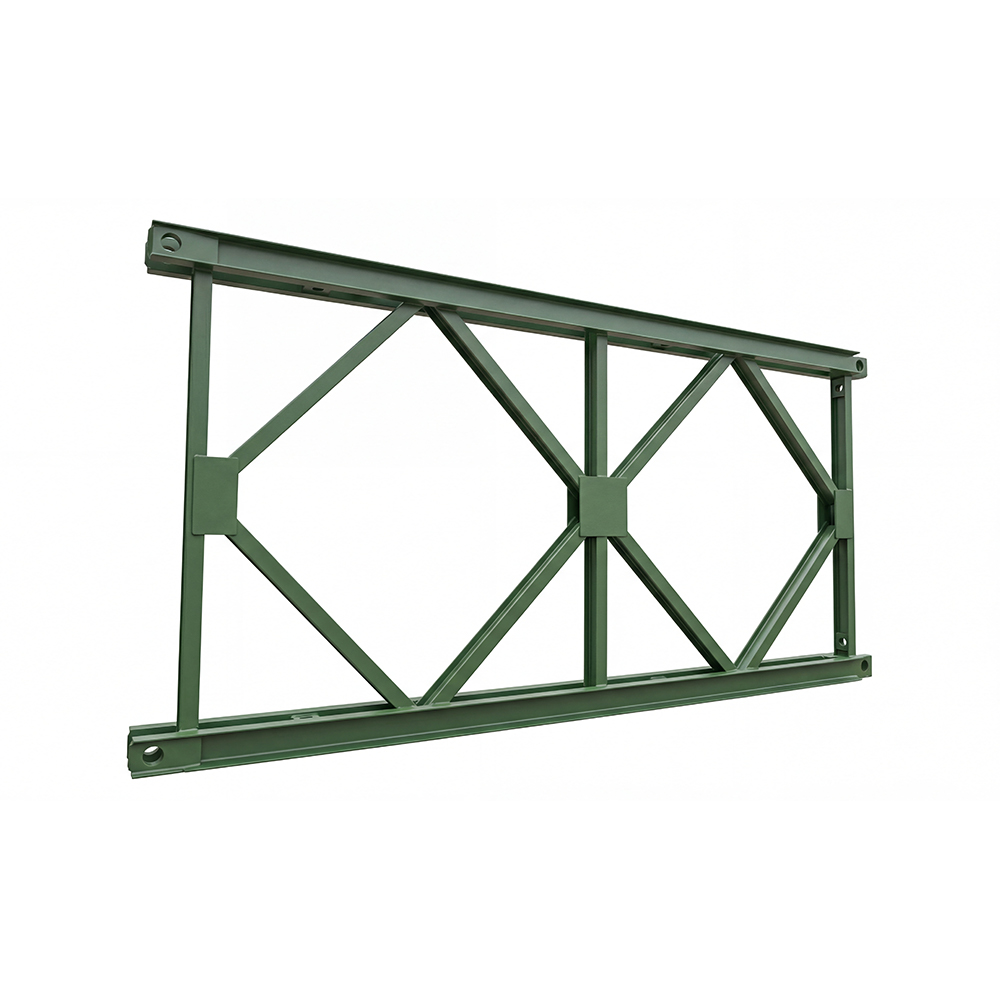
Each module of a Modular Steel Bridge is typically designed using standardized geometric configurations. Common structural elements include truss panels, girder sections, cross beams, deck panels, and connection nodes. These elements are manufactured under strict quality control protocols, including ultrasonic testing of welds, dimensional inspection using laser scanning systems, and coating inspections for corrosion protection.
Because modules are produced in controlled environments, they are not exposed to unpredictable site conditions such as humidity, dust, temperature fluctuations, or precipitation. This results in higher material performance and longer service life. Additionally, factory-based production enables bulk manufacturing, which reduces unit cost and increases scalability for large infrastructure programs.
The prefabrication model also supports digital integration through Building Information Modeling (BIM). Engineers can simulate the entire lifecycle of a Modular Steel Bridge, from design and fabrication to transportation and installation. BIM-based coordination helps identify design conflicts, optimize module sizes for transport logistics, and ensure compatibility between different structural components before construction begins.
3. Logistics Optimization and Transportation Efficiency
Transportation efficiency plays a crucial role in the rapid deployment of a Modular Steel Bridge. Unlike traditional bridge systems that require large-scale on-site fabrication, modular components are designed to fit standard transportation constraints, including flatbed trucks, shipping containers, and rail freight systems. This modularization simplifies logistics planning and reduces transportation costs.
Each module is engineered with dimensional constraints that allow for efficient stacking, bundling, and handling. This is particularly important in remote or difficult-to-access regions where transportation infrastructure may be limited. For example, in mountainous terrain or disaster-affected zones, modular steel components can be airlifted by helicopters or transported via lightweight vehicles, enabling bridge deployment in areas that would otherwise be inaccessible.
The logistics chain of a Modular Steel Bridge is typically divided into multiple stages: manufacturing, warehousing, transport staging, and final delivery to the construction site. Advanced project management systems are used to synchronize these stages, ensuring that components arrive in the correct sequence to support rapid assembly. Just-in-time delivery methods are often applied to minimize on-site storage requirements and reduce material handling risks.
Efficient logistics not only reduce construction time but also lower environmental impact. Fewer heavy transports, reduced fuel consumption, and optimized delivery routes contribute to more sustainable infrastructure development practices.
4. On-Site Assembly and Structural Connection Systems
The defining feature of a Modular Steel Bridge is its simplified on-site assembly process. Instead of requiring extensive welding, casting, or curing operations, modular systems rely primarily on mechanical connection methods such as high-strength bolting, pin joints, and interlocking structural nodes.
These connection systems are designed to be intuitive and rapid to install, often requiring only standard tools and moderate lifting equipment such as mobile cranes or hydraulic jacks. In many modern modular bridge systems, components are pre-aligned at the factory level, reducing the need for complex adjustments during installation.
Assembly typically follows a sequential process: installation of support structures, placement of primary load-bearing modules, connection of secondary structural elements, and installation of bridge deck panels. Because each module is pre-engineered to fit precisely, alignment errors are minimized, and structural integrity is maintained without extensive field modifications.
A Modular Steel Bridge also benefits from repeatable assembly procedures. Construction teams can be trained using standardized installation manuals, reducing dependency on highly specialized labor. This standardization increases construction efficiency and allows multiple teams to work simultaneously on different sections of the bridge.
In emergency deployment scenarios, such as post-disaster reconstruction, this rapid assembly capability becomes critical. Bridges can be restored within days or even hours, restoring transportation routes for emergency services, logistics operations, and civilian mobility.
5. Project Scheduling Efficiency and Critical Path Reduction
One of the most significant advantages of a Modular Steel Bridge in modern infrastructure development is the reduction of the project’s critical path duration. Traditional bridge construction is often constrained by sequential dependencies, particularly concrete curing times and in-situ fabrication delays. Modular systems eliminate many of these dependencies by shifting them to the manufacturing phase.
Project scheduling becomes more predictable and less sensitive to environmental uncertainties. Weather delays, which commonly affect concrete pouring and curing, have minimal impact on modular steel assembly operations. This allows for more accurate timeline forecasting and improved risk management in large infrastructure projects.
Critical path analysis in modular bridge projects typically shows that fabrication and foundation preparation are the longest-duration tasks, while on-site assembly represents a significantly shorter phase. This imbalance allows project managers to allocate resources more effectively and compress overall project delivery timelines.
In urban infrastructure upgrades, this scheduling efficiency is particularly valuable. Road closures can be planned with precision, minimizing disruption to traffic flow and economic activity. For rail or highway overpasses, modular construction enables “install-and-open” strategies where bridges are assembled during short maintenance windows and immediately reopened to traffic.
Modular Steel Bridge Provides High Structural Strength and Load-Bearing Capacity
1. Structural Engineering Principles Behind Modular Steel Bridge Load Capacity
A Modular Steel Bridge is engineered based on advanced structural mechanics principles that allow prefabricated components to achieve high load-bearing capacity while maintaining modular flexibility. The structural performance of such bridges is primarily governed by axial force distribution, bending moment resistance, shear transfer efficiency, and connection rigidity between modules. Unlike monolithic bridge systems, modular steel structures rely on the collective behavior of multiple interconnected elements, each contributing to the overall structural stability.
The primary load-resisting system in a Modular Steel Bridge is typically composed of steel trusses, plate girders, or box girders, depending on design requirements. Truss-based modular systems distribute loads through triangulated frameworks, where forces are resolved into tension and compression members. This geometric efficiency allows the bridge to carry significant loads while minimizing material usage. In girder-based modular systems, the load is primarily resisted through flexural action, with the top flange experiencing compression and the bottom flange experiencing tension.
Finite element analysis (FEA) is commonly used in the design stage to simulate stress distribution across modular components. Engineers model each module as part of a continuous system to evaluate deflection behavior, stress concentration points, and potential fatigue zones. These simulations are essential for ensuring that a Modular Steel Bridge meets international design standards such as AASHTO, Eurocode, and BS EN specifications.
Load-bearing capacity is also influenced by the stiffness of connection joints between modules. Bolted high-strength friction grip (HSFG) connections, pinned joints, and interlocking steel interfaces are designed to transfer shear forces and bending moments efficiently. The performance of these connections directly impacts the global structural behavior of the bridge. Properly designed connections ensure that load transfer between modules behaves similarly to a continuous beam system, reducing localized stress accumulation.
2. Material Strength and High-Performance Structural Steel in Modular Bridge Systems
The structural strength of a Modular Steel Bridge is highly dependent on the mechanical properties of the steel materials used in fabrication. Modern modular bridge systems typically utilize high-strength low-alloy (HSLA) steel, weathering steel, or quenched and tempered structural steel grades. These materials are selected for their high yield strength, tensile strength, and improved fatigue resistance.
High-strength steel allows engineers to design slimmer structural components without compromising load capacity. This reduction in cross-sectional area improves transportation efficiency while maintaining structural integrity. In modular bridge applications, weight optimization is critical because each module must be transported and assembled efficiently without exceeding logistical constraints.
Weathering steel is frequently used in Modular Steel Bridge applications due to its enhanced corrosion resistance. This material forms a protective oxide layer that reduces the need for protective coatings and long-term maintenance. In environments with high humidity, coastal exposure, or industrial pollution, weathering steel significantly extends the service life of the structure.
Material consistency is ensured through standardized manufacturing processes. Steel plates and sections are produced under controlled metallurgical conditions, followed by rigorous testing including tensile tests, Charpy impact tests, and hardness measurements. These quality assurance procedures ensure that every module in a Modular Steel Bridge system exhibits uniform mechanical properties, which is essential for predictable load distribution.
Fatigue resistance is another critical factor in structural performance. Modular bridges are often subjected to repeated cyclic loading due to traffic flow, including heavy trucks, emergency vehicles, and industrial transport. High-quality steel materials are selected to withstand millions of load cycles without crack initiation or propagation. Structural detailing, such as smooth weld transitions and stress-relief geometries, further enhances fatigue performance.
3. Load Distribution Mechanisms in Modular Steel Bridge Structures
Load distribution in a Modular Steel Bridge occurs through a combination of primary and secondary structural systems. The primary system consists of main load-bearing elements such as girders or trusses, while the secondary system includes cross beams, bracing systems, and deck panels that distribute loads across the structure.
When a vehicle or dynamic load enters the bridge, the load is first applied to the deck system, which then transfers it to transverse beams. These beams distribute the load to longitudinal girders or truss members. In modular systems, each segment acts as part of an integrated load path, ensuring that forces are efficiently transmitted to support bearings and foundations.
One of the defining characteristics of a Modular Steel Bridge is its ability to maintain structural continuity across modular joints. Even though the structure is composed of discrete segments, the load transfer system is designed to behave as a continuous structural entity. This is achieved through precision-engineered connection interfaces that minimize relative movement and ensure uniform stiffness distribution.
Bracing systems play a critical role in stabilizing load distribution. Lateral bracing, cross bracing, and diaphragm elements prevent torsional deformation and lateral buckling under asymmetric loading conditions. These systems are especially important in long-span modular bridges where wind loads and uneven traffic distribution can create complex stress patterns.
Dynamic load distribution is also a key consideration. Moving loads generate impact factors and vibration effects that must be accounted for in design. A Modular Steel Bridge incorporates damping characteristics through structural mass distribution and joint stiffness optimization, reducing resonance effects and improving ride quality.
4. Connection Systems and Structural Continuity in Modular Steel Bridges
Connection technology is central to achieving high load-bearing capacity in a Modular Steel Bridge. Unlike traditional welded structures, modular systems rely heavily on mechanical connections that must replicate or exceed the performance of continuous structural elements.
High-strength bolted connections are widely used due to their reliability and ease of installation. These bolts are pre-tensioned to create frictional resistance between connected steel plates, allowing shear forces to be transferred without slip. The performance of these connections is governed by bolt grade, preloading force, surface treatment, and hole precision.
Pinned connections are used in specific modular designs to allow controlled rotational flexibility while maintaining axial load transfer. This is particularly useful in temporary bridge systems or structures designed for rapid assembly and disassembly.
Interlocking steel node systems provide another method of achieving structural continuity. These systems use precisely machined interfaces that fit together with minimal tolerance gaps, ensuring accurate alignment and efficient load transfer. In advanced Modular Steel Bridge designs, hybrid connection systems combine bolting and interlocking mechanisms to maximize structural performance.
Connection fatigue resistance is a critical engineering consideration. Repeated loading can cause micro-movements at joint interfaces, leading to long-term degradation. To mitigate this, engineers design redundancy into connection systems, ensuring that even if localized wear occurs, the overall structural integrity remains uncompromised.
5. Structural Redundancy and Safety Factors in Modular Steel Bridge Design
A Modular Steel Bridge incorporates multiple layers of structural redundancy to ensure safety under extreme loading conditions. Redundancy refers to the ability of the structure to redistribute loads in the event of component failure, preventing catastrophic collapse.
This is achieved through multi-path load distribution systems where multiple structural elements share load responsibilities. If one module experiences excessive stress or damage, adjacent modules can absorb and redistribute the load. This characteristic is particularly important in emergency bridge applications and high-traffic infrastructure corridors.
Safety factors in modular bridge design are determined based on load combinations that include dead loads, live loads, wind loads, seismic loads, and impact loads. International design codes specify conservative safety margins to account for uncertainties in material behavior, construction tolerances, and environmental conditions.
Progressive collapse prevention is another key aspect of structural safety. A Modular Steel Bridge is designed so that localized failure does not propagate through the entire structure. This is achieved through robust connection detailing, load redistribution pathways, and energy absorption mechanisms.
Inspection and maintenance strategies further enhance structural safety. Modular systems allow for individual component replacement without dismantling the entire bridge, reducing downtime and improving long-term reliability.
Modular Steel Bridge Supports Flexible Design for Various Span Requirements
1. Span Adaptability in Modular Steel Bridge Engineering Systems
A Modular Steel Bridge is engineered to accommodate a wide range of span requirements by utilizing standardized yet configurable structural modules that can be combined in different geometric and structural configurations. Span adaptability is one of the most critical engineering advantages in modular bridge systems because infrastructure projects rarely follow uniform geometric conditions. Rivers, highways, rail corridors, valleys, and urban crossings all impose different span lengths, clearance requirements, and foundation constraints.
The structural logic of a Modular Steel Bridge is based on the principle of incremental span extension. Instead of designing a single monolithic structure for a fixed span, modular systems divide the bridge into repeating structural units. These units can be added or removed depending on the required total span length. Each module is engineered with predefined connection interfaces that allow seamless integration into longer or shorter configurations without redesigning the entire structural system.
In short-span applications, modular steel systems may function as simple beam bridges supported by end abutments. In medium-span applications, the same modular components can be configured into continuous girder systems or truss-based arrangements. For long-span applications, modular truss systems are extended with intermediate piers or support towers, enabling spans that can exceed conventional prefabricated bridge limitations.
Finite element modeling is extensively used to evaluate how different span configurations affect bending moments, shear forces, and deflection patterns. Engineers simulate multiple span scenarios using identical modular components to ensure that the structural system remains stable across all possible configurations. This parametric design approach is fundamental to the flexibility of a Modular Steel Bridge, enabling a single standardized system to serve multiple infrastructure applications.
Span adaptability also directly influences foundation design. Because modular systems allow flexible span distribution, the placement of piers and supports can be optimized based on geotechnical conditions. In unstable soil conditions, longer spans can be adopted to reduce the number of foundation points, while in stable soil conditions, shorter spans with more supports can be used to reduce structural member sizes.
2. Structural Configurations for Multi-Span Modular Steel Bridge Systems
A Modular Steel Bridge can be configured into multiple structural systems depending on span requirements, including simply supported spans, continuous spans, cantilever systems, and truss-based long-span configurations. Each configuration offers different performance characteristics in terms of load distribution, structural efficiency, and construction complexity.
Simply supported modular configurations are typically used for short to medium spans. In this system, each module or set of modules is supported independently at both ends. Load transfer is localized, and structural behavior is relatively simple to analyze. This configuration is widely used in temporary crossings, rural road bridges, and emergency infrastructure restoration.
Continuous span configurations are achieved by connecting multiple modular segments over intermediate supports. This system improves structural efficiency by reducing mid-span bending moments and distributing loads more evenly across multiple supports. A Modular Steel Bridge configured as a continuous system exhibits improved stiffness and reduced deflection compared to simply supported configurations.
Cantilever-based modular systems are used in situations where intermediate supports are difficult to construct, such as deep valleys or wide rivers. In this configuration, modules are extended outward from supports until they meet at mid-span closure points. This method is commonly used in staged construction techniques for longer spans.
Truss-based modular systems are the most structurally efficient for long-span applications. The triangular geometry of truss elements allows axial force distribution, minimizing bending stresses and maximizing load-bearing efficiency. In a Modular Steel Bridge, truss modules can be stacked vertically or horizontally to adjust structural depth depending on span length and load requirements.
Hybrid configurations combine multiple structural systems within a single bridge. For example, a bridge may use simply supported modules at the approaches and continuous truss systems at the central span. This hybridization enhances flexibility and allows engineers to optimize material usage and structural performance simultaneously.
3. Parametric Design and Modular Span Extension Techniques
The design of a Modular Steel Bridge relies heavily on parametric engineering methods that allow engineers to adjust span lengths dynamically without altering the fundamental structural architecture. Parametric design involves defining key geometric and structural variables such as module length, girder depth, truss height, and connection spacing, which can be modified to generate different span configurations.
One of the most important parameters in modular bridge design is module length. Standardized module lengths are selected based on transportation constraints, fabrication efficiency, and structural performance requirements. By combining multiple modules, engineers can achieve a wide range of total span lengths without redesigning individual components.
Span extension techniques in a Modular Steel Bridge include incremental module addition, intermediate support insertion, and structural depth modification. Incremental module addition allows engineers to extend the bridge length in uniform steps, making it ideal for standardized infrastructure projects. Intermediate support insertion enables longer spans by reducing unsupported lengths, thereby controlling bending moments and deflection.
Structural depth modification is used in long-span applications where increased stiffness is required. In truss-based systems, increasing truss height improves moment of inertia and reduces structural deformation. In girder systems, deeper sections provide higher flexural resistance. These adjustments allow modular bridges to maintain structural integrity across varying span lengths.
Computational optimization tools are frequently used to determine the most efficient span configuration for a given project. These tools evaluate material usage, structural performance, transportation constraints, and construction cost to identify optimal modular arrangements. This optimization process ensures that a Modular Steel Bridge can be adapted to site-specific requirements without compromising performance.
4. Geometric Flexibility and Site-Specific Span Adaptation
A Modular Steel Bridge exhibits high geometric flexibility, allowing it to adapt to diverse site conditions including uneven terrain, varying river widths, and complex urban layouts. This flexibility is achieved through adjustable module interfaces, variable support spacing, and adaptable structural alignment systems.
In river crossing applications, span length is often dictated by hydrological conditions such as water flow velocity, flood levels, and scour depth. Modular systems allow engineers to adjust span lengths to minimize the number of piers in water, reducing environmental impact and improving hydraulic performance. Longer spans can be used to avoid sensitive ecological zones, while shorter spans can be applied in stable bank areas.
In urban infrastructure environments, span flexibility is essential for integrating bridges into existing road networks, rail systems, and utility corridors. A Modular Steel Bridge can be configured to accommodate irregular span lengths caused by building constraints, traffic intersections, or underground infrastructure. This adaptability reduces the need for extensive demolition or relocation of existing structures.
In mountainous regions, span flexibility is critical for bridging valleys and uneven terrain. Modular systems can be configured with variable support heights, allowing the bridge to follow natural topography without extensive earthworks. This reduces construction cost and environmental disturbance.
Geometric adaptability also extends to bridge alignment. Modular systems can be designed for straight, curved, or skewed alignments. Curved modular bridges require specialized connection geometry to ensure load transfer continuity across non-linear paths. Skewed bridges, which cross obstacles at non-perpendicular angles, require adjusted module interfaces to maintain structural alignment and stability.
5. Load Distribution Across Variable Span Configurations
The ability of a Modular Steel Bridge to support different span lengths is directly linked to its load distribution mechanisms. As span length increases, bending moments and deflection values increase exponentially, requiring careful structural optimization.
In short-span configurations, load distribution is primarily localized, with forces transmitted directly to supports over short distances. In medium-span configurations, load distribution becomes more uniform, with structural elements sharing bending and shear forces across multiple modules. In long-span configurations, axial force distribution becomes more dominant, particularly in truss-based systems.
Deflection control is a key design consideration in variable span systems. Engineers must ensure that deflection limits specified by design codes are not exceeded under maximum load conditions. A Modular Steel Bridge achieves this through optimized structural depth, increased material stiffness, and improved connection rigidity.
Vibration behavior also changes with span length. Longer spans are more susceptible to dynamic oscillations caused by wind and traffic loads. Structural damping mechanisms, including bracing systems and mass distribution strategies, are incorporated to control vibration amplitude and frequency response.
Load path continuity is maintained across all span configurations through standardized connection systems. These connections ensure that structural forces are transmitted efficiently between modules, regardless of span length or configuration type. This continuity is essential for maintaining global structural stability in modular systems.
Modular Steel Bridge Enhances Emergency Response and Disaster Recovery Efficiency
1. Emergency Infrastructure Restoration Role of Modular Steel Bridge Systems
A Modular Steel Bridge plays a critical role in emergency infrastructure restoration where transportation networks are disrupted due to natural disasters, structural failures, or conflict-related damage. In emergency engineering scenarios, the primary objective is not long-term optimization but rapid re-establishment of connectivity across broken transportation corridors. Floods, earthquakes, landslides, hurricanes, and bridge collapses can instantly isolate communities, interrupt supply chains, and prevent access for emergency medical and rescue operations.
In such conditions, a Modular Steel Bridge is deployed as a rapid replacement system designed to restore traffic flow in the shortest possible time. Unlike conventional bridge reconstruction that requires site-specific design, long procurement cycles, and extensive curing periods for concrete structures, modular systems rely on pre-engineered steel components that are stored, transported, and assembled on demand. These components are designed to be universally compatible, allowing them to be deployed across a wide range of disaster environments without redesign.
Emergency deployment teams prioritize restoring critical transportation links such as highways, arterial roads, rail crossings, and evacuation routes. A Modular Steel Bridge can be installed as a temporary or semi-permanent structure depending on the severity of infrastructure damage and the expected recovery timeline. In many disaster response frameworks, modular bridges are classified as strategic emergency assets, pre-positioned in regional depots to enable immediate deployment when required.
The structural adaptability of modular systems allows them to replace damaged bridge spans without requiring full demolition of existing substructures. In cases where abutments or piers remain intact, modular components can be installed directly onto existing foundations. This reduces reconstruction time significantly and minimizes the need for heavy civil works in unstable post-disaster environments.
2. Rapid Deployment Logistics and Emergency Construction Workflow
The deployment process of a Modular Steel Bridge in disaster recovery scenarios is structured around rapid mobilization logistics and simplified construction workflows. Emergency engineering teams follow predefined response protocols that prioritize speed, safety, and operational efficiency under constrained conditions.
The first stage of deployment involves damage assessment and site evaluation. Engineering teams assess structural failure points, foundation stability, water flow conditions, soil integrity, and access routes. This assessment determines the appropriate modular configuration, span length, and load-bearing requirements for the replacement bridge.
Once the design parameters are confirmed, prefabricated modules are transported from storage facilities or manufacturing hubs to the disaster site. Transportation methods may include heavy-duty trucks, military logistics vehicles, rail systems, or air transport in extreme cases where ground access is unavailable. A Modular Steel Bridge is specifically engineered for transport efficiency, with standardized module dimensions that comply with logistical constraints.
Upon arrival at the site, rapid construction teams begin foundation preparation. In many emergency scenarios, temporary foundations such as steel pile supports, prefabricated abutments, or adjustable support frames are used to accelerate installation. These systems eliminate the need for extensive excavation or concrete curing, allowing immediate structural assembly.
The assembly process is highly standardized. Modules are sequentially positioned using mobile cranes, hydraulic lifting systems, or even manual assembly methods in lightweight configurations. High-strength bolted connections are used to secure structural elements, ensuring rapid but reliable load transfer between modules. A Modular Steel Bridge can often be assembled in phases, allowing partial reopening of traffic lanes even before full completion.
3. Disaster Resilience and Structural Survivability of Modular Steel Bridge Systems
A Modular Steel Bridge is engineered not only for rapid deployment but also for resilience under extreme environmental conditions commonly associated with disaster scenarios. These conditions include flooding, seismic activity, high wind loads, ground instability, and debris impact forces.
In flood-prone environments, modular bridges are designed with elevated deck systems and reduced in-water structural components to minimize hydraulic obstruction. The modular configuration allows engineers to adjust span lengths to avoid placing supports in high-velocity water zones, reducing scour risk and structural undermining. Elevated truss systems can maintain clearance above flood levels, ensuring continued functionality during extreme hydrological events.
In seismic zones, a Modular Steel Bridge incorporates ductile connection systems and energy dissipation mechanisms. These allow controlled deformation during ground motion without catastrophic failure. Modular connections are designed to absorb seismic energy through bolt slippage, controlled rotation, and flexible joint behavior. This ensures that even under significant seismic stress, the bridge retains structural continuity and can be repaired or replaced rapidly after the event.
Wind resistance is another critical factor in disaster-prone regions. Modular steel structures are designed with aerodynamic profiles that reduce wind-induced vibration and oscillation. Cross-bracing systems and lateral stiffening elements enhance torsional stability, preventing structural instability during storms or hurricanes.
Impact resistance is particularly relevant in flood and landslide scenarios where debris flow can strike bridge structures. A Modular Steel Bridge utilizes redundant load paths and reinforced structural nodes to distribute impact forces across multiple components, reducing localized damage and maintaining overall structural integrity.
4. Strategic Prepositioning and Emergency Bridge Inventory Systems
The efficiency of a Modular Steel Bridge in disaster recovery is significantly enhanced by strategic prepositioning and inventory management systems. Governments, military organizations, and infrastructure agencies often maintain dedicated stockpiles of modular bridge components in regional depots located near high-risk zones.
These inventory systems are designed based on probabilistic disaster modeling, which identifies regions with high exposure to earthquakes, floods, hurricanes, or industrial accidents. Modular bridge components are stored in standardized kits that include truss panels, deck sections, connection hardware, and support systems. Each kit is configured to support a specific range of span lengths and load capacities.
Prepositioned Modular Steel Bridge systems are regularly inspected and maintained to ensure readiness for immediate deployment. Corrosion protection, structural integrity checks, and component replacement schedules are implemented to maintain operational reliability over long storage periods.
Emergency logistics planning includes predefined deployment routes, transportation coordination protocols, and inter-agency communication frameworks. These systems ensure that modular bridge components can be rapidly mobilized without administrative or logistical delays.
In some advanced infrastructure systems, digital inventory management platforms are integrated with disaster monitoring networks. When a disaster event is detected, automated alerts trigger the deployment of modular bridge systems based on predefined response scenarios. This integration reduces response time and improves coordination between engineering teams, logistics operators, and emergency services.
5. Restoration of Critical Transportation Networks and Economic Continuity
A Modular Steel Bridge is essential for restoring critical transportation networks that support economic activity, emergency response operations, and civilian mobility. When key bridges are destroyed, entire regions can become isolated, disrupting supply chains, healthcare access, and industrial production.
In disaster recovery planning, restoring highway and arterial road connectivity is a top priority. Modular bridge systems enable rapid reopening of these routes, allowing emergency vehicles, food supplies, fuel transport, and medical equipment to reach affected areas. This rapid restoration of mobility significantly reduces secondary disaster impacts such as supply shortages and delayed rescue operations.
Industrial zones and logistics hubs rely heavily on continuous transportation connectivity. A Modular Steel Bridge allows manufacturing facilities, ports, and distribution centers to resume operations quickly after infrastructure damage. This minimizes economic losses and stabilizes regional supply chains.
In urban environments, modular bridges are used to restore pedestrian crossings, utility access routes, and public transportation corridors. Temporary modular structures can support buses, trams, and light rail systems, ensuring continuity of urban mobility during reconstruction phases.
Economic resilience is closely linked to infrastructure recovery speed. The faster a Modular Steel Bridge is deployed, the faster economic systems can recover from disruption. This includes labor mobility, commercial transport, and regional trade flows.
References / Sources
-
AASHTO (2020). LRFD Bridge Design Specifications. American Association of State Highway and Transportation Officials, Washington, D.C.
-
EN 1993-2 (2006). Eurocode 3: Design of Steel Structures – Steel Bridges. European Committee for Standardization (CEN), Brussels.
-
Ryall, M., Parke, G. A. R., & Harding, J. E. (2000). The Manual of Bridge Engineering. Thomas Telford Publishing.
-
Troitsky, M. S. (1994). Planning and Design of Bridges. John Wiley & Sons.


 Français
 Español
 عربى
عربى